
Soft Ground Sets the Scene at the Roodee
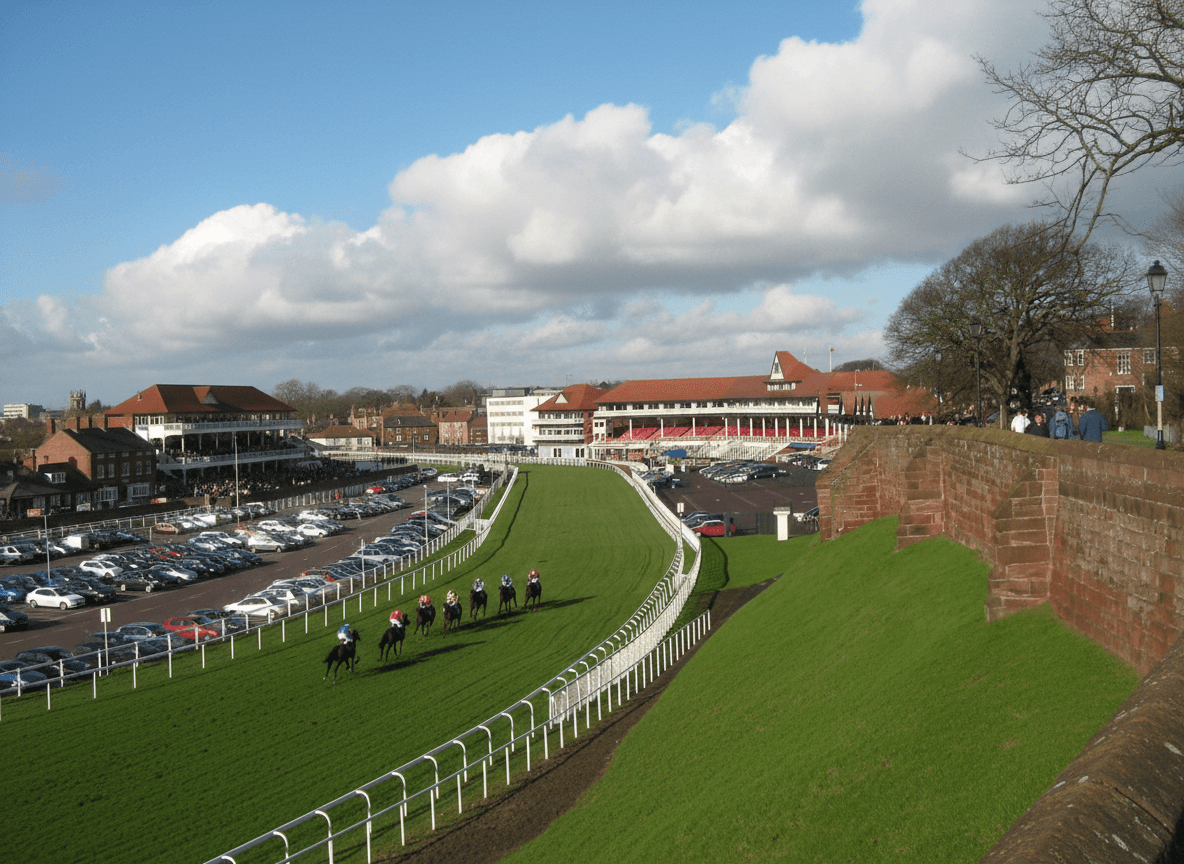
The ancient amphitheatre of Chester opens its doors for what promises to be a fascinating afternoon's racing, with the going officially described as soft, good to soft in places. This testing surface will fundamentally alter the complexion of Saturday's seven-race programme, demanding stamina reserves that might otherwise remain untapped on quicker ground.
The Roodee's unique characteristics become even more pronounced when the heavens have opened. The tight left-handed circuit, barely exceeding a mile in circumference, places a premium on tactical speed and the ability to travel strongly into the home straight. On soft ground, however, the emphasis shifts toward horses with proven stamina and the mechanical efficiency to handle testing conditions.
Today's Chester racecard is headlined by the £150,000 Lincoln Heritage Handicap, a race that has traditionally served as a reliable early-season barometer. The presence of Listed company in both the Cammidge Trophy and the Doncaster Mile Stakes adds further depth to what appears a well-constructed programme.
The Lincoln Takes Centre Stage
The William Hill Lincoln Heritage Handicap stands as the afternoon's centrepiece, its £150,000 prize fund dwarfing the supporting contests. Historically, this race has favoured horses with proven course form, and the soft ground conditions will only amplify Chester's idiosyncratic demands.
The mile distance at Chester is particularly revealing. Unlike the straight mile tracks, the Roodee's version includes the notorious Dee bend, where races can be won and lost in a matter of strides. Horses drawn high often find themselves at a significant disadvantage, forced to race wide throughout and cover additional ground on an already stamina-sapping surface.
The soft conditions will likely favour horses with a proven affinity for cut in the ground. Those with Timeform ratings achieved on similar surfaces should be viewed more favourably than rivals whose best efforts have come on good to firm ground. The testing nature of today's going will also place additional emphasis on horses' recent form and fitness levels.
Supporting Cast Provides Quality Depth
The Listed Cammidge Trophy Stakes over six furlongs and two yards presents an intriguing puzzle for three-year-olds and upwards. The shorter distance might suggest pace will be crucial, but Chester's unique configuration means stamina remains at a premium. The ability to quicken from the home turn, rather than sustain a long drive, often proves decisive.
The Doncaster Mile Stakes, also carrying Listed status, offers a fascinating contrast to the Lincoln. Without the burden of handicap weights, this race should provide a clearer indication of merit, though the soft ground will still separate the wheat from the chaff.
The opening Brocklesby Stakes holds particular significance as the traditional curtain-raiser for the two-year-old season. While no runners are yet declared, this race typically attracts juveniles from the most forward yards, those confident their charges can handle both Chester's unique demands and the early-season conditions.
Ground Conditions Shape the Narrative
The soft going transforms Chester from a speed track into something approaching a stamina test. The tight turns become more treacherous, the home straight more demanding. Jockeys will need to judge their mounts' reserves carefully, knowing that a premature move could prove costly on such testing ground.
Horses with proven form on similar surfaces gain significant advantages. Those bred for stamina – perhaps by sires known for producing tough, genuine performers – may find conditions suiting them better than their odds suggest. Conversely, speed horses who have built their reputations on fast ground may struggle to reproduce their best form.
The draw assumes even greater significance on soft ground. High numbers, already disadvantaged by Chester's configuration, face the additional burden of racing wide on a surface that punishes every extra yard covered. Low draws provide not just positional advantages but crucial energy conservation.
Tactical Considerations and Key Angles
Chester's tactical nuances become magnified on soft ground. The ability to secure an early position without expending excessive energy proves crucial. Horses who typically race prominently may find their usual tactics even more effective, while hold-up performers face the challenge of making ground on a surface that can quickly sap momentum.
The pace scenario in each race will be fascinating to observe. Soft ground typically produces more even gallops, but Chester's configuration can still create tactical bottlenecks. The horse who can travel most smoothly through the early stages while preserving energy for the climb to the line holds significant advantages.
Experience at the track becomes invaluable on such testing ground. Course winners who have previously handled Chester's demands possess proven credentials that newcomers cannot match. The combination of track knowledge and ground conditions creates a formidable barrier for debutants at the venue.
The Verdict
Saturday's Chester card presents a compelling blend of quality and complexity. The soft ground conditions will strip away pretenders and reward genuine ability, while the unique characteristics of the Roodee will favour horses with proven course credentials and tactical speed.
The Lincoln Heritage Handicap stands as the day's most intriguing puzzle, its substantial prize fund attracting a competitive field to tackle Chester's unique examination. The supporting Listed races provide additional quality, while the juvenile opener offers glimpses of potential future stars.
Success today will likely favour horses who combine proven stamina with course experience, tactical speed with finishing kick. The soft ground has transformed what might have been a speed-dominated card into a thorough test of racing merit – exactly the kind of challenge that makes Chester's ancient amphitheatre such a compelling venue for both horse and punter alike.


