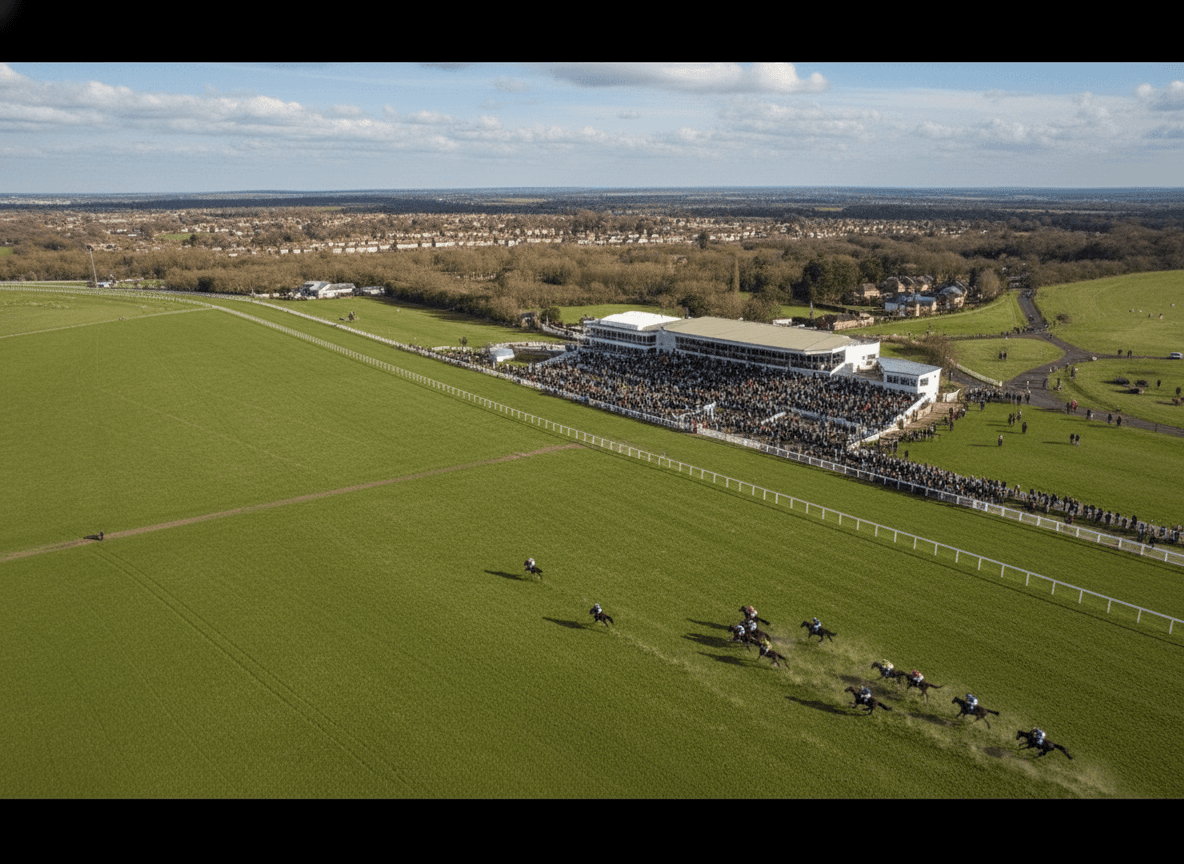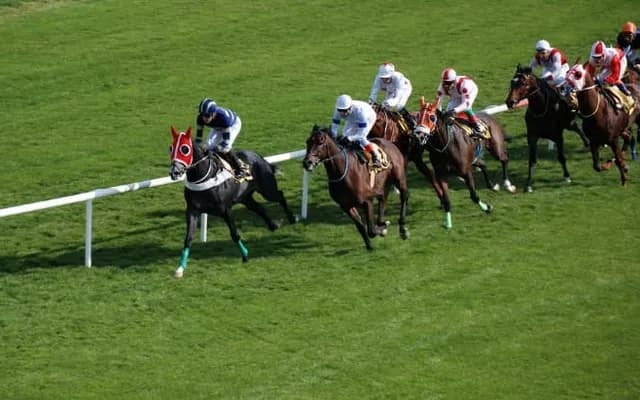
The Derby is Britain's premier Classic for three-year-olds. Run over a mile and a half at Epsom Downs, it is the centrepiece of a two-day festival in early June that also includes the Oaks and the Coronation Cup. This guide explains the race, the meeting, the track and the betting principles that apply every year.
What the Derby is
The Derby is one of Britain's five Classics, alongside the 2,000 Guineas, the 1,000 Guineas, the Oaks and the St Leger. It is restricted to three-year-olds, so every horse gets exactly one chance at it.
Colts and fillies are both eligible; geldings are not. In practice the Derby is a colts' race: the last filly to win it was Fifinella in 1916, when the race was staged at Newmarket because of the First World War.
The field is capped at 20 runners. If more than 20 are declared, the lowest-rated horses are eliminated first.
Origins
Racing at Epsom dates from the 17th century. The Derby grew out of a gathering hosted by the 12th Earl of Derby at the 1778 May meeting, where General John Burgoyne suggested a race for three-year-old fillies, and the Oaks, named after Lord Derby's house at Woodmansterne, was first run in May 1779.
A second race, open to colts and fillies, followed. The story goes that Lord Derby and Sir Charles Bunbury, a leading figure in the Jockey Club, tossed a coin to decide whether it would be the Derby Stakes or the Bunbury Stakes. No archive confirms the tale.
The first Derby was run on Thursday 4 May 1780 over a mile. Nine went to post and the 6-4 favourite Diomed won it, owned, fittingly, by Bunbury. The distance was extended to a mile and a half from 1784, and it has stayed there since.
The race left Epsom only during the two world wars, when it was run at Newmarket in 1915-18 and 1940-45. In 2020 it was held behind closed doors on 4 July because of the pandemic.
Why it matters to the breed
The race's name has been borrowed around the world, from the Kentucky Derby to the Irish Derby and the Deutsches Derby.
Derby winners have not always succeeded at stud: in the last three decades of the 20th century only one Derby winner, Shirley Heights, sired another. Galileo, the 2001 winner, changed that: he became the most successful sire in the race's history with five Derby winners. His half-brother Sea The Stars, the 2009 winner, sired Harzand to win in 2016, and several more recent Derby winners have since sired winners of the race.
Records worth knowing
- Jockey: Lester Piggott rode nine Derby winners, from Never Say Die in 1954 to Teenoso in 1983. It remains the record.
- Trainer: Aidan O'Brien has trained more Derby winners than anyone else in the race's history. His first was Galileo in 2001.
- Triple Crown: the last horse to win the 2,000 Guineas, Derby and St Leger was Nijinsky, ridden by Piggott, in 1970.
The Derby Festival
The Derby meeting is run over two days, Friday and Saturday, in early June. For most of its history the Derby was a Wednesday race. It moved to the weekend in the 1990s and since 2003 has normally been run on the first Saturday in June.
Friday: Oaks day
The opening day is also marketed as Ladies Day, and its feature is the Oaks. This is the fillies' Classic, run over the same mile and a half as the Derby. It is the older of the two races by a year.
The Friday card has also included the Woodcote Stakes, a six-furlong race for two-year-olds.
Saturday: Derby day
The Coronation Cup is the meeting's Group 1 for older horses, aged four and upwards, over the Derby course and distance. It was first run in 1902, the year of Edward VII's coronation. Previous Epsom form, including a good run in the Derby or Oaks a year earlier, is always worth noting. St Nicholas Abbey is the only horse to have won it three times (2011, 2012 and 2013).
For many years the Coronation Cup was run on the Friday. For the 2026 Festival the Jockey Club moved it to Derby day, to run back-to-back with the Dash and the Derby, and more than doubled its prize fund. Always check the official racecard.
The Dash is a big-field sprint handicap over Epsom's five-furlong course, which Timeform describes as the fastest in the world. The supporting cards have included Group 3 races such as the Diomed Stakes and the Princess Elizabeth Stakes and, from 2026, Derby day has included the Tattenham Corner Stakes, a seven-furlong Group 3 that replaced the John of Gaunt Stakes at Haydock.
The Epsom course
Epsom is a left-handed, undulating, U-shaped track with tight bends. It sits on chalk downland whose undulations the course follows, and that ground is protected by legislation. Its quirks decide plenty of races at this meeting.
The climb
The Derby start is out in the country. The first four furlongs or so are uphill, a climb often likened to the height of Nelson's Column over the first half-mile. Timeform's course guide warns that anything pulling too hard here is usually found out in the closing stages. A horse that fights its rider on the climb will not have enough left for the straight.
Tattenham Corner
From the top of the hill, the runners sweep downhill and left-handed round Tattenham Corner into the straight. The bend is sharp and the descent steep. Unbalanced or inexperienced horses can lose ground and position here, and it is hard to recover from being shuffled back at this point.
The camber and the straight
The home straight is not level from side to side. There is a sharp camber sloping towards the inside rail, and tiring horses often hang down it in the closing stages. Jockeys on horses that hang have to keep them straight, and a horse that rolls off a true line can cost itself or others a run.
Why the layout matters for punters
- Tactical speed: the ability to hold a position going down the hill without being pushed matters. A horse that needs time to build up momentum can be badly placed turning in.
- Stamina: the early climb and the run down the hill make this a genuine mile-and-a-half test. Horses with doubts about the trip often find them exposed.
- Short distances: in races up to around eight and a half furlongs, Timeform notes that front-runners and prominent racers hold an advantage. The five-furlong course runs virtually downhill throughout.
- Soft ground: in testing conditions, Timeform says runners tend to switch towards the stands-side rail for the better ground.
The Classic route to Epsom
The 2,000 Guineas
The 2,000 Guineas at Newmarket, run over a mile in early May, is the first leg of the Triple Crown. The Derby is the second and the St Leger at Doncaster, later in the season, is the third. The jump from a mile to a mile and a half within about a month is considerable, and the full Triple Crown is now rarely attempted. Camelot came closest in recent times: he won the 2,000 Guineas and Derby in 2012 before being beaten in the St Leger.
The Guineas is still a major source of Derby winners. Racing Post research published in 2026 found that it has supplied more Derby winners this century than any other race, although most of those horses did not actually win at Newmarket. Our guide to betting on the 2,000 Guineas covers the first Classic in more detail.
The trials
The established trials fall in late April and May:
- The Dante Stakes (York): the same Racing Post research found it had produced more Derby winners since 2000 than any other British or Irish middle-distance trial.
- The Chester Vase: run over the tight, turning Chester track, which can be a useful pointer for how a horse may cope with Epsom's bends.
- The Irish trials at Leopardstown: including the Ballysax Stakes and the Derrinstown Stud Derby Trial (the Leopardstown Derby Trial), these are the route Irish stables, Ballydoyle especially, have often taken. Sinndar, Galileo and High Chaparral all won the Leopardstown trial before winning at Epsom.
Timing matters as much as the trial itself. The Racing Post analysis found that, setting aside horses coming from the Guineas, 13 of the 19 Derby winners up to 2025 had their final run between 21 and 28 days before Epsom, roughly the slot the Dante and Chester Vase occupy. On the same basis, 24 of the last 26 winners had finished in the first three on their previous start. Derby winners rarely come from nowhere.
Betting angles that hold every year
Ante-post betting
Derby markets open long before the race, often on the strength of a single run at two. Early prices can be generous, but the risks are obvious: a horse may not train on, may not stay, may be gelded and become ineligible, or may simply be sent elsewhere. Ante-post bets are normally struck on an "all-in, run or not" basis, so a horse that misses the race is a losing bet. Our guide to ante-post betting explains the trade-off in detail.
The Derby entry system shapes this market. Horses go through several entry and forfeit stages during the spring, so the number still in the race shrinks as the trials go by. A late supplementary entry is possible, at a substantial cost, for a horse that was not entered earlier.
Non-runner no bet
In the weeks before the race, many bookmakers offer non-runner no bet terms, which return your stake if your horse does not run. This removes the biggest risk of betting early, at the price of usually shorter odds than in the long-range market. For a race in which trainers with several entries often delay their final decision, it is usually the better compromise. See our explainer on non-runner no bet.
Since 2026 the Jockey Club has made permanent a 72-hour declaration stage for the Derby, with a stalls draw on the Wednesday. That means the final field and draw are known several days in advance.
Reading the trials
Look past the result of a trial. Did the winner pull hard, handle the bends, or look to be running out of stamina? A horse beaten in a slowly run trial may be the better stayer. Our guides to pace analysis and sectional times are useful here. Ratings such as RPR help compare form across trials run at different tracks.
Draw and pace at Epsom
One race a year with no more than 20 runners gives too little data to claim a strong draw bias. Position matters more: a horse drawn wide with no early speed may find itself caught out of the ground on the long run down to Tattenham Corner. Look at which horses are likely to lead and how the pace is likely to unfold, rather than relying on stall numbers alone.
Each-way
Under the usual terms, a non-handicap with eight or more runners pays a fifth of the odds for the first three places. That makes each-way betting worth considering on a horse at a decent price you doubt can beat the favourite. Ante-post bets are settled on the place terms in force when the bet was struck, so check them before you bet.
Best Horse Racing Betting Sites


Frequently asked questions
When is the Derby run?
The Derby is run on a Saturday in early June, normally the first Saturday of the month, on the second day of the two-day Derby Festival at Epsom Downs. The Jockey Club announces exact dates and race times on its official site.
How long is the Derby?
A mile and a half, which is 12 furlongs. The race was first run over a mile in 1780 and was lengthened to its current distance from 1784.
Can fillies run in the Derby?
Yes. The Derby is open to three-year-old colts and fillies, but not geldings. Fillies very rarely take part, as most are aimed at the Oaks instead. The last filly to win the Derby was Fifinella in 1916.
What is the difference between the Derby and the Oaks?
Both are Classics over the same mile and a half at Epsom for three-year-olds. The Oaks is restricted to fillies, while the Derby is open to colts and fillies. The Oaks, first run in 1779, is a year older than the Derby.
Who has ridden the most Derby winners?
Lester Piggott, with nine winners between 1954 and 1983.
Has anyone won the Triple Crown recently?
No. The last horse to win the 2,000 Guineas, the Derby and the St Leger was Nijinsky in 1970. Camelot won the first two legs in 2012 but was beaten in the St Leger.
Gambling should be fun. Only bet what you can afford to lose. 18+ only. For help and advice, see our responsible gambling page.