
Setting the Scene at Southwell

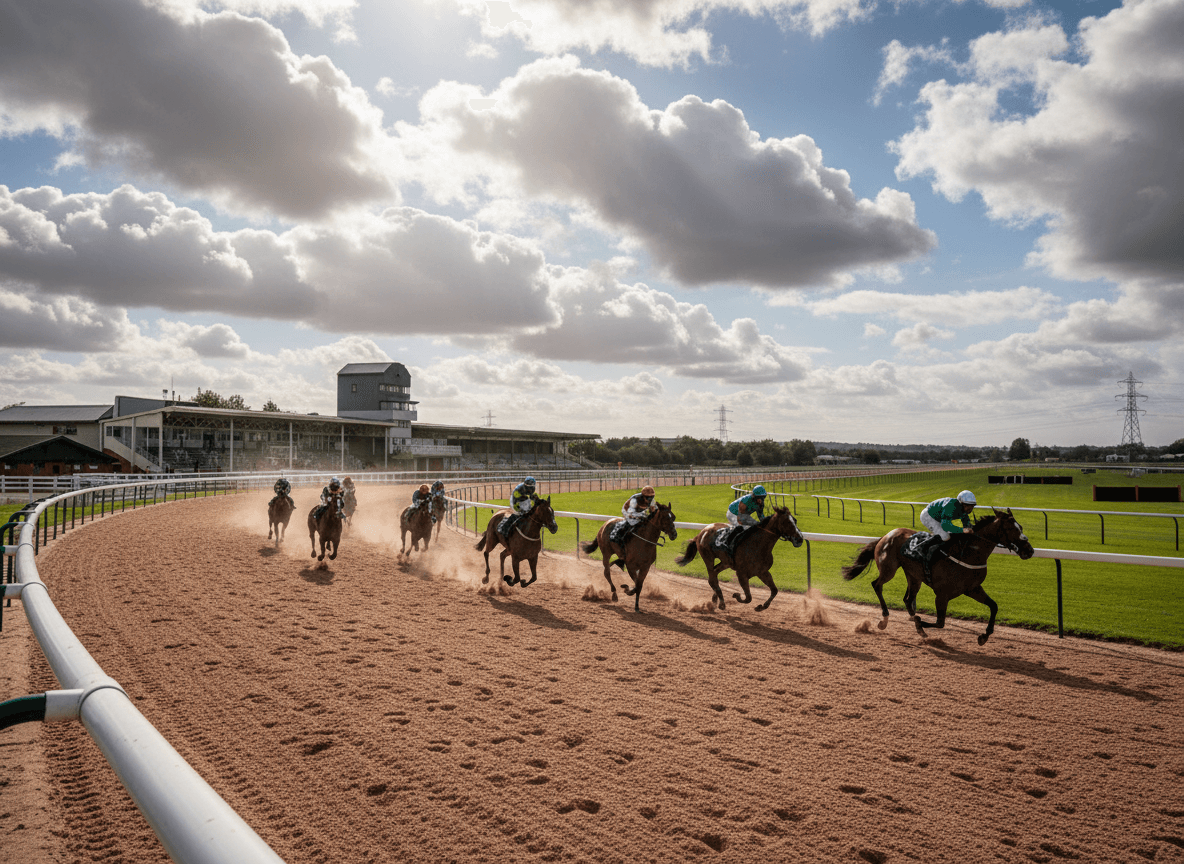
There is something quietly compelling about an evening meeting at Southwell. As the Nottinghamshire shadows lengthen and the day's heat begins to soften, the Fibresand surface comes into its own — consistent, reliable, and forgiving in a way that few all-weather tracks can genuinely claim to be. Seven races are scheduled this Thursday evening, spanning a range of distances from the sharp four furlongs and 215 yards of the opening sprint to the more searching mile and a half of the third race on the card. It is a well-constructed evening's entertainment, and one that deserves more attention than mid-week all-weather fixtures sometimes receive.

Going conditions have not yet been formally announced at the time of writing, though as ever on the Fibresand that matters less than it might on turf. The artificial surface at Southwell tends to ride consistently regardless of the weather, and while heavy rainfall can slow the surface fractionally and dry spells can quicken it, the variation is modest compared to the dramatic shifts you might encounter on a grass track in June. That said, it is always worth checking the Southwell racecard for any late going updates before committing your selections.

What the Fibresand does reward, consistently and without apology, is horses who have been here before and know the track. The slight left-handed loop, the way the surface can grab at a horse's stride if they are not balanced through the turn — these are things that experience teaches. Course form at Southwell is not merely a useful guide; it is frequently the most important factor on the entire racecard.

The Feature Race: A Three-Way Battle for Prominence

With prize money of £10,000 on offer in three separate contests this evening — the 19:30 novice stakes, the 20:30 fillies' novice, and the 21:00 handicap — the card does not have one obvious headline act in the traditional sense. Instead, the evening builds to a satisfying crescendo across its final three races, each carrying equal financial weight and, in their own ways, equal intrigue.

The 19:30 Download the Raceday Ready App Novice Stakes over a mile and 14 yards carries the GBB Race designation, meaning it is part of the Great British Bonus scheme — an initiative that rewards owners of British-bred horses with a bonus should they win a qualifying race. That added layer of incentive can occasionally influence trainer decisions about whether to run, and it lends the race a slightly elevated significance. Novice races over a mile on the Fibresand can be deceptively tactical affairs; horses with a clean, economical action tend to travel well through the surface, and those who have shown any previous aptitude for the track should be respected.

The 20:30 Follow attheraces on Instagram Fillies' Novice Stakes, also a GBB Race, runs over six furlongs and 17 yards — a trip that suits a certain type of sharp, precocious filly. The six-furlong trip at Southwell is long enough to reward a genuine galloper but short enough that early pace can be decisive. Fillies' novice races on the all-weather have a habit of throwing up progressive types who go on to better things, and it is worth paying close attention to debut runners from powerful yards who have chosen this evening to introduce a promising youngster.

Rounding off the card, the 21:00 Get Raceday Ready Handicap Stakes over the same six furlongs and 17 yards is restricted to three-year-olds and offers the most competitive puzzle of the evening. Handicaps at this level, with the weights theoretically levelling the field, are where course-and-distance form becomes most decisive. A horse that has won over this exact trip on this exact surface carries a significant advantage that no amount of theoretical ability can easily overcome.

Ones to Watch: What to Look For Without Confirmed Runners

With runners yet to be confirmed across all seven races at the time of writing, specific selections must wait — but there are clear principles that will guide any shrewd approach to this Southwell racecard once the fields are declared.

  • Course and distance winners [C/D] should be elevated to the top of your shortlist in every race, particularly in the sprint races and the closing handicap. The Fibresand at Southwell has a memory, and so do the horses who have thrived on it.
  • Trainer form at the track matters enormously. Certain handlers — those with strong Fibresand strings and a habit of targeting all-weather meetings with fit, purposeful runners — consistently outperform their market price at venues like this. Look for trainers whose Southwell strike rate over the past 12 months justifies confidence.
  • The GBB bonus races at 19:30 and 20:30 may attract runners who are not necessarily the most exposed or experienced, but whose connections have specifically targeted these contests. A well-bred, lightly raced horse from a top stable in a GBB novice deserves serious consideration, even on limited form.
  • Weight-for-age allowances in the confined handicap at 20:00 — restricted to horses who have not won since the 2025 Flat Turf Season — create an interesting dynamic. These are horses who, by definition, have been searching for a win and may arrive here with something to prove. Fresh handicap marks and a surface that suits can be a potent combination.
  • The early sprint at 17:55 over four furlongs and 215 yards is a classified stakes — a format that attracts horses of a specific rating band rather than a wide handicap spread. In these races, the most recently race-fit horse, particularly one with Southwell experience, often has a decisive edge.

Going Conditions and Their Impact

As noted, the going at Southwell's Fibresand surface is yet to be officially declared, but the nature of the track means this is less consequential than it might first appear. The artificial surface absorbs and releases moisture in a controlled way, and the variation between a standard and a slightly slower surface is unlikely to fundamentally alter the complexion of any race this evening.

That said, horses with a high knee action — those who tend to flourish on softer turf — can occasionally find the Fibresand less accommodating, as the surface rewards a flatter, more economical stride. Conversely, horses who have struggled on firm summer turf sometimes find the consistent give of the Fibresand genuinely liberating. It is worth checking each runner's turf form in the context of going preferences before drawing firm conclusions.

The evening temperature in Nottinghamshire this time of year should be pleasant, and racing under the lights — if the meeting runs late enough into dusk — adds an atmospheric quality that the Southwell faithful will recognise. Horses who have raced in evening conditions before, and who have shown no signs of being unsettled by the changing light, carry a marginal but real advantage in the final races of the card.

Best Bets and Summary

Without confirmed runners, firm selections must be held in reserve — but the framework for a productive evening's punting is clear. The three £10,000 races in the second half of the card represent the best value hunting ground, particularly the closing handicap where course-and-distance form will be most richly rewarded. The two GBB novice races offer the most intrigue, with the potential for unexposed talent to emerge from progressive yards.

In every race, the guiding principle at Southwell remains the same: trust the track record. A horse who has shown it can handle the Fibresand, who has the fitness to perform on a Thursday evening in June, and whose connections have chosen this meeting with purpose rather than as a consolation — that is the horse worth following. Check back once declarations are confirmed for specific selections, and make sure the Southwell racecard is your first port of call this evening. Racing at its most honest and functional awaits.