
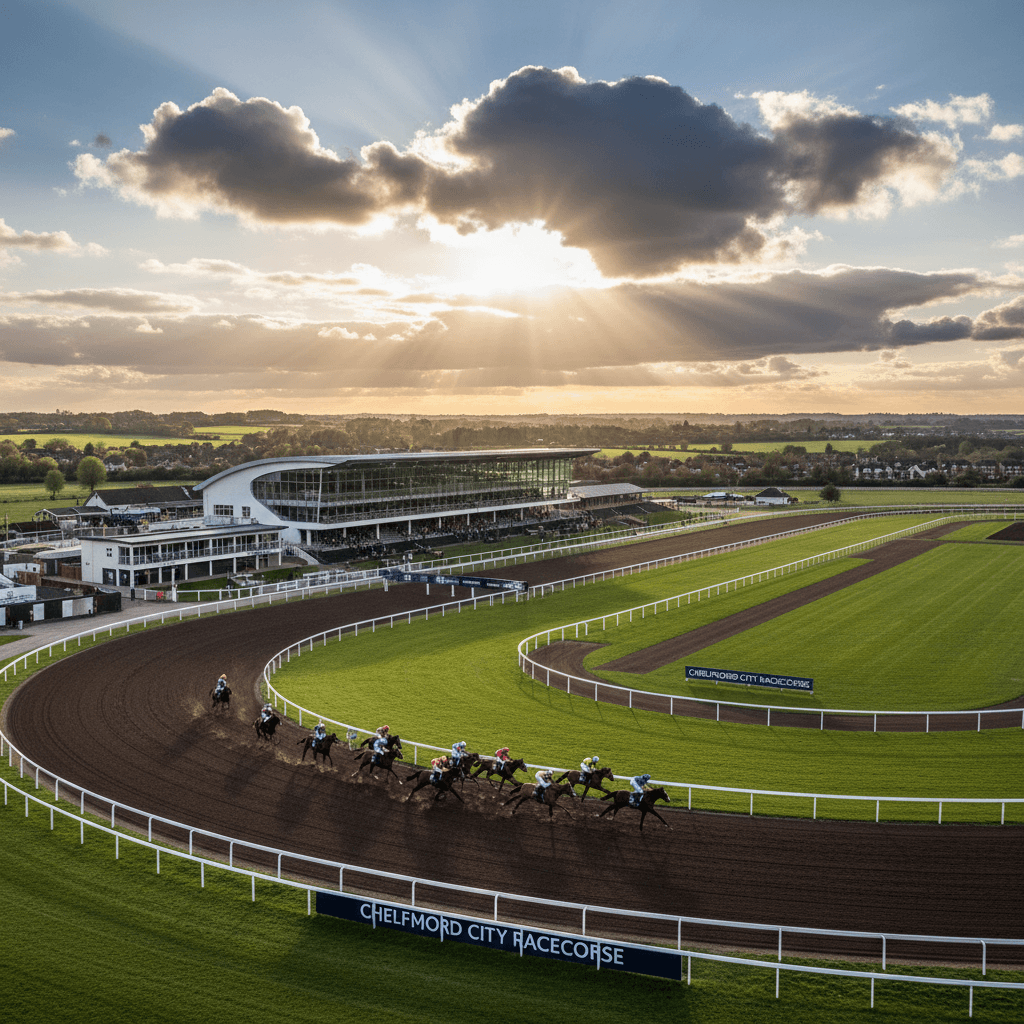
Evening Card Called Off at Chelmsford
There will be no racing at Chelmsford City this Thursday evening, with the entire six-race card abandoned following a BHA Inspector-supported inspection. The decision was confirmed well in advance — more than 72 hours before the first race was due to go to post — which, while deeply frustrating for connections, trainers, and the many punters who had been looking forward to a warm summer evening under the Essex floodlights, is precisely the kind of measured, responsible process that racing's governing body exists to carry out.
It is worth pausing to acknowledge that, as disappointing as abandonments are for the sport commercially, the welfare of horses and the safety of jockeys must always take precedence. When a BHA Inspector recommends abandonment and connections across the board support that recommendation, it sends a clear message: the sport is listening to its own conscience. That is never a bad thing.
What Was on the Chelmsford City Racecard?
Tonight's card had been shaping up as an appealing mix of amateur, juvenile, and open-aged flat racing — the kind of varied evening programme that Chelmsford City does so well on its Polytrack surface. Six races were scheduled across distances ranging from five furlongs to a mile and two furlongs, with prize money totalling just under £52,000 across the card.
The headline race was due to be the For The Love Of Horses Fillies' Novice Stakes — a Class 3 contest over a mile and two furlongs carrying £12,000 in prize money, and a qualifier under both the GBB and GBBPlus schemes. For connections of unraced or lightly raced fillies, those GBB qualifiers represent meaningful financial incentive, and losing a race of that calibre to abandonment will sting particularly sharply.
Equally notable was the Fegentri World Championship Handicap Stakes, a Class 5 mile-and-two-furlong contest restricted to Gentleman Amateur Jockeys — one of those wonderfully traditional races that connects modern flat racing to its more eccentric, amateur-spirited roots. The Fegentri series carries genuine international prestige within amateur riding circles, and Thursday's race would have been a fine showcase for that community.
Rounding out the card were a pair of Class 6 handicaps, a seven-furlong maiden for two-year-olds under EBF Restricted conditions, and a five-furlong nursery handicap for juveniles — the kind of programme that gives young horses their early education in competitive racing and gives their handlers a chance to plot a path forward into the autumn.
Why Abandonments Matter — and Why This One Was Handled Well
It can be tempting, in the immediate aftermath of an abandonment, to focus purely on the inconvenience — the wasted journeys, the horses that had been prepared and primed, the punters whose accumulators will need reworking. But the 72-hour-plus notice period here is genuinely significant. Early abandonments allow trainers to adjust training schedules without stress, allow horses to avoid unnecessary travel, and give stable staff the chance to plan their days accordingly. In an industry that too often gets criticised for prioritising the schedule over the horse, this is the system working as it should.
The BHA's inspection process, when engaged transparently and early, is one of flat racing's quiet welfare successes. It is not glamorous, and it rarely makes headlines for the right reasons — but the willingness to call off a card when conditions are deemed unsuitable, even a commercially important evening fixture, reflects the kind of institutional integrity that the sport needs to demonstrate consistently if it is to retain public trust.
What Happens Next for Connections?
For trainers and owners affected by tonight's abandonment, the immediate priority will be finding alternative engagements. Many of the races — particularly the EBF Restricted Maiden and the GBB-qualifying fillies' novice — carry conditions that limit where horses can be re-entered, so connections will need to move quickly to identify suitable alternatives. The BHA's supplementary entry processes and the racing calendar's density through August and into September should provide options, though the more specialist races — particularly the Fegentri amateur contest — may prove harder to replace on short notice.
Juvenile horses, in particular, benefit from racing at the right moment in their development, and a missed opportunity in August can have knock-on effects for a two-year-old's programme heading into the backend of the season. Trainers with horses entered in tonight's nursery and maiden races will be watching the entries lists closely over the coming days.
Looking Ahead at Chelmsford City
Chelmsford's Polytrack surface is one of the most reliable and well-maintained all-weather venues in Britain, and the course's track management team will no doubt be working to ensure that future fixtures are protected. The Essex track has built an enviable reputation for evening racing in particular — the atmosphere under the lights, the accessibility from London, and the quality of the racing product have made it a genuine favourite among both casual and serious racegoers.
We will bring you full previews, racecard analysis, and best bets as soon as future Chelmsford fixtures are confirmed. In the meantime, keep an eye on the Chelmsford City course page for updates on rescheduled races and upcoming cards.
Summary
Tonight's card is off, and while there is nothing to preview and no runners to analyse, the manner of this abandonment — early, transparent, and inspector-supported — is worth acknowledging. Racing at its best looks after its horses first and its fixtures second. There are no best bets to offer tonight, but there is, perhaps, a quiet reassurance that when the system is tested, it can respond with the right priorities in place. We will be back at Chelmsford City soon enough — and when we are, it will be worth the wait.


