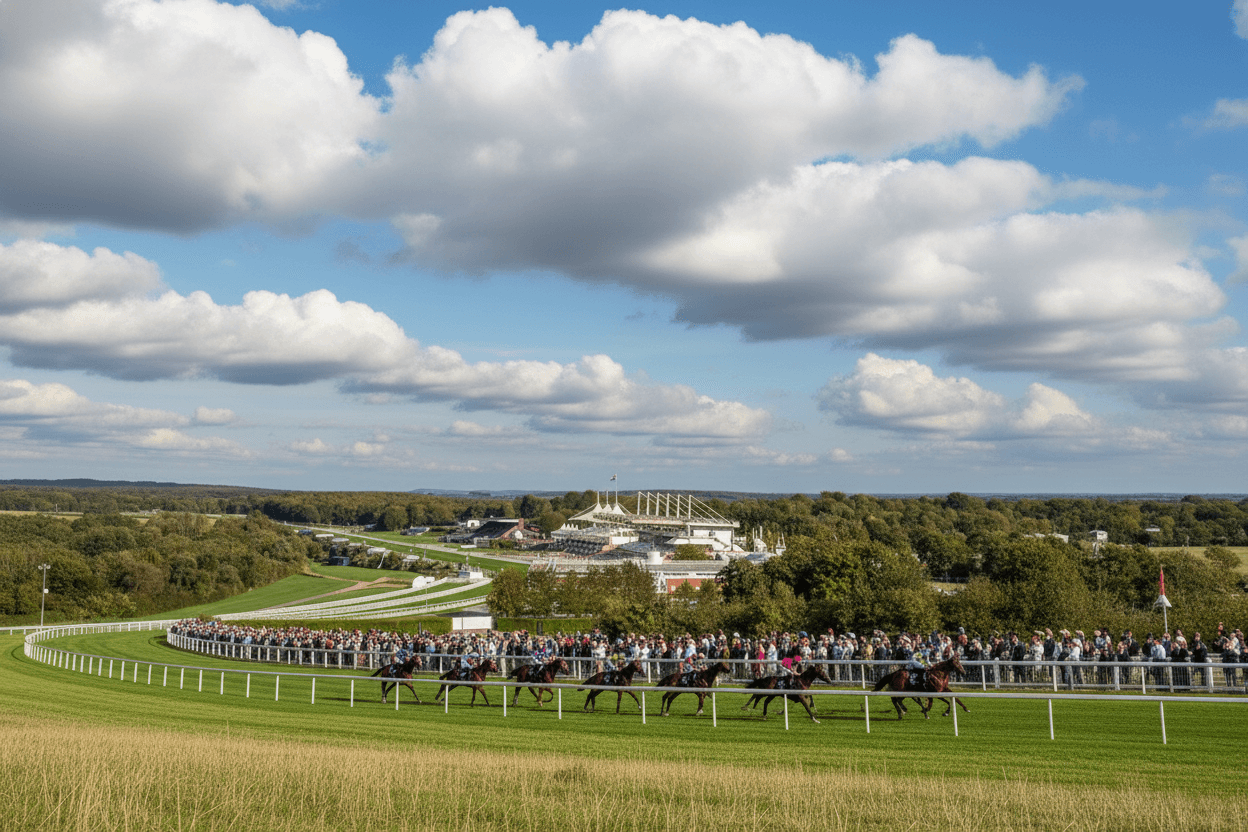
The Theatre on the Downs
There exists no racing venue quite like Goodwood. Perched 500 feet above sea level on the rolling Sussex Downs, this extraordinary amphitheatre has been captivating racegoers since the 3rd Duke of Richmond first staged races here in 1802. While we're still some weeks away from the festival's full summer glory, this weekend's fixtures offer an intimate glimpse into what makes racing on these ancient downlands so compelling.
The course's dramatic topography creates a unique tactical puzzle. Unlike the flat, predictable gallops of Newmarket or the sharp, enclosed circuits of Chester, Goodwood demands horses navigate significant elevation changes, sweeping turns, and a finish that can flatter the brave or expose the hesitant. It's a track where pedigree meets geography, and where understanding the nuances of pace and positioning often separates astute punters from the merely hopeful.
This Weekend's Racing
Friday evening's six-race card presents an intriguing study in how going conditions shape Goodwood's character. The current description of Good to Soft, Good in places suggests the sort of testing ground that can transform the track's characteristics entirely. There's also the possibility of a switch to the inner course, pending investigation works—a development worth monitoring closely as it would fundamentally alter draw advantages and pace scenarios.
Saturday's seven-race afternoon programme follows, with going conditions yet to be determined. The timing difference between Friday's evening atmosphere and Saturday's traditional afternoon racing creates distinct tactical considerations, particularly regarding wind patterns across the exposed downland.
These fixtures, while modest compared to the summer festival, offer valuable insights into early-season form and provide a crucial testing ground for horses being aimed at bigger targets later in the campaign.
Reading the Unique Terrain
Goodwood's five-furlong course remains one of racing's most dramatic sprint tests. The precipitous downhill start can catch inexperienced horses off guard, while the sharp right-hand turn into the home straight demands exceptional balance. Horses that handle this descent smoothly often find themselves with a crucial positional advantage as the field bunches approaching the turn.
The six-furlong start, positioned on the side of the hill, creates different tactical considerations entirely. Here, the initial climb tests stamina reserves early, before the descent towards the turn provides an opportunity for pace acceleration. Horses drawn high often find themselves with more racing room on the outside, though this advantage must be weighed against the extra ground covered.
For middle-distance races, the extended circuit reveals Goodwood's full character. The long, sweeping turn after passing the stands tests a horse's ability to maintain position while navigating the camber, before the climb towards the back straight sorts out the genuine stayers from the merely willing.
Draw Analysis and Tactical Considerations
Draw bias at Goodwood operates on multiple levels, influenced by distance, field size, and crucially, going conditions. On faster ground, low draws in sprints often hold the edge, allowing horses to secure the rail and benefit from the most direct route home. However, when conditions soften—as Friday's going description suggests—the advantage can shift towards higher draws, where horses find better ground away from the rail.
The potential switch to the inner course adds another layer of complexity. The inner track typically favours different tactical approaches, with pace often becoming more crucial as the turns tighten and the straight shortens.
The Goodwood Type
Successful Goodwood horses share certain characteristics that transcend mere class ratings. Balance stands paramount—the ability to handle the undulating terrain while maintaining momentum through the turns. Horses with proven downhill form often translate that experience effectively to Goodwood's unique demands.
Pedigree provides valuable clues. Sires known for producing horses with natural balance and tactical speed—think Dubawi, Kingman, or Night of Thunder—often see their progeny adapt well to Goodwood's challenges. Similarly, horses from yards with strong Goodwood records deserve extra consideration, as trainers who understand the track's demands can provide crucial tactical advantages.
Age and experience matter significantly here. While talented juveniles can certainly succeed, horses returning to Goodwood often show marked improvement in their understanding of the track's demands. The combination of course experience and tactical awareness frequently trumps raw ability alone.
Practical Considerations
For those attending this weekend's racing, the elevated position means weather conditions can change rapidly. The exposed nature of the downs makes wind direction and strength crucial factors in both horse performance and spectator comfort. Friday's evening fixture offers the added charm of racing in the golden hour, when the South Downs are at their most spectacular.
From a betting perspective, market movements often prove particularly instructive at Goodwood. Trainers and jockeys with strong course records command respect, and late market support frequently identifies horses whose connections understand the specific demands of racing on the downs.
The going description deserves careful attention throughout the week. Goodwood's drainage characteristics mean conditions can vary significantly across the track, and any updates to the official going should be factored into assessments of draw bias and pace scenarios.
Weekend Outlook
This weekend's Goodwood fixtures offer a perfect introduction to the track's unique challenges and rewards. While the fields may lack the star quality of summer festival racing, they provide an excellent opportunity to observe how different types of horses adapt to the downs' distinctive demands.
The combination of potentially testing ground conditions, the atmospheric Friday evening slot, and Saturday's traditional afternoon racing creates a compelling weekend for both casual observers and serious students of the game. As always at Goodwood, success will favour those who appreciate that class alone rarely suffices—here, tactical acumen and an understanding of the track's ancient rhythms often prove equally valuable.