
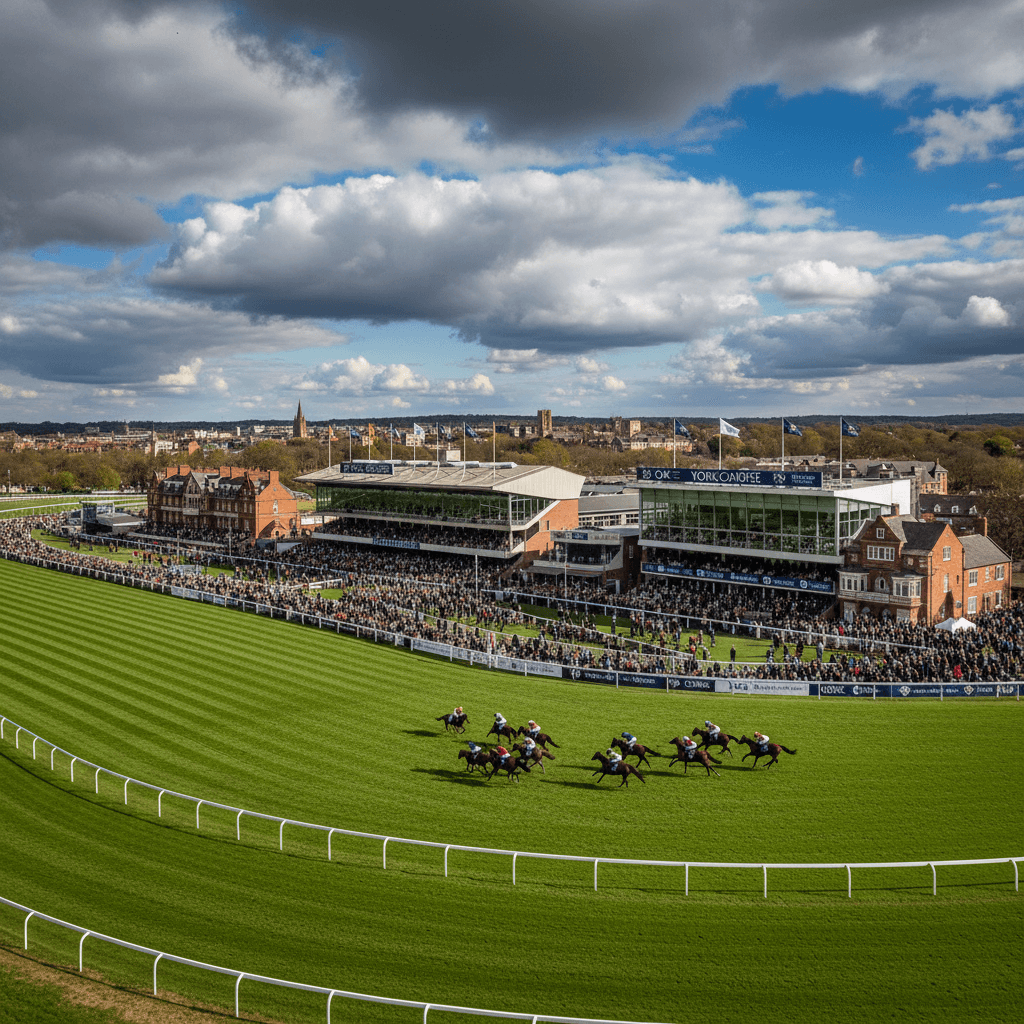
Why the Acomb Stakes Matters
There are juvenile races, and then there are juvenile races. The Tattersalls Acomb Stakes at York firmly belongs in the second category. Run over seven furlongs on the Knavesmire, this Group 3 has a habit of throwing up horses that go on to define their generation. It sits perfectly in the calendar — early enough that the best two-year-olds are still finding their feet, late enough that the serious players have had time to show their hand. With £175,000 in prize money and Classic entries invariably dotted through the field, winning connections don't just pocket the cheque. They buy themselves a winter of optimism.
The distance is key. Seven furlongs at York is a proper test — it asks questions that five and six-furlong specialists simply cannot answer. You need pace, you need stamina, and crucially, you need a horse that switches off and travels. On Good ground with the whole course terra-spiked since the last meeting, conditions look fair and honest. The far-side home straight reading of 5 is worth noting — we'll come back to that.
Key Contenders Assessed
Alfred Wallace (Draw: 8 | Kieran Shoemark | Ed Walker)
Alfred Wallace heads the market on a rating of 105, and it's hard to argue with that on paper. Ed Walker doesn't send horses to York in August without believing they belong, and a horse rated 105 in a field where several rivals are unrated is a significant edge — assuming the rating is genuine. The distance winner flag tells you he's already proven himself over this trip, which matters enormously at this stage of a juvenile's development. Kieran Shoemark is a shrewd booking, a jockey who rides with his head as much as his hands. Draw 8 puts him in a comfortable middle-high position. My only mild concern is whether the market has already priced in everything he has to offer. At short odds, you're not getting paid to be right.
Haffner (Draw: 11 | Ryan Moore | Aidan O'Brien)
Ryan Moore doesn't take rides at York in August for the fun of it. When Aidan O'Brien sends a horse to the Acomb with Moore in the saddle, you sit up and pay attention — full stop. Haffner is unrated, which means we're working somewhat in the dark, but the distance winner flag suggests O'Brien has already seen enough at home and on a racecourse to believe this trip is well within his compass. Draw 11 is the widest in the field, which on a straight seven at York can be a mild inconvenience rather than a disaster, particularly on ground that's been spiked. Moore will drift him across early and find his position. I've seen him make worse draws look irrelevant. This is my idea of the most dangerous horse in the race.
Gentle Hurricane (Draw: 6 | Oisin Murphy | Andrew Balding)
Andrew Balding has been in outstanding form with his juveniles, and Oisin Murphy is the kind of jockey who makes horses look better than they are — not worse. Gentle Hurricane carries no official rating, so we're relying on reputation and trainer intent here. Draw 6 is almost ideal for a seven-furlong straight at York, right in the heart of the track. Balding won't have targeted this race without confidence, and Murphy rarely takes Group-race rides on two-year-olds unless there's genuine substance behind them. Keep him onside.
Fuel The Jet (Draw: 1 | Neil Callan | Tom Clover)
Tom Clover is a trainer who punches above his weight in good company, and Fuel The Jet arrives as a distance winner — so the trip is ticked off. The concern here is draw 1. On a straight course, the lowest stall isn't automatically a disaster, but on Good ground with far-side readings suggesting the middle-to-far side may carry an advantage, stall 1 puts Neil Callan in a position where he either hugs the rail or crosses the field early. Neither is ideal in a competitive Group 3. The talent may well be there, but the draw makes this a harder sell at anything less than a generous price.
Big Cigar (Draw: 9 | Oisin Orr | Richard & Peter Fahey)
The Faheys know York like the back of their hand — it's practically a home track — and Big Cigar arrives as a course winner, which is always worth a mark in the notebook. A rating of 94 puts him 11lb below Alfred Wallace on official figures, which is a gap to bridge, but course form at York is currency you can spend. Oisin Orr is quietly becoming one of the most underrated jockeys in the north, and draw 9 gives him options. If the pace is strong up front, Big Cigar could be finishing best of all. He's the value each-way play in this field.
Confucius (Draw: 10 | W. M. Lordan | Aidan O'Brien)
O'Brien with two runners — always worth a raised eyebrow. Confucius is unrated and draws alongside Haffner in double figures, but W. M. Lordan is a capable handler of inexperienced horses and the Ballydoyle operation rarely sends two runners to a race like this without believing both have a genuine chance. The question is which one they fancy more. Moore on Haffner is the obvious pointer, but don't dismiss Confucius entirely — O'Brien's second string has a habit of making people look foolish.
Going and Draw: What the Numbers Tell Us
Good ground, terra-spiked throughout — that's a fair surface that rewards horses with a clean action and genuine ability. No excuses for anyone here. The far-side home straight reading of 5 is the more interesting detail. In a straight seven-furlong race at York, far-side bias can emerge as the ground dries, and with the middle-to-high draws (5 through 9) sitting in the prime real estate, those horses have a structural advantage. Stall 1 (Fuel The Jet) and stall 11 (Haffner) are the outliers — one too low, one too high. Moore's experience may mitigate the wide draw for Haffner; Callan will need everything to fall right from stall 1.
Value Picks and Dangers
The danger is obvious: Alfred Wallace is the highest-rated horse in the field and has already won over the trip. If he's at his best, he wins. Simple as that. But favourites in juvenile Group races have a way of getting found out, and 105 is a rating built on what he's done — not necessarily what he'll need to do against O'Brien's pair and Balding's unexposed colt.
- Value pick: Big Cigar each-way — course form, shrewd trainer, decent draw, and likely to be bigger in the market than his chances deserve.
- Danger: Haffner — Moore and O'Brien is a combination that demands respect regardless of the draw.
- Watch: Gentle Hurricane — Balding's unexposed runner could be anything.
My Selection: Haffner
I'm going with Haffner. I know the draw is against him, and I know we're working without the safety net of an official rating. But Ryan Moore riding for Aidan O'Brien in a seven-furlong Group 3 at York in August — that's a combination I've learned not to oppose without very good reason. The distance winner flag tells me O'Brien already knows this horse stays, and Moore will get him into the race from stall 11 regardless of how the early positions shake out. Alfred Wallace is the obvious selection, but at the prices likely to be on offer, Haffner represents a more compelling risk-reward equation. Check the full York racecard for the latest market moves before you commit.
My tip: Haffner. Each-way: Big Cigar.
Who is the favourite for the Tattersalls Acomb Stakes 2026?
Alfred Wallace, trained by Ed Walker and ridden by Kieran Shoemark, heads the field on official ratings with a mark of 105 — 11lb clear of the next highest-rated rival. He's already proven himself over seven furlongs, making him the logical market leader. That said, the presence of two Aidan O'Brien runners — including Haffner with Ryan Moore aboard — means the market is unlikely to let Alfred Wallace go off at a generous price.
Does the draw matter in the Acomb Stakes at York?
In a straight seven-furlong race at York, the draw can play a role — particularly when the ground has a bias. With far-side home straight readings pointing to a slight advantage for middle-to-high draws, stalls 5 through 9 look the most favourable on paper. Stall 1 (Fuel The Jet) is the most exposed to any far-side advantage, while stall 11 (Haffner) is wide but manageable for an experienced jockey like Ryan Moore.
Is the Acomb Stakes a good guide to the 2000 Guineas?
Historically, yes — with caveats. The Acomb has produced its share of horses who went on to Classic glory, and the seven-furlong trip is a natural stepping stone for a mile at Newmarket or the Curragh. However, not every Acomb winner trains on, and the race is just as useful for identifying horses who peak at two. The key is watching how the winner develops through the autumn — races like the Dewhurst and the Futurity Trophy will tell you whether Acomb form is truly Classic-grade.