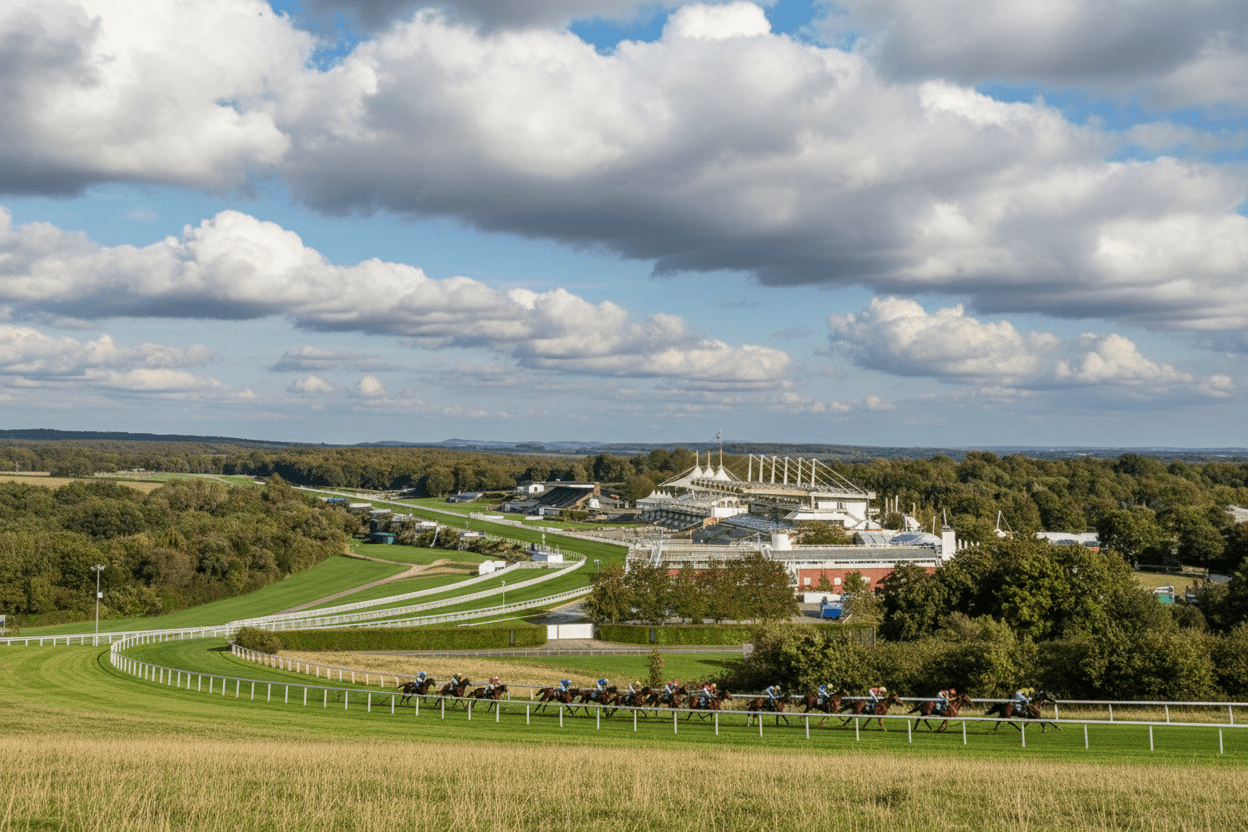
The Hill That Has No Equal
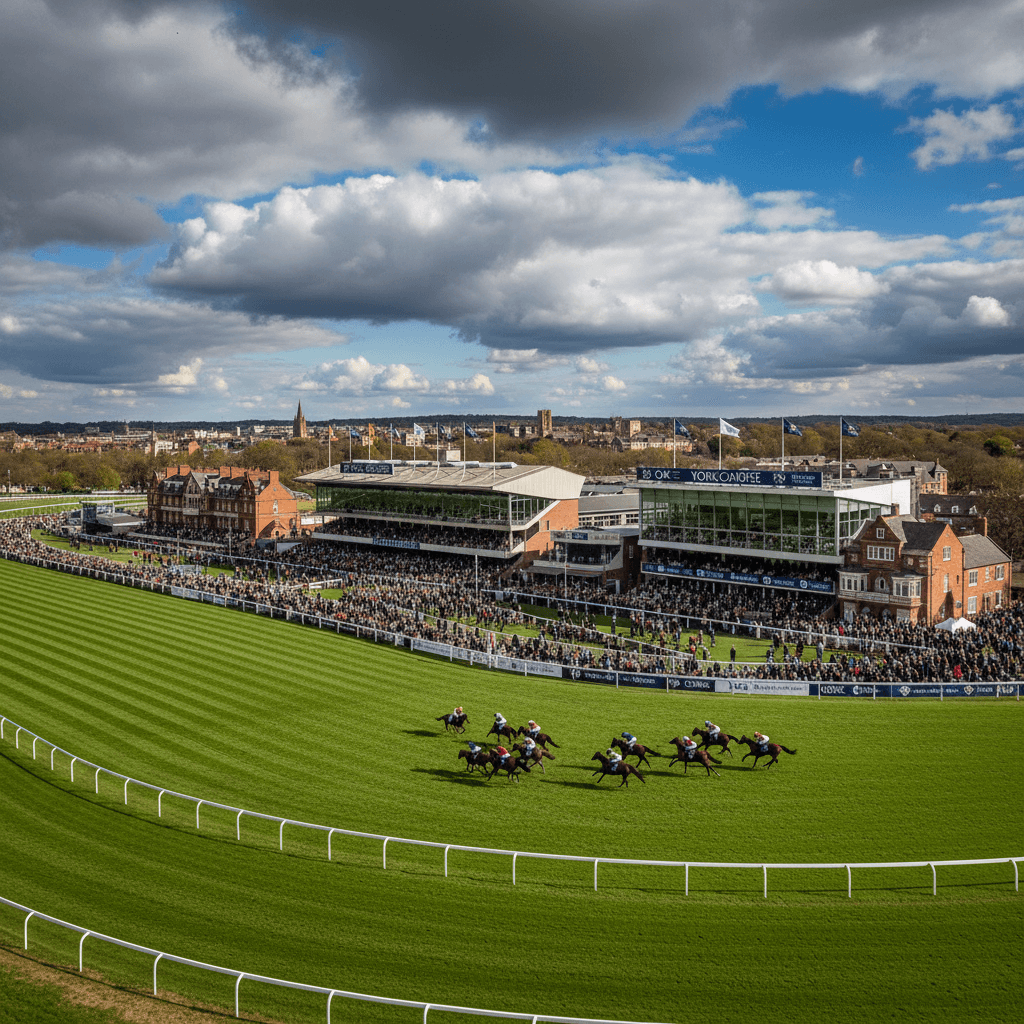
There are racecourses, and then there is Goodwood. Perched high on the South Downs above Chichester, its turf swept clean by the Channel breeze and framed on clear days by views stretching out to sea, it occupies a category of its own in British Flat racing. The 3rd Duke of Richmond first staged racing here in 1802, and more than two centuries on, the place retains an almost aristocratic self-possession — unhurried, beautiful, and quietly demanding of those who seek to understand it.
The Qatar Goodwood Festival, with its Sussex Stakes, Nassau Stakes, and Goodwood Cup, tends to attract most of the column inches. But the course rewards attention at every meeting, not just the marquee week. The same idiosyncrasies that catch trainers and punters off guard in July are present in August too. The hill is always there. The camber never changes. The draw still matters, the pace scenario still shapes the finish, and a horse that handles the undulations will always hold an edge over one that merely tolerates them.
This weekend brings two fixtures — a Friday evening card and a Saturday afternoon programme — and with Good to Good to Firm ground underfoot, conditions are close to ideal for the sharper, more athletic types that tend to thrive on this downland turf.
This Week's Fixtures at a Glance
The week opens on Friday, 7 August 2026 with an evening meeting — six races run on Good, Good to Firm in places ground. Evening fixtures at Goodwood carry a particular charm; the light softens over the Downs as the card progresses, and the crowd, though smaller than a Saturday afternoon, tends to be genuinely engaged. Six races offers a tight, focused card where every contest warrants attention. See the full Goodwood Friday, 7 August 2026 racecard for entries and market moves.
On Saturday, 8 August, the action steps up to a seven-race afternoon programme, again on Good, Good to Firm in places going. Saturday afternoons at Goodwood in August are among the more underrated fixtures on the Flat calendar — the track is in prime summer condition, the fields tend to be competitive, and the going description here is about as good as it gets for a high-quality surface. The Goodwood Saturday, 8 August 2026 racecard is well worth studying in advance.
Ground-wise, Good to Good to Firm in places is a reading that suits horses with a clean, efficient action. It is fast enough to flatter those who travel well through their races, but there is sufficient give to spare the joints of horses who need just a touch of cut. Firm-ground specialists and those who struggle on quick surfaces are worth monitoring through the week's declarations.
Reading the Track: What Goodwood Does to a Race
Goodwood is not a course you can approach on autopilot. Its right-handed configuration, pronounced undulations, and the sheer variety of distances — from five furlongs up to two miles and five — mean that understanding the track's geometry is as important as reading the form.
The Five-Furlong Sprint Course
The five-furlong track at Goodwood is one of the most distinctive in the country. Races begin on a chute that sits significantly higher than the finish, meaning horses effectively run downhill for much of the contest. Balance and a short, controlled action are essential. Big, scopey gallopers who need time to find their stride can be caught flat-footed by nimbler types who hit the ground quickly and maintain their equilibrium on the descent. The draw is significant over the minimum trip — low numbers tend to benefit when the stalls are positioned on the stand side, as they get a cleaner run to the rail and avoid the worst of the camber.
Middle Distances and the Sweeping Turns
At a mile and beyond, the emphasis shifts. The track's right-handed bends are long and sweeping rather than tight, but the changes in elevation remain a constant test of a horse's jumping ability — metaphorically speaking. Horses that travel well within their races and settle into a rhythm tend to hold their form better here than those who race with exuberance early. Pace scenario matters enormously: in a slowly-run race on Good to Firm ground, the hold-up horse can find themselves with too much to do on a track where the straight, though long, does not always deliver the late surge that a more conventional flat circuit might.
Draw Considerations
As a general principle at Goodwood, the draw advantage shifts with distance and with where the stalls are placed. Over shorter trips, low draws on the stands rail are favoured. Over a mile and beyond, the track opens up sufficiently that draw becomes less deterministic, though horses drawn wide on sharper bends can lose ground if their jockey is not proactive. Always check the stalls position on the day — it is one of the more important variables at this course.
The Type of Horse That Wins at Goodwood
Certain profiles recur in Goodwood's winners' enclosure with enough regularity to be worth keeping in mind when assessing a field.
- Balanced, athletic movers — the undulations punish horses with a long, flat stride. Compact types who pick their feet up tend to handle the cambers more naturally.
- Course-and-distance winners — previous form at Goodwood carries more weight here than at most tracks. The layout is unusual enough that prior experience represents a genuine edge.
- Horses proven on quick ground — Good to Firm suits a particular kind of horse, and those with a record on fast surfaces should be prioritised over those whose best efforts have come on softer going.
- Prominent racers over sprint trips — given the downhill nature of the five-furlong course, horses who like to bowl along from the front or close to it have a structural advantage. Closers can find the finish coming too quickly.
- Well-bred middle-distance types — Goodwood's longer races over a mile and a quarter or more reward horses with class and stamina. The course has always had an affinity with quality bloodlines.
Practical Tips for Racegoers and Punters
If you are attending either fixture this weekend, a few practical notes. The course sits high on the Downs, which means weather can change quickly — even in August, it is worth bringing a layer for the Friday evening meeting, when temperatures drop once the sun dips behind the hill. Parking and access via the A286 can be congested on Saturday afternoons, so arriving early rewards you with both a better parking spot and time to walk the course perimeter and get a feel for the ground.
For those betting from home, the key homework tasks are these: check the stalls draw once it is published on the morning of each fixture; look for horses with previous Goodwood form, particularly over the same course and distance; and pay close attention to pace maps over the sprint trips, where the downhill configuration can make a front-runner almost impossible to peg back if the pace is modest. On Good to Firm ground, the early pace tends to be honest, but it is always worth verifying before committing.
The Goodwood course page on Paddock Punter carries full historical form, draw statistics, and going records that will sharpen your approach to both cards.
A Course Worth Knowing Deeply
Goodwood does not give up its secrets easily, and that is part of its enduring appeal. It has been testing the judgment of trainers, jockeys, and punters for well over two centuries, and it will continue to do so this Friday and Saturday. The going is good, the setting is extraordinary, and there are thirteen races across two sessions in which the details — the draw, the pace, the pedigree, the previous course form — will separate the thoughtful approach from the hopeful one.
Study the Friday evening racecard and the Saturday afternoon card with care. Goodwood rewards those who do.