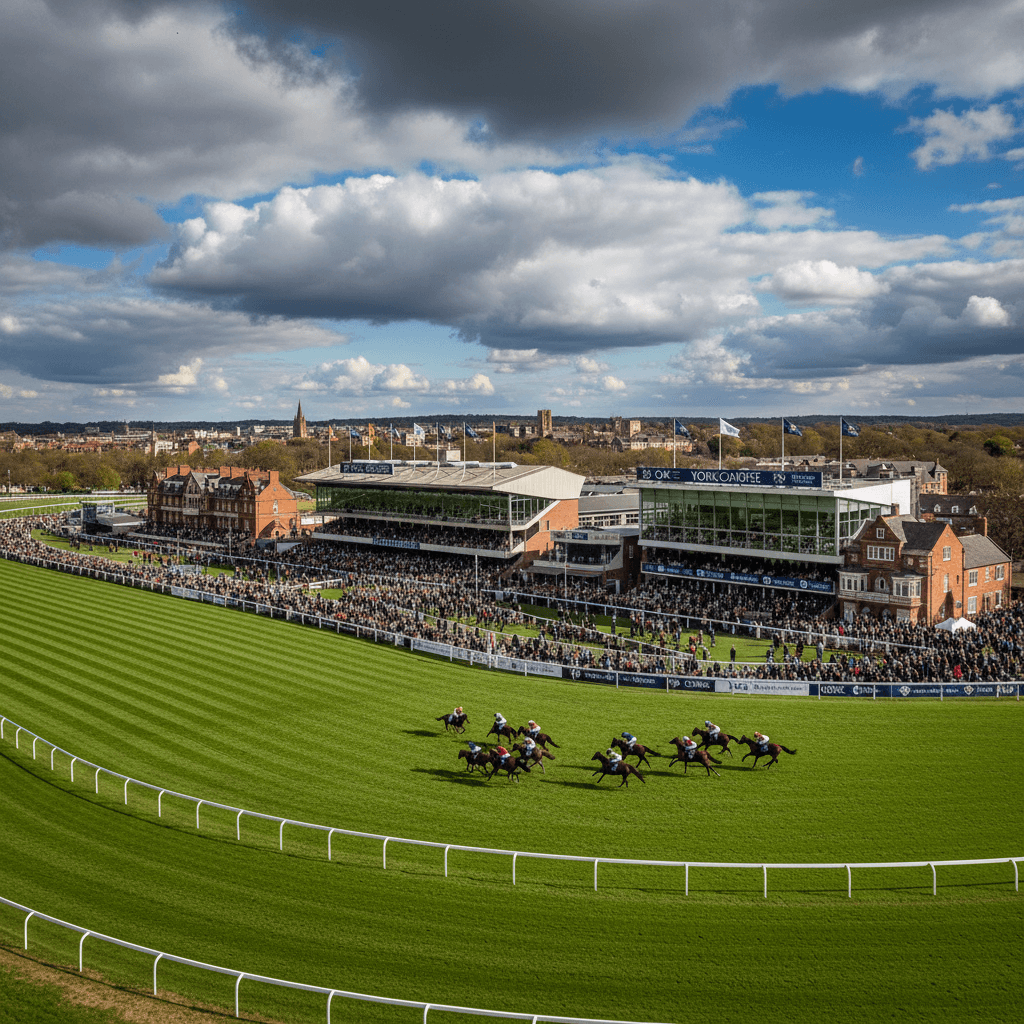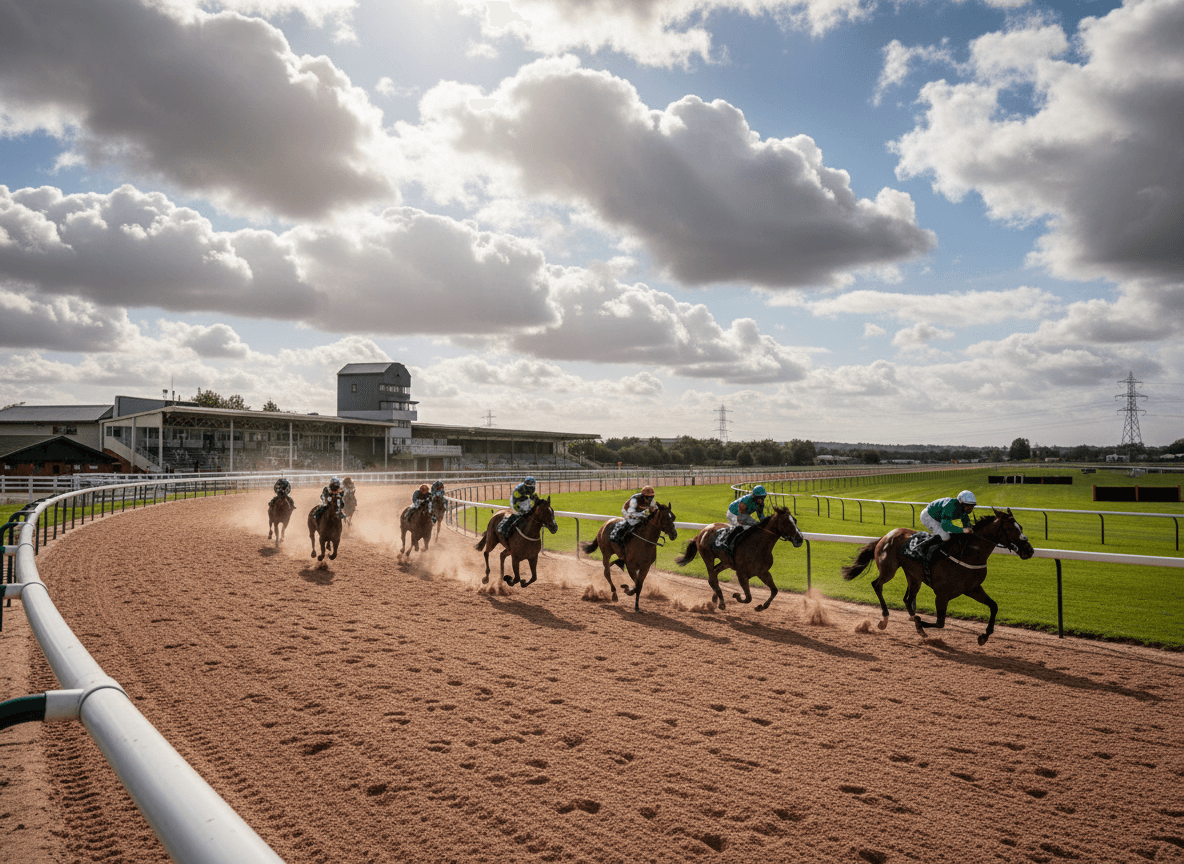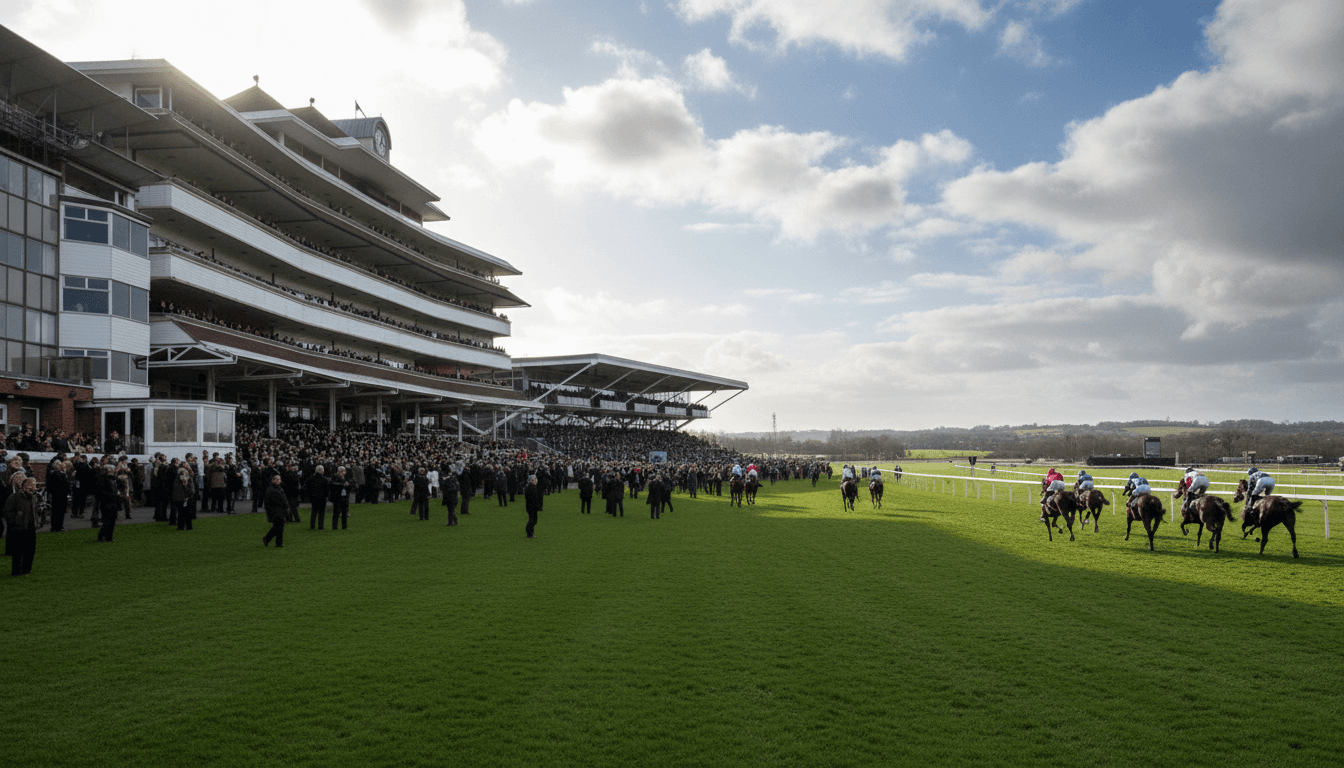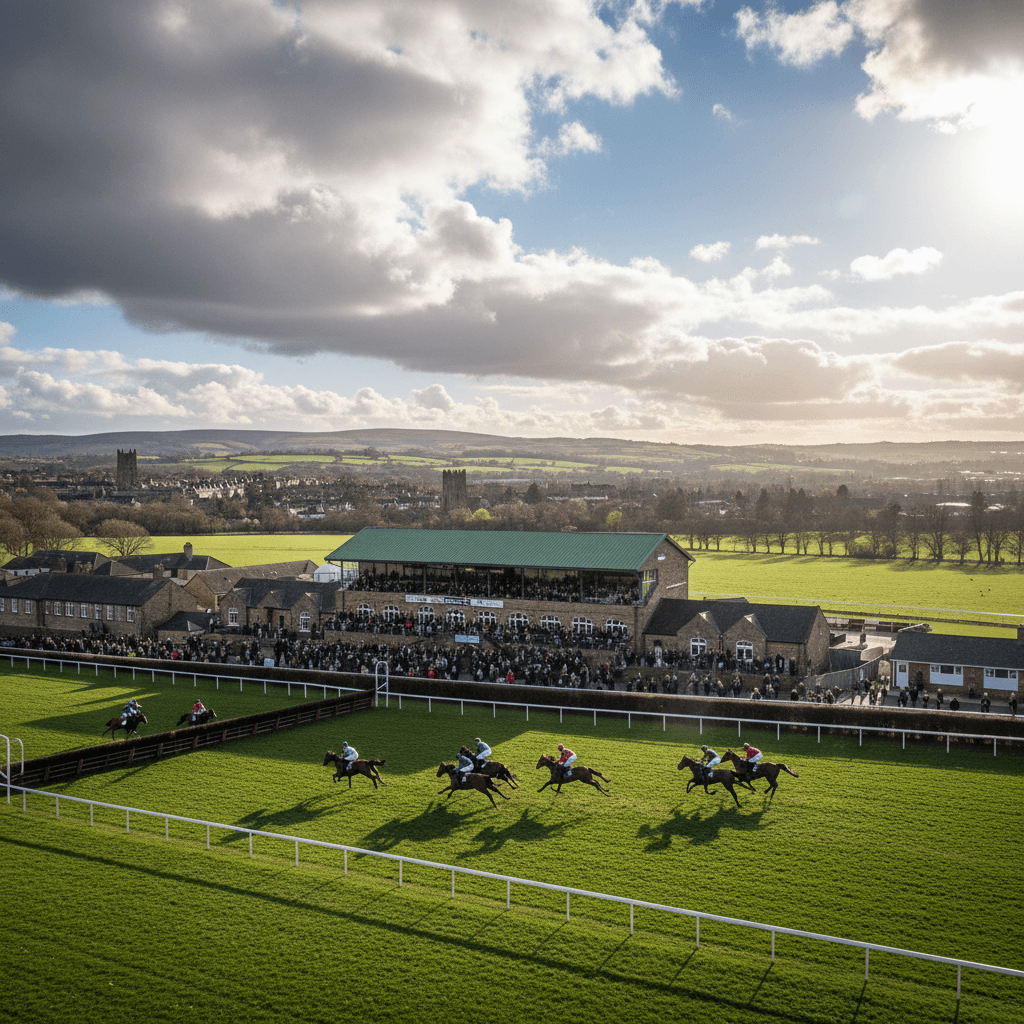
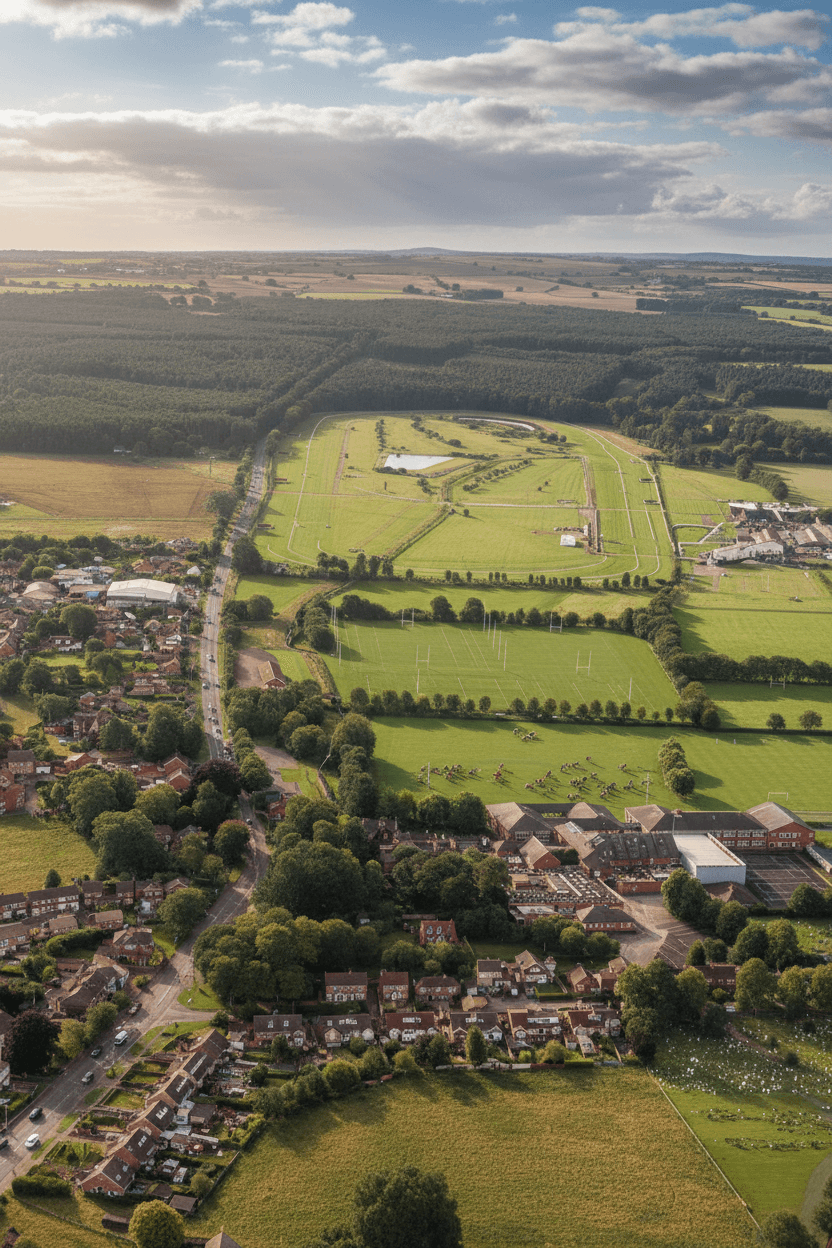
A Course That Earns Its Affection
There are racecourses you visit out of obligation, and there are racecourses you return to out of love. Market Rasen belongs firmly in the second category. Tucked into the gentle folds of the Lincolnshire Wolds, this compact little circuit has been quietly going about its business since 1924 — longer than most of us care to count — and in that time it has accumulated the kind of institutional warmth that newer, shinier venues simply cannot manufacture.
It is a place where the rails feel close, the crowd feels real, and the racing feels immediate. Excellent sightlines mean there is scarcely a bad vantage point on the whole ground, and the atmosphere on a busy afternoon has a particular quality to it: unhurried, knowledgeable, genuinely enthusiastic. Families mix with seasoned punters. Newcomers to the sport find their feet without intimidation. It is, in the truest sense, a proper racecourse.
Market Rasen is best known, of course, as a National Hunt venue — home to the Grade 3 Summer Plate and the Summer Hurdle, its two flagship contests that draw quality horses and passionate crowds each July. But this week brings something a little different to the Lincolnshire faithful: two consecutive afternoons of flat racing, a reminder that this right-handed, undulating oval has more than one gear.
This Week's Fixtures: What's on the Card
The week's action unfolds across a pleasingly symmetrical double-header. Friday, 18 September gets proceedings underway with a seven-race afternoon card, followed immediately by Saturday, 19 September, which mirrors it — another seven races, another afternoon session, another opportunity to get things right or learn from getting them wrong.
The going on both days is declared as Good to Soft, Good in places, with a soil moisture average sitting at 39% — a reading taken on 11 September and likely to have shifted only marginally since, given the time of year. That figure places the ground in a genuinely interesting middle territory: not soft enough to favour the most resolute stayers, not quick enough to reward pure speed alone. It is, in short, the kind of going that rewards a horse with both class and adaptability.
Late September flat racing in Lincolnshire carries its own particular atmosphere. The summer crowd has thinned, the light has a lower, more amber quality, and the racing itself often carries greater consequence — horses either rounding off their campaigns in form or making late-season bids for a win that could shape their winter plans. Pay attention to the trainers who travel here at this time of year. They tend to mean business.
Reading the Track: Shape, Bias, and Pace
Market Rasen's flat configuration shares the bones of its jumps layout — a right-handed oval, just over a mile and two furlongs in circumference, with fairly tight bends and an undulating profile that rewards balance and agility over raw power. It is not a track that flatters the idle or the one-paced.
The draw is a factor worth examining carefully, particularly in sprint distances and races over a mile or less. On ground sitting at the softer end of Good to Soft, a low draw can become a meaningful advantage in larger fields, as horses closer to the rail avoid being pulled wide on the bends. In smaller fields, the bias is less pronounced, but it rarely disappears entirely. Check the field sizes on each racecard and weight your draw analysis accordingly.
Pace scenarios here tend to favour the horse that can travel comfortably in mid-division and pick up through the final two furlongs. The undulations mean that front-runners who go off too hard often find the closing stages unforgiving — the ground takes its toll, and a horse that has burned its reserves early will be swallowed up. Conversely, a horse that settles well and has a genuine turn of foot in the straight is well-suited to what Market Rasen asks.
On Good to Soft going specifically, watch for horses that have previously won or run well on cut in the ground. A horse with a pedigree that suggests stamina — particularly those by sires known for producing progeny that appreciate ease underfoot — will be worth a second look in any race where the distance stretches beyond a mile.
The Type of Horse That Thrives Here
Market Rasen on the flat is not a course for the fragile or the temperamental. The undulating track demands a horse that is well within itself mentally, capable of handling the rhythm changes that come with the rises and dips. Horses that race freely or pull hard against their jockeys tend to find the final furlong arrives too soon.
- Consistent travellers: Horses that settle and travel smoothly through a race, rather than those that need to be covered up or produced with a dramatic late challenge.
- Ground-versatile types: With the going sitting between two extremes, horses with form on both Good and Good to Soft ground have a clear edge over those with a narrow going preference.
- Proven course winners: Market Rasen rewards familiarity. A horse that has won here before — particularly on similar going — deserves respect above its current market position.
- Fit, in-form horses from smaller stables: The trainer who makes the journey to Lincolnshire in late September with a horse in form is rarely here to make up the numbers. Treat those runners with respect.
- Mid-distance performers: The track suits horses racing between seven furlongs and a mile and a quarter particularly well. Neither pure sprinters nor extreme stayers are at their most comfortable here.
Practical Tips: Attending and Betting
If you are making the trip to Lincolnshire this weekend, a few practical notes are worth keeping in mind. Market Rasen's compact layout means the paddock is genuinely worth your time — you can get close enough to assess a horse's condition properly, and the pre-race atmosphere there is one of the course's quiet pleasures. Watch for horses that are bright and forward-going in the parade ring. On ground with a degree of cut, a horse that looks dull or heavy in its coat may not be at its sharpest.
From a betting perspective, the seven-race cards on both days offer plenty of material, but selectivity is rewarded here. Resist the temptation to have a view on every race. Instead, identify two or three contests where the going, the draw, and the form lines converge clearly, and back your judgement there with appropriate confidence.
Watch the market moves in the hour before post time. Market Rasen is a track where stable support tends to be reflected in the betting with reasonable reliability — a horse drifting significantly in a small field on this going is worth treating with caution, regardless of its form on paper.
Finally, if you have not visited before: go. The drive through the Wolds is worth it in itself, and the racing will do the rest.
In Summary
Two afternoons of flat racing at Market Rasen this week offer a gentle but rewarding puzzle for the attentive observer. Good to Soft ground, tight bends, and an undulating track combine to produce a test that separates the well-balanced and the well-prepared from those simply making up the field. Check the draw in larger sprints, favour the horse that settles and travels, and give proper weight to course form and ground versatility.
The full racecards for Friday, 18 September and Saturday, 19 September are available now. Study them carefully — Market Rasen tends to reward those who do.