A Track Like No Other
There is a particular quality to Southwell that is difficult to articulate and almost impossible to replicate. Tucked into the Nottinghamshire countryside, just south of the market town that shares its name, the racecourse carries a lived-in warmth — the kind that comes from over a century of continuous use, from turf days stretching back to 1897 through to the modern all-weather era that has made it one of the most distinctive venues in British racing.
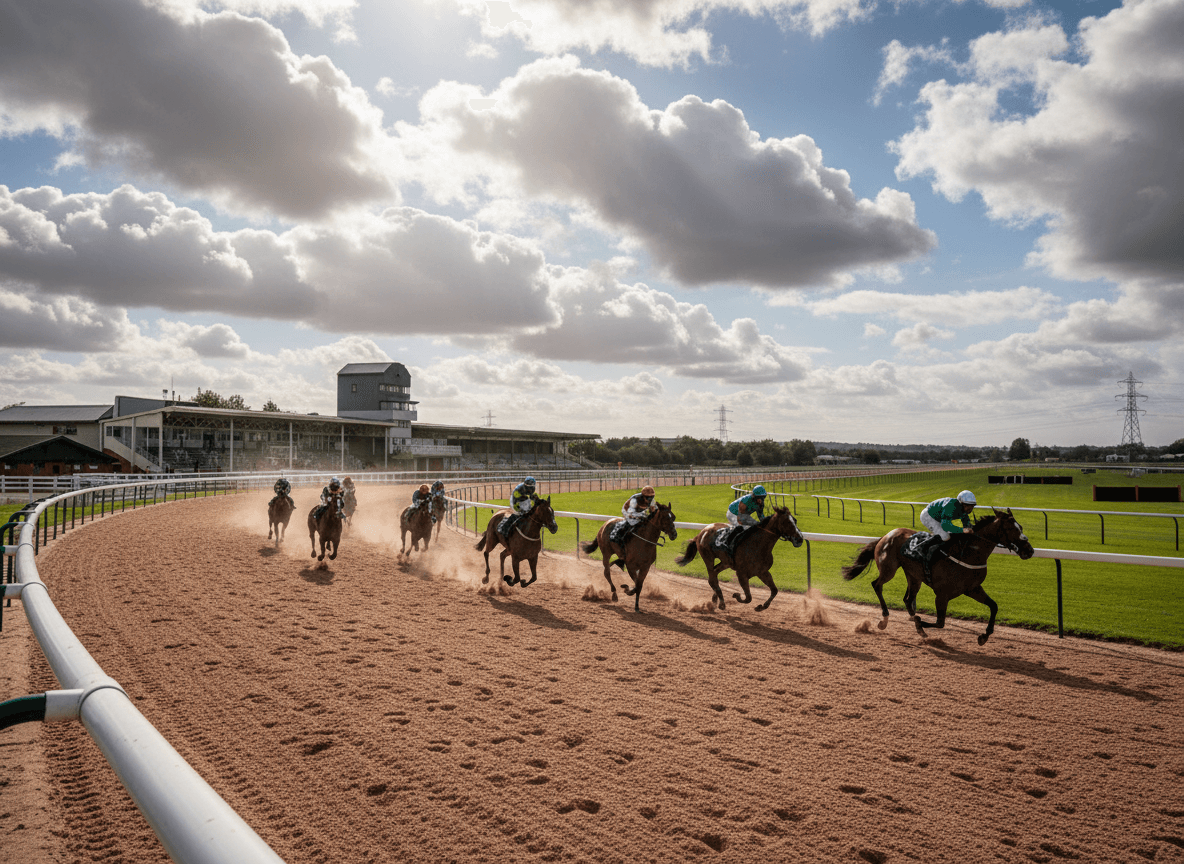
What sets Southwell apart is its Fibresand surface. While Chelmsford gleams and Wolverhampton hums with metropolitan energy, Southwell feels closer to the earth — literally. The deep, forgiving Fibresand circuit is unlike anything else on the all-weather calendar. It rewards a different kind of horse, demands a different kind of thinking, and produces a different kind of form. For the uninitiated, it can seem opaque. For those who have taken the time to understand it, it becomes something close to a specialism.
The track itself is a left-handed oval of one mile and two furlongs, compact and tight, with turns that arrive quickly and a run-in that leaves little room for error. There is no hiding place here for a horse that cannot travel into its races or a jockey who misreads the pace. It is, in the best possible sense, an honest test.
This Week's Fixtures
Southwell offers two Flat fixtures this week, both on the Fibresand, and both preceded by significant surface preparation that is worth factoring into your thinking.
Monday, 31 August 2026 — Afternoon
The Bank Holiday Monday card is an eight-race afternoon fixture, with going declared as Standard. Crucially, before racing takes place, the track will be cultivated to four inches and reinstated with a Gallop-master finish. This is meaningful. Deep cultivation followed by a Gallop-master finish tends to produce a surface that rides slightly looser and more energy-sapping in the early stages of a race before compacting underfoot as the card progresses. The first two or three races on Monday may ride differently to those later in the afternoon — a nuance worth bearing in mind when assessing pace scenarios. View the full Southwell Monday, 31 August 2026 racecard.
Thursday, 3 September 2026 — Evening
Thursday brings an eight-race evening fixture, again on Standard going and again preceded by cultivation to four inches with a Gallop-master reinstatement. Evening racing at Southwell has its own rhythm — the light softens, the crowd is typically smaller and more knowledgeable, and the atmosphere takes on something almost intimate. The same surface considerations apply: expect the track to ride at its most demanding early in the card and to settle as the evening progresses. Check out the Southwell Thursday, 3 September 2026 racecard when it is published.
Track Characteristics and the Draw
Understanding Southwell's geometry is half the battle. The circuit is tight and left-handed, which immediately favours horses that are comfortable racing on the turn and can maintain their action through a bend without losing momentum. Horses that need a long, sweeping track to find their stride — the big, scopey types bred for Newmarket or Ascot — often find Southwell's configuration unsympathetic.
The draw is one of the most discussed variables at this course, and rightly so. Over the shorter distances — five and six furlongs — low draws tend to hold an advantage, particularly in fields of seven or more runners. The rail provides a direct route and helps horses avoid the worst of the kickback that can unsettle those drawn wide. Over the longer distances, the draw becomes less decisive, as the field has time to settle into position before the turns become critical. That said, in strongly run races over a mile or further, horses drawn in the middle to low stalls often find it easier to track the pace without covering excess ground.
Pace is the other great variable. Southwell rewards prominent racers more consistently than almost any other all-weather track. The Fibresand surface is energy-sapping enough that horses forced to make up ground from the rear — particularly in smaller fields where a true pace is not guaranteed — frequently find the task beyond them. Front-runners and hold-up horses who can sit just off the leader in second or third tend to fare best. Closers who need a truly strong gallop to produce their finishing kick are often left wanting.
The Type of Horse That Thrives at Southwell
Southwell has its specialists, and experienced punters know to look for them. The course rewards a very particular profile:
- Course and distance winners — perhaps more so than at any other track in Britain, proven course form at Southwell carries genuine predictive weight. The surface is idiosyncratic enough that a horse which has already shown it handles the Fibresand is a significant advantage over one trying it for the first time.
- Compact, robust types — horses with a low, efficient action tend to handle the deep surface better than those with a high knee action. Look for horses bred on the tougher, more workmanlike side of the pedigree page.
- Consistent all-weather performers — Southwell tends to be kinder to horses with a consistent profile than to those with high ceilings and occasional brilliance. Reliability matters here.
- Front-runners and prominent racers — as noted, the pace dynamic at Southwell consistently favours those who can be placed near the head of affairs without burning too much energy in the early stages.
- Horses returning to a proven surface — a horse dropping back from turf to Fibresand after a run or two away from here is often sharper for the experience and quicker to acclimatise.
Practical Tips for Punters and Racegoers
Whether you are attending in person or watching from home, a few principles will serve you well across both fixtures this week.
First, pay close attention to the going reports as the cards progress. The post-cultivation surface will evolve through the day and evening respectively. If you can, note how the first couple of races are run — whether the pace collapses late or whether front-runners are holding on — and use that as a calibration for the rest of the card.
Second, treat Southwell form as its own currency. A horse that has run well here before is not necessarily a strong traveller to other tracks, and vice versa. The Fibresand is specialist enough that you should weight recent course form heavily and discount runs on Polytrack or turf accordingly unless the horse has a particularly strong all-surface profile.
Third, for those attending Monday's card, the Bank Holiday atmosphere brings a slightly larger and more casual crowd. Prices in the ring can drift more than usual as recreational money spreads across the card — a useful environment for the disciplined punter who has done their homework.
Finally, watch the market moves in the final twenty minutes before each race. Southwell is a track where stable confidence matters. Trainers who know their horses handle the Fibresand will back them accordingly, and those moves are often worth following.
A Closing Word
Southwell is not a course that announces itself loudly. It does not host the Classics or the big-field handicaps that dominate the summer conversation. But for those who have spent time with it — who have learned its surface, its pace dynamics, its quirks — it offers something quietly rewarding. Two fixtures this week, both freshly prepared and both carrying that distinctive Fibresand character, give us another chance to engage with one of British racing's most singular venues.
Take the time to study the Monday racecard and the Thursday evening card carefully. The answers are in there — they usually are at Southwell, for those patient enough to look.