
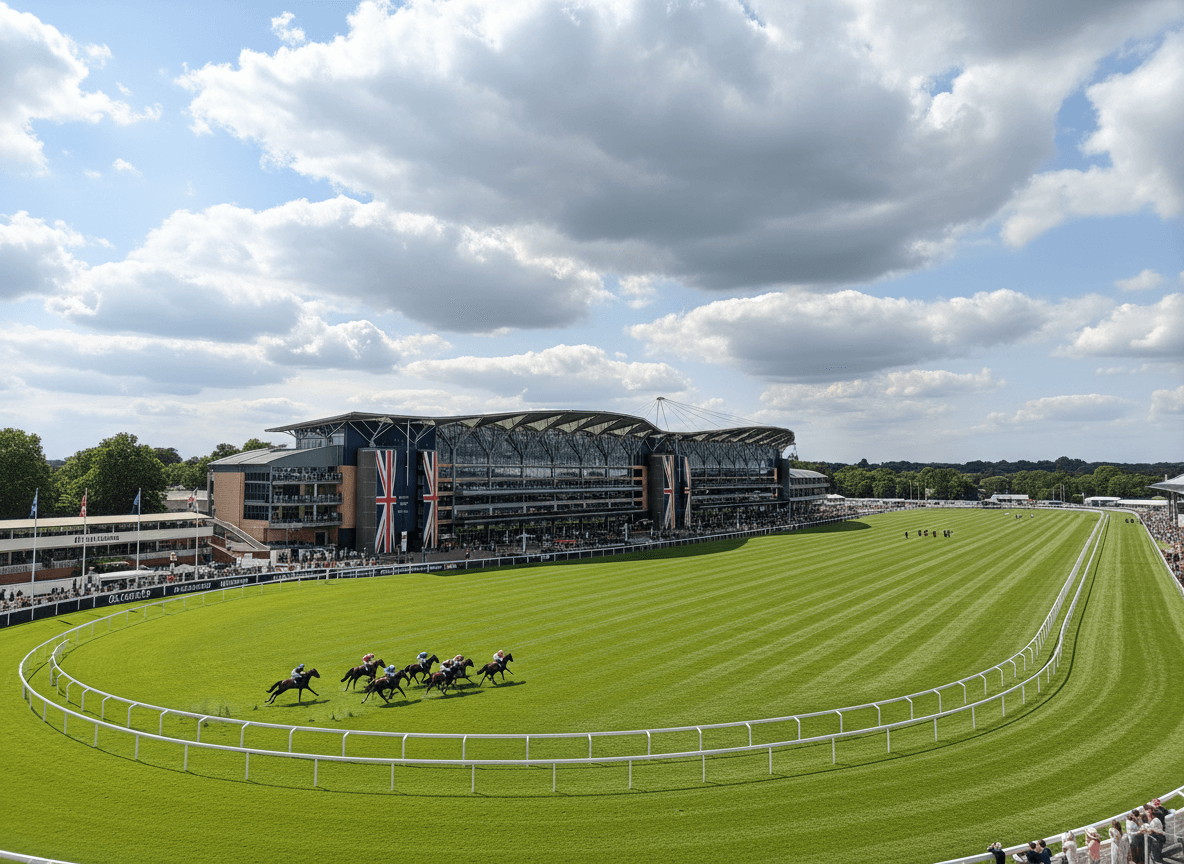
The Stage is Set at Ascot

There is a particular quality to the first morning of Royal Ascot week — a stillness before the noise, a sense of possibility that no other fixture in the British Flat calendar quite replicates. By the time the bugles sound for the 14:30, the straight mile at Ascot will have been walked, measured, and argued over by connections from across the globe. Seven races await on Tuesday's card, ranging from the precocious brilliance of two-year-old sprinters in the Coventry to the grinding stamina test of the Ascot Stakes over two miles and three furlongs. It is, in every sense, a full day's work.

Going conditions have not yet been officially confirmed as we go to press, though the forecast for Berkshire this week has been characteristically mixed — a pattern of dry days punctuated by overnight showers that tends to produce the kind of good to firm, good in places ground that suits a wide range of types. Ascot's drainage is excellent, and the groundstaff here are among the most diligent in the country. Whatever the strip reads on the day, it is unlikely to stray far from the quick end of the spectrum unless the weather takes a sharp turn. That matters enormously when you begin to weigh up which horses are likely to be seen to best advantage.

The full Ascot racecard for Tuesday covers seven races from 14:30 through to 18:10, with prize money totalling well in excess of £2.7 million across the card.

The Feature: Queen Anne Stakes (14:30, Group 1, 1m)

The Queen Anne Stakes has long served as the opening statement of Royal Ascot week, and with £800,000 in prize money it remains the richest race on Tuesday's card. Run over the straight mile — a track that demands both tactical awareness and genuine quality — it is a race that tends to sort itself out on merit. There is nowhere to hide on the Ascot straight, particularly when the ground is quick. Horses who lack a true mile action are found out swiftly; those who travel fluently through the race and pick up in the final two furlongs tend to win it.

The straight mile at Ascot is one of the most dissected strips of turf in British racing. The draw has historically shown a slight bias toward higher stalls in large fields when the ground is on the fast side, though this is less pronounced than it once was following rail adjustments in recent seasons. Pace is everything here: a strongly-run race will suit those with a turn of foot, while a falsely-run contest can produce a more grinding finish that rewards the horse with the highest cruising speed. Connections who have won this race before will know to ensure their horses are positioned close enough to the pace to react when the tempo quickens in the final quarter-mile.

Two-Year-Old Brilliance: The Coventry Stakes (15:05, Group 2, 6f)

The Coventry Stakes is one of the most eagerly anticipated races of the week for those who follow the bloodlines and the breeding trends. Run over six furlongs on the straight course, it is the first serious examination of the juvenile crop — horses who, in many cases, will have had only one or two starts before arriving here. The margin for error in assessing them is slim, and the race rewards those who do their homework on both the form and the physical.

On quick ground, early pace becomes a significant factor. Juveniles who break smartly and travel kindly tend to dominate, and there is a noted advantage to horses drawn toward the centre of the track when conditions are fast. Horses trained by handlers with a strong record in early-season juvenile sprints — those who have learned to have their two-year-olds forward and ready in June — deserve particular respect. The Coventry has a habit of producing future Classic horses, and a winner here who stretches out over seven furlongs or a mile in the autumn can quickly become one of the most talked-about horses in training.

Speed and Spectacle: The King Charles III Stakes (15:40, Group 1, 5f)

Five furlongs. Twenty-two seconds of concentrated, barely-contained power. The King Charles III Stakes — run over the straight five at Ascot — is the race that stops the crowd in its tracks every year, and it has a way of producing moments that linger in the memory long after the meeting has ended. At £700,000 in prize money, it sits alongside the St James's Palace as the joint-second most valuable race of the day.

The five-furlong straight at Ascot is unique in British racing. It rises steadily for the first half before levelling and then dipping slightly toward the finish, and it demands a horse that can both accelerate quickly from the gates and sustain that effort through a genuinely testing final furlong. On good to firm ground, the times here can be electric. Horses with a high draw have historically fared well in large fields when conditions are quick and the pace is strong — the ground tends to ride truest toward the stands rail in these circumstances. Any horse arriving here with a course-and-distance win to their name deserves to be taken seriously.

The Mile Specialists: St James's Palace Stakes (16:20, Group 1, 7f 213y)

The St James's Palace Stakes, confined to three-year-olds over the round course distance of seven furlongs and 213 yards, is the race that tends to define the mile division for the season ahead. The round mile at Ascot is a very different proposition to the straight — it requires horses to settle into a rhythm around the bend before producing their effort in the home straight, and it places a premium on those who can travel smoothly without fighting their jockey in the early stages.

For three-year-olds, particularly those coming off a Classic campaign, this can be the race that either confirms their status or reveals a limitation. The best milers in this generation will be found here, and the form that emerges from the St James's Palace tends to set the agenda for the rest of the summer.

Staying Tests and Handicap Intrigue

The final three races on the card — the Ascot Stakes (17:00), the Wolferton Stakes (17:35), and the Copper Horse Handicap (18:10) — offer a different kind of puzzle. The Ascot Stakes over two miles and three furlongs is one of the great endurance tests of the Royal meeting, and it rewards horses with an engine that simply does not switch off. The Wolferton, a Listed race over one mile one furlong and 212 yards on the round course, often attracts older horses of considerable quality who fall just short of Group 1 level but are capable of producing something memorable on their day. The Copper Horse, over one mile six furlongs, rounds off the card with a competitive handicap that has a way of throwing up a well-handicapped improver.

On quick ground, stamina races like the Ascot Stakes can take on a different complexion — the pace tends to be stronger, the times faster, and the emphasis shifts slightly toward horses who can sustain a gallop rather than those who simply outstay their rivals in a crawl. It is worth noting that horses who have shown they act well on a sound surface and have the constitution to run freely over extreme distances are the ones to focus on in the staying contests.

Ones to Watch: Tuesday's Key Themes

  • Course and distance form — At a track as specific as Ascot, horses who have won here before carry a meaningful advantage. The straight course in particular rewards those who have learned its rhythm.
  • Draw in the sprints — Keep a close eye on stall positions in the King Charles III and the Coventry. On quick ground, the centre-to-high draw has historically been favoured on the straight course.
  • Pace scenarios — The Queen Anne and St James's Palace will both hinge on how the race is run. A truly-run race is likely on quick ground, which will suit those with a genuine turn of foot over those who rely on stealing a march.
  • Three-year-olds in the St James's Palace — Watch for any horse who has shown the ability to settle and travel in their previous starts. Fighting the bridle around the Ascot round course is a costly habit.
  • Staying handicappers — In the Ascot Stakes and Copper Horse, look for horses whose trainers have a strong record at the Royal meeting and who arrive here fresh rather than race-fit from a hard campaign.

Tuesday at Royal Ascot is, as ever, a day to savour slowly. The racing here rewards patience and close reading — the kind of attention that separates a well-informed wager from a guess. Check the Ascot racecard for the latest market moves as declarations are confirmed, and keep an eye on the going report as the morning progresses. The ground will tell us a great deal about who is likely to thrive and who may find conditions against them before a hoof has even been drawn back in the stalls.