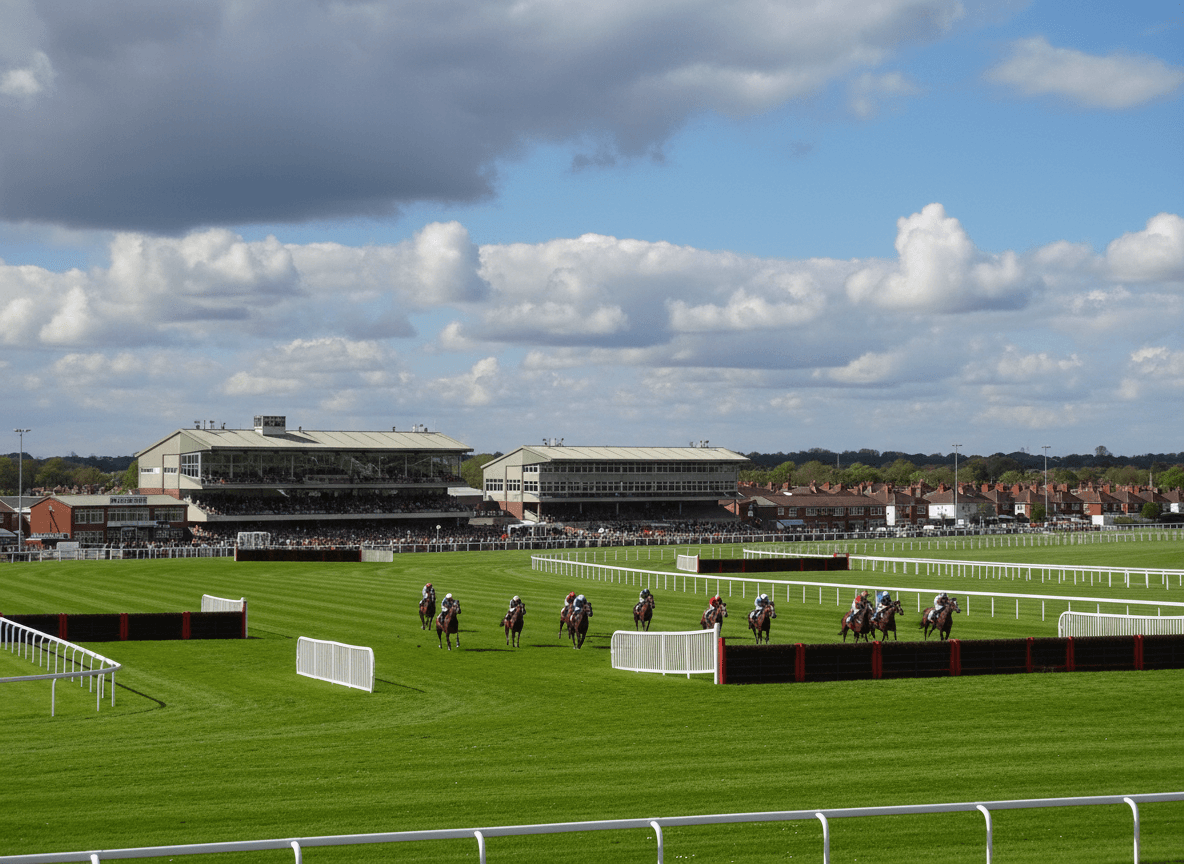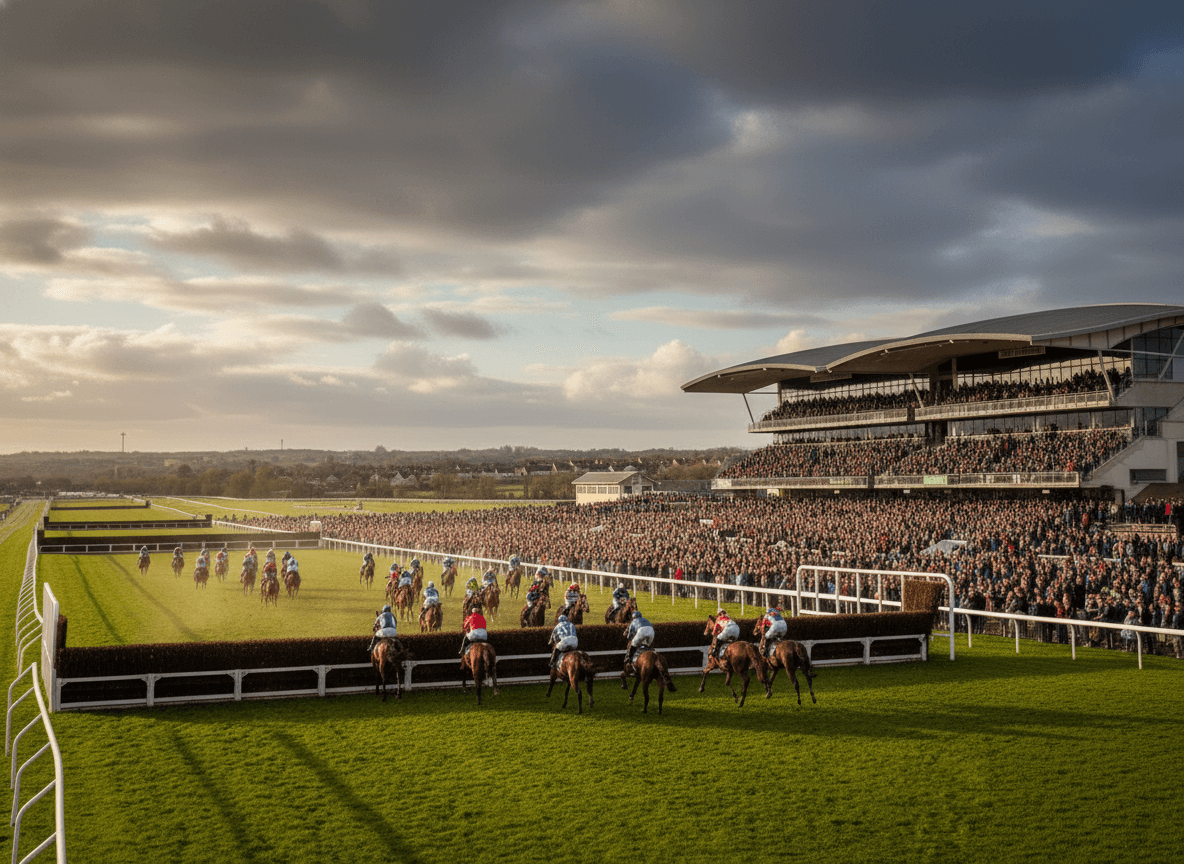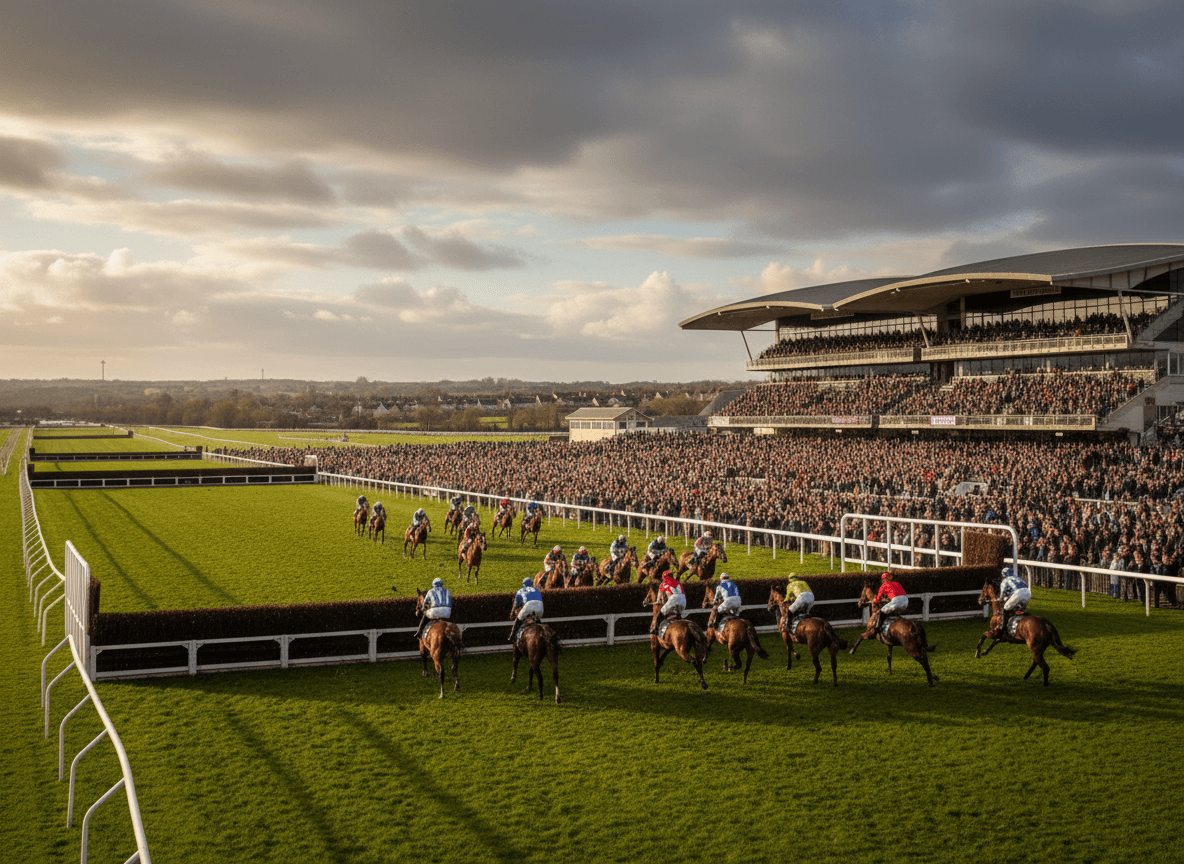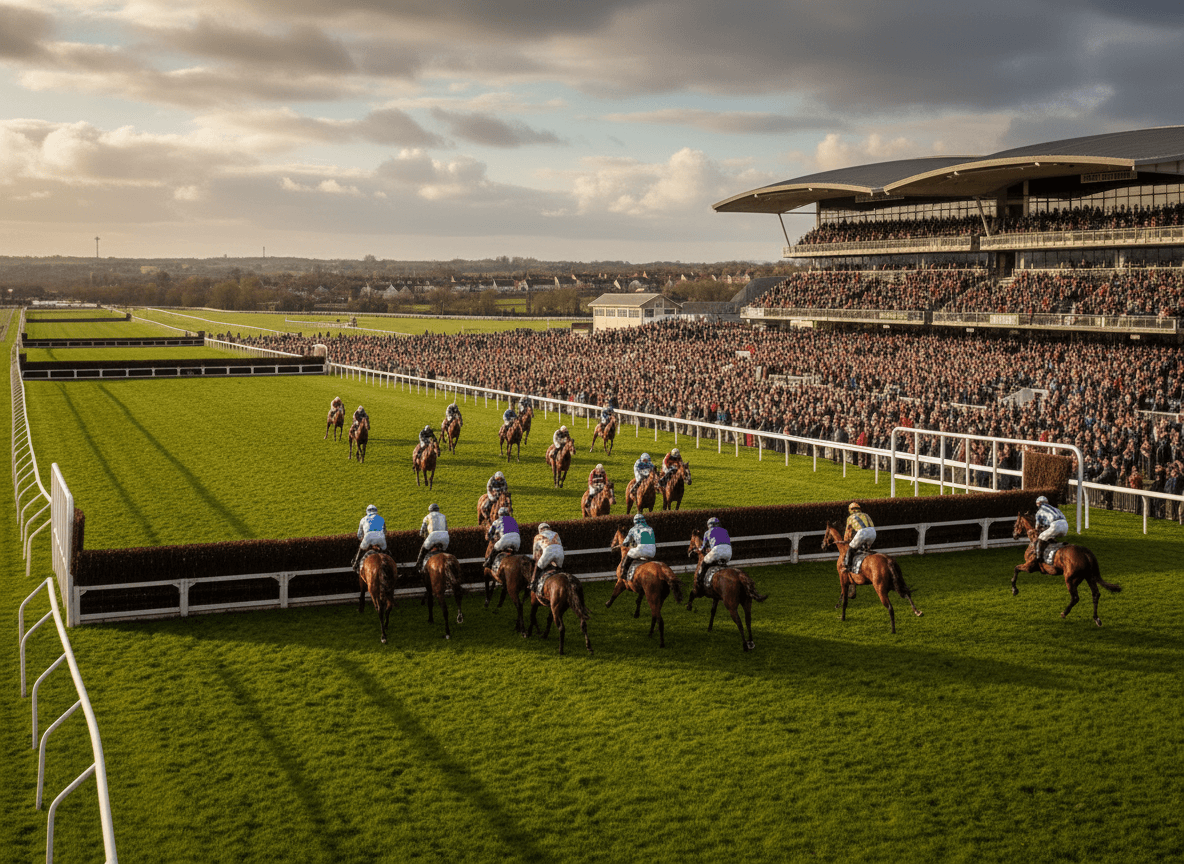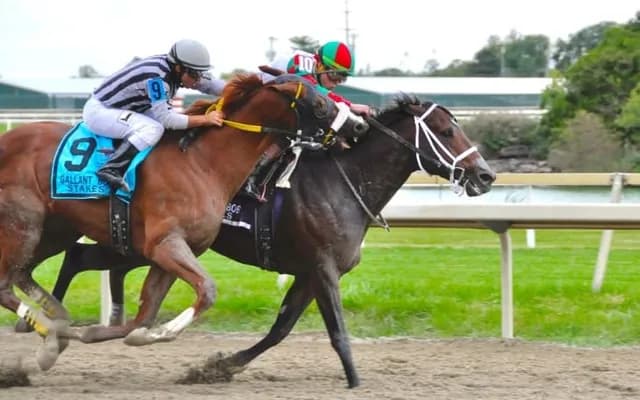
The Grand National at a glance
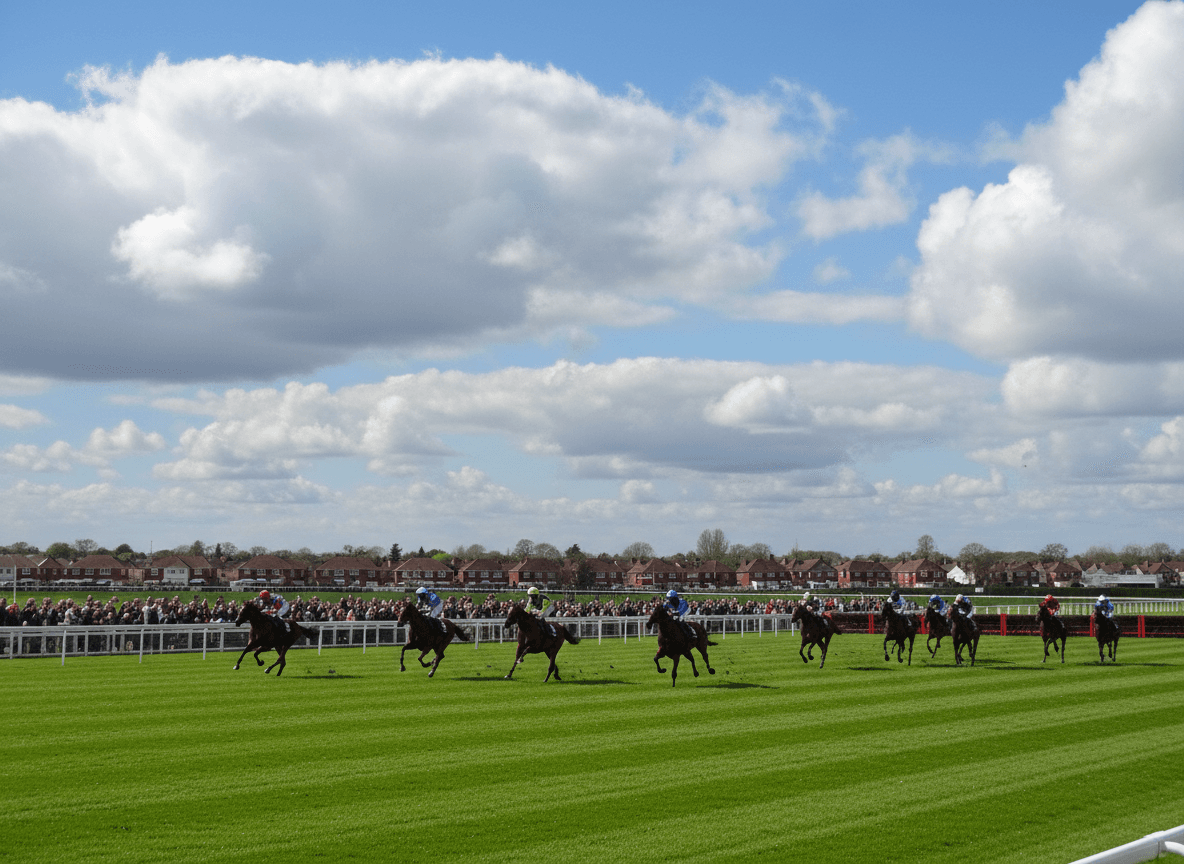
The Grand National is a handicap steeplechase run over 4m2f74y at Aintree, on the northern edge of Liverpool. It is the longest jumps race in Britain, and its 30 fences include the most famous obstacles in the sport.
The race is run on the Saturday of Aintree's three-day Grand National Festival, which takes place in early-to-mid April. In 2026 the meeting ran from Thursday 9 to Saturday 11 April, and the National went off at 4pm. Aintree's owner, The Jockey Club, announces dates and times each year.
No other race reaches so far beyond racing. It is the one day many people have a bet, and office sweepstakes are a fixture. Aintree says the race is broadcast in around 170 countries, and National-day crowds are put at about 70,000.
A short history
In February 1839 Lottery won the Grand Liverpool Steeplechase, the race that became the Grand National. Some historians count an earlier race in 1836 as the first running, but most date the race from 1839. It was a weight-for-age race for its first four years before Edward William Topham made it a handicap in 1843.
Landmarks since include:
- Foinavon (1967) was a long way behind when a pile-up at the fence after Becher's stopped almost the entire field. He was the only horse to jump it first time, he went on to win, and the fence now carries his name.
- Red Rum won in 1973, 1974 and 1977 and finished second in 1975 and 1976. He is still the only horse to have won the race three times.
- 1993 was the race that never was. After two false starts the recall failed, most of the field set off anyway, and the race was declared void.
- 1997 was the "Monday National". A coded bomb warning forced Aintree to be evacuated on the Saturday, and the race was run two days later. Lord Gyllene won it.
- Tiger Roll won in 2018 and 2019, the first back-to-back winner since Red Rum. The 2020 meeting was cancelled because of Covid-19.
- Rachael Blackmore became the first woman to ride the winner when she won on Minella Times in 2021.
- I Am Maximus, trained by Willie Mullins, won in 2024 and won again in 2026, when he carried top weight of 11st 12lb.
There was no race at Aintree from 1916 to 1918 or from 1941 to 1945, and none in 2020.
The course and the fences
The National is run left-handed on Aintree's Grand National course, a circuit of about 2m2f, separate from the Mildmay course used for Aintree's conventional chases and hurdles. Runners go round twice. There are 16 fences on the circuit. Fourteen are jumped twice, but The Chair and the Water Jump are jumped only once, which makes 30 jumps in all.
After the last fence comes a 494-yard run-in with a dog-leg, the Elbow, in the middle of it.
The fences were once thorn hedges. Today each has a flexible plastic frame dressed with Sitka or Norway spruce from the Lake District. Jockey Club figures put them between 4ft 6in and 5ft 2in, apart from the 2ft 6in Water Jump.
The famous fences
| Fence | Jumped as | What makes it notable |
|---|---|---|
| Becher's Brook | 6th and 22nd | 4ft 10in high. It is named after Captain Martin Becher, who was unseated there in 1839. The drop on the landing side has been reduced several times. |
| Foinavon | 7th and 23rd | At 4ft 6in, it is one of the smallest fences on the course. It was the scene of the 1967 pile-up. |
| Canal Turn | 8th and 24th | A 5ft fence followed straight away by a 90-degree left turn. |
| Valentine's Brook | 9th and 25th | A 5ft fence with a brook on the landing side. It was originally called Second Brook. |
| The Chair | 15th only | The tallest fence on the course at 5ft 2in, with a 5ft ditch in front and a raised landing. It is named after the seat once used by the distance judge. |
| Water Jump | 16th only | A low fence with water on the landing side, in front of the stands. |
How the course has been modified
- Becher's Brook was altered after the 1989 race, when the brook was partly filled in and the landing regraded. It was levelled again after the 2011 race.
- The 2012 review, led by the BHA, made 30 recommendations. The resulting changes for 2013 replaced the timber cores of the fences with plastic, moved the start about 90 yards closer to the first fence, away from the stands, and levelled several landing areas. That move is why the race distance became 4m2f74y.
- Bypass routes were introduced around every fence in 2009, so that a fence can be omitted if a stricken horse or rider is on the landing side.
- 2024: the first fence moved 60 yards closer to the start and fence 11 lowered from 5ft to 4ft 10in (see the welfare section).
Who gets a run
The National is a handicap. The BHA handicapper gives each horse a weight based on its official rating, so in theory every horse has an equal chance. The weights are published in mid-February. Once they are out, they are fixed: a horse that wins in the meantime is not penalised.
Under the conditions published for 2026:
- Horses must be aged seven or older. The minimum age was raised from six in 2012.
- Horses need an official rating of at least 130. This was raised from 125 for the 2024 race.
- Horses must have run in at least six steeplechases, at least one of them in the current season.
- Horses must have finished in the first four in a chase of 2m7½f or further at some point in their career.
- Weights ran from 11st 12lb down to 10st 2lb. A horse rated too low to reach 10st 2lb still carries it, running "out of the handicap".
- Jockeys must have ridden at least 15 jumps winners, at least 10 of them over fences.
The maximum field is 34. It was cut from 40 for the 2024 race, the first reduction since the 40-runner limit was set in 1984. When more are declared than can run, those lowest in the weights miss out.
From 2026 the National became a 72-hour declaration race. Final declarations are now made on the Wednesday, and the number of reserves went up from four to six. Reserves can come in up to 1pm on the Friday if a declared horse is withdrawn.
The conditions are reviewed every year, so check the current race conditions before relying on any single figure. For 2026 the race was worth £1 million in total, with £500,000 to the winner.
The rest of the Festival
The other two days are among the strongest of the jumps season, and many of the Grade 1 races draw on Cheltenham Festival form. Running orders can change; days below are from 2026.
- Bowl Chase (Grade 1, about 3m1f): the staying chase of the meeting, often contested by horses that ran in the Cheltenham Gold Cup. It was run on the Thursday in 2026.
- Aintree Hurdle (Grade 1, 2m4f): the senior hurdle at intermediate distance. It was run on the Thursday.
- Foxhunters' Chase (about 2m5f over the National fences): the hunter chasers' race on the big fences. It was run on the Thursday.
- Melling Chase (Grade 1, about 2m4f): this tends to attract horses from the Champion Chase and the Ryanair at Cheltenham. It was run on the Friday.
- Topham Chase (handicap, about 2m5f over the National fences): a big-field handicap and a useful pointer to how a horse handles the fences. It was run on the Friday.
- Grand National day also stages the Grade 1 Liverpool Hurdle (about 3m) and Maghull Novices' Chase, and there are Grade 1 novice races on all three days.
The National fences are also used outside April, most notably in the Becher Chase, run in November or December, and the Grand Sefton.
Betting on the Grand National: evergreen angles
A 34-runner handicap over more than four miles and 30 fences is about as hard a betting puzzle as racing offers: in 2026 only 16 of the 34 starters completed. For a broader introduction, see our guide on how to bet on the Grand National.
Each-way and extra places
In a handicap with 16 or more runners, the standard each-way terms are a quarter of the odds for the first four places. An each-way bet is two bets of equal stake: one to win and one to place.
For the National, bookmakers routinely offer more places than standard, often five, six or more. Sometimes they pay a smaller fraction of the odds, such as a fifth, for those extra places. Compare both the number of places and the fraction before you bet. More places at a fifth is not always better value than four at a quarter. Our guide to each-way betting in the Grand National works through the sums.
Ante-post betting and non-runner no bet
Betting weeks or months ahead can secure bigger prices than on the day. The catch is that a standard ante-post bet is a loser if your horse does not run, whether through injury, a change of plan or missing the 34-runner cut. In exchange, ante-post bets are not subject to Rule 4 deductions when other horses are withdrawn.
In the run-up to the National, many bookmakers offer non-runner no bet terms, which return your stake if your horse does not take part. It matters most for horses near the cut-off. See our guides to ante-post betting on the National and non-runner no bet in the Grand National.
What kind of horse wins?
Treat trends as a guide, not a rule. The patterns worth knowing:
- Stamina is proven before Aintree. The rules require every runner to have been placed over at least 2m7½f.
- Irish-trained horses have dominated recently. In the ten runnings from 2016 to 2026 (there was no race in 2020), eight winners were trained in Ireland. The two British-trained winners, One For Arthur in 2017 and Corach Rambler in 2023, were both trained in Scotland by Lucinda Russell. In 2025 Willie Mullins trained the first three home.
- Weight has been no barrier since the 2024 changes. The first three winners under the new conditions carried 11st 6lb (I Am Maximus, 2024), 11st 8lb (Nick Rockett, 2025) and 11st 12lb (I Am Maximus, 2026). Three runnings is a small sample, but they point to a race where high-class horses near the top of the weights can win.
- Age is not a barrier at seven. Noble Yeats won at seven in 2022, the first seven-year-old to win since 1940. He also won in his first season over fences.
- Fence form is a bonus, not a requirement. The Topham, Becher Chase and earlier Nationals show whether a horse takes to the spruce fences, but first-time runners still win.
For how the weights shape the race, read handicap betting in the Grand National explained. If you prefer pool betting on the day's card, see our Grand National placepot strategy.
Sweepstakes
Draw sweepstake tickets only once the final field is known, and agree beforehand what happens to a ticket whose horse is withdrawn. If there is a prize for "last", make it the last horse to finish, not a faller.
Best Horse Racing Betting Sites


Welfare and the 2024 changes
The National's fences and big field have long drawn welfare scrutiny, and the race has been changed repeatedly in response. In October 2023 The Jockey Club announced a package of changes, effective from the 2024 race, which it said followed its annual review, independent research and its own analysis showing that horses' average speed approaching the first fence had risen over the previous ten years.
- Field size cut from 40 to 34. Aintree cited a direct link between the number of runners and the risk of falling, unseating or being brought down.
- First fence moved 60 yards closer to the start. A standing start was brought in for all races over the National fences. Both changes are meant to stop horses building up too much speed early on.
- Earlier start time. The race had gone off at 5.15pm since 2016. An earlier slot gives Aintree a better chance of producing the right ground, which can dry quickly on a sunny April afternoon.
- Fence 11 lowered by two inches, from 5ft to 4ft 10in, and the drop on its landing side reduced.
- Foam and rubber toe boards fitted to every fence. The running rail was also realigned to help catch loose horses earlier.
- A calmer parade. Horses are no longer led by handlers in front of the stands.
- Tighter eligibility. The minimum rating went up to 130. A review panel looks more closely at horses that have made jumping errors in half or more of their last eight races.
These came on top of earlier changes. They include the 2013 plastic-cored fences and repositioned start, and the enhanced veterinary checks introduced in 2023, under which trainers supply treatment histories and trot-up videos.
Frequently asked questions
When is the Grand National run?
On the Saturday of the three-day Festival in early-to-mid April; Aintree confirms the date and time each year. Since 2024 it has been run earlier than its old 5.15pm slot (4pm in 2026).
How long is the Grand National and how many fences are there?
The official distance is 4m2f74y, about 4¼ miles, making it the longest jumps race in Britain. Runners jump 30 fences over two circuits. Fourteen of the 16 fences are jumped twice, and The Chair and the Water Jump are jumped once.
Which is the biggest fence on the Grand National course?
The Chair, at 5ft 2in with a 5ft ditch on the take-off side. It is jumped once, as the 15th fence.
Has any horse won the Grand National more than twice?
Only Red Rum, who won in 1973, 1974 and 1977. Tiger Roll (2018 and 2019) and I Am Maximus (2024 and 2026) are among the horses to have won twice.
How many places do bookmakers pay each-way on the Grand National?
Standard terms for a handicap with 16 or more runners are a quarter of the odds for the first four places. For the National many bookmakers offer extra places, sometimes at a fifth of the odds. Check the terms on the bet slip before you place the bet.
What happens to my bet if my horse doesn't run?
If you bet on the day, or within a market that already has non-runner no bet terms, your stake is returned. A standard ante-post bet struck before such terms apply is settled as a loser if the horse does not run.
Why was the Grand National changed in 2024?
On welfare and safety grounds. The Jockey Club linked bigger fields to a greater risk of falls and found horses were reaching the first fence faster than before, so it cut the field to 34, moved the first fence closer to a standing start and brought the start time forward.
Please gamble responsibly. Betting is for over-18s only. For support and tools, see our responsible gambling page.