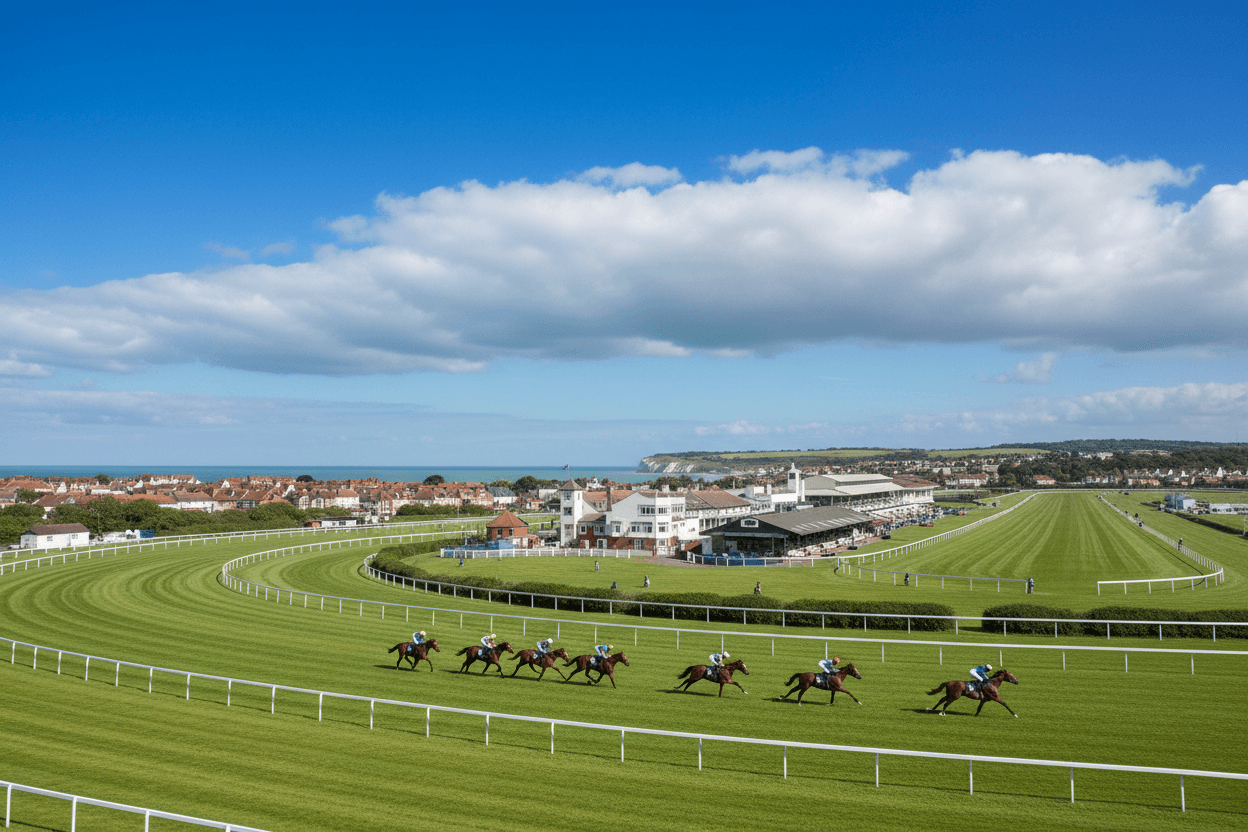
A Track That Earns Its Affection
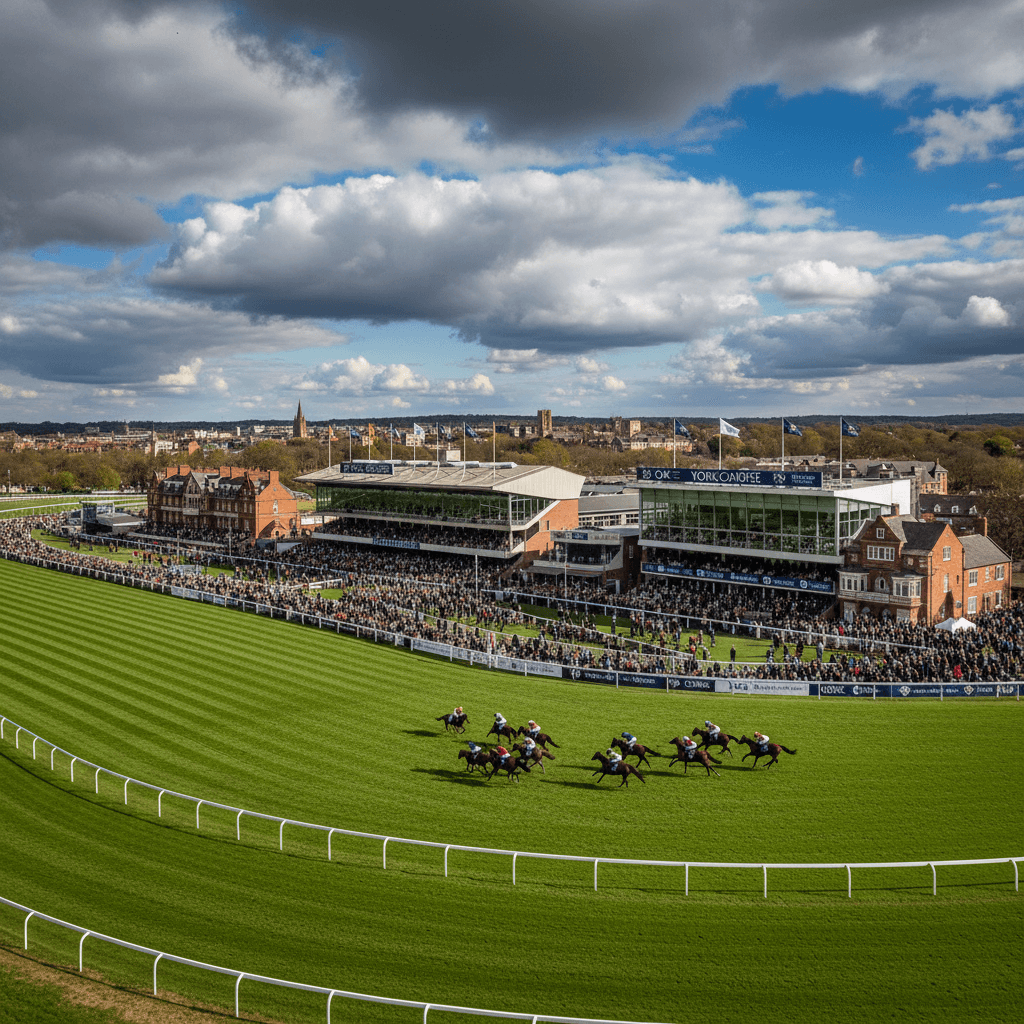
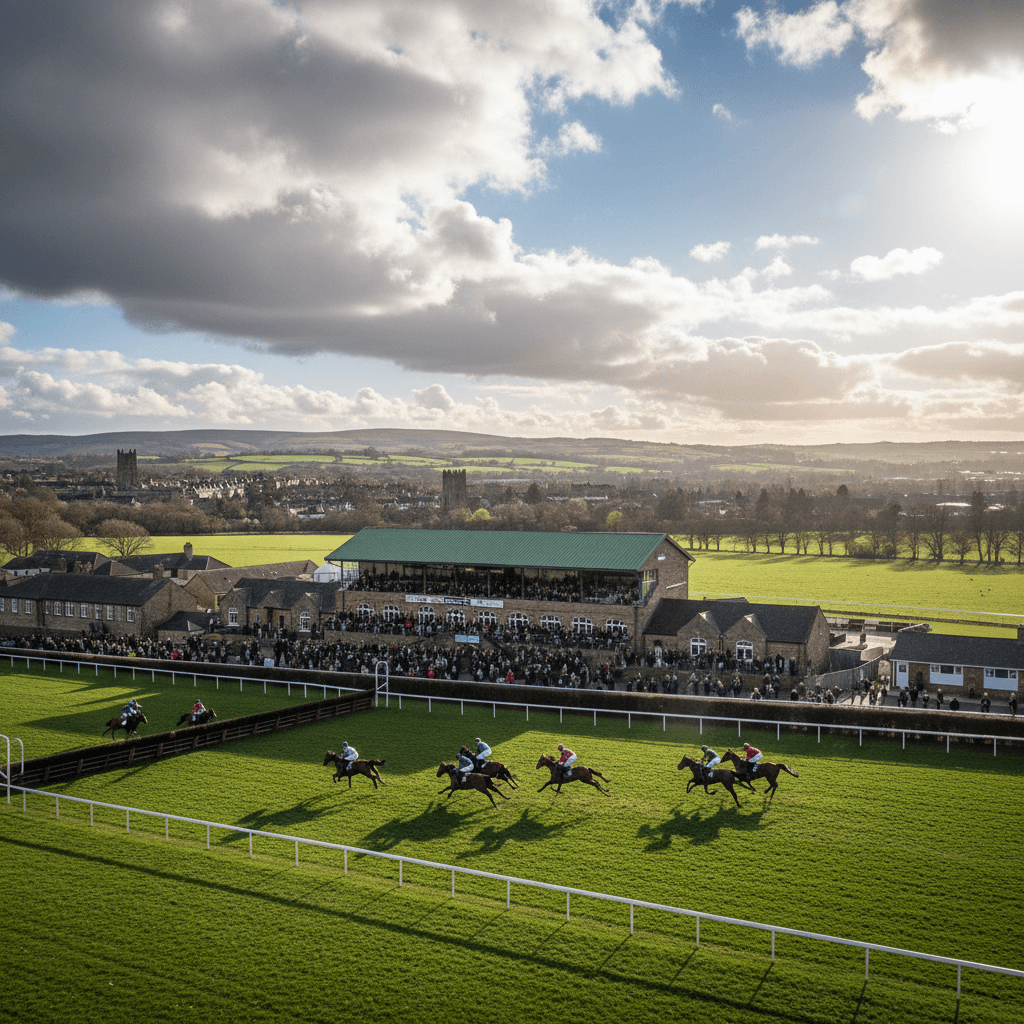
There are racecourses that demand your attention and those that quietly earn it. Folkestone has always belonged to the latter category. Tucked into the folds of the Kent countryside with the Channel coast close enough to lend the air a particular quality — salt-tinged on the right morning, heavy with warmth on a summer afternoon — it is a venue that rewards patience and repays loyalty. It never hosted a Group 1. It never needed to. What it offered instead was something rarer in modern racing: a genuine sense of place.
The course operated from the late nineteenth century until its closure in 2012, and those who were fortunate enough to attend during its active years will tell you the same thing: Folkestone had character in its bones. The right-handed, undulating oval of approximately one mile and four furlongs was never a venue for the faint-hearted. The stiff finish asked genuine questions of stamina and resolve, and the horses that answered them most convincingly were invariably the ones worth following. For many a future star, Folkestone served as the first proper examination — the kind of test that separates the promising from the genuine.
This Bank Holiday weekend, racing returns to that distinctive Kent skyline across three consecutive days of Flat action, and there is plenty here to reward the careful observer.
The Weekend's Fixtures at a Glance
The programme opens on Friday 28 August with an evening meeting — six races under the long late-summer light, the kind of session that has an unhurried quality to it, the shadows lengthening across the track as the card unfolds. View the full Folkestone Friday, 28 August 2026 racecard for the day's schedule.
Saturday and Sunday both offer afternoon cards of seven races apiece, making for a genuinely substantial weekend of racing. The Folkestone Saturday, 29 August 2026 card and the Folkestone Sunday, 30 August 2026 card together provide fourteen races across two days — ample opportunity for the patient punter to find their spot.
Going conditions across all three days are currently described as Good, with soil moisture readings sitting at 44%. The next GoingStick and soil moisture readings are due on Sunday morning, which means conditions could shift slightly by the final day of the weekend. With the Bank Holiday weather carrying its usual element of uncertainty, it is worth keeping one eye on those Sunday readings before committing to any late wagers on the final card. Good ground at Folkestone, however, is very much the track's natural state — the undulations drain well, and the surface tends to ride consistently through the summer months.
Understanding the Folkestone Track
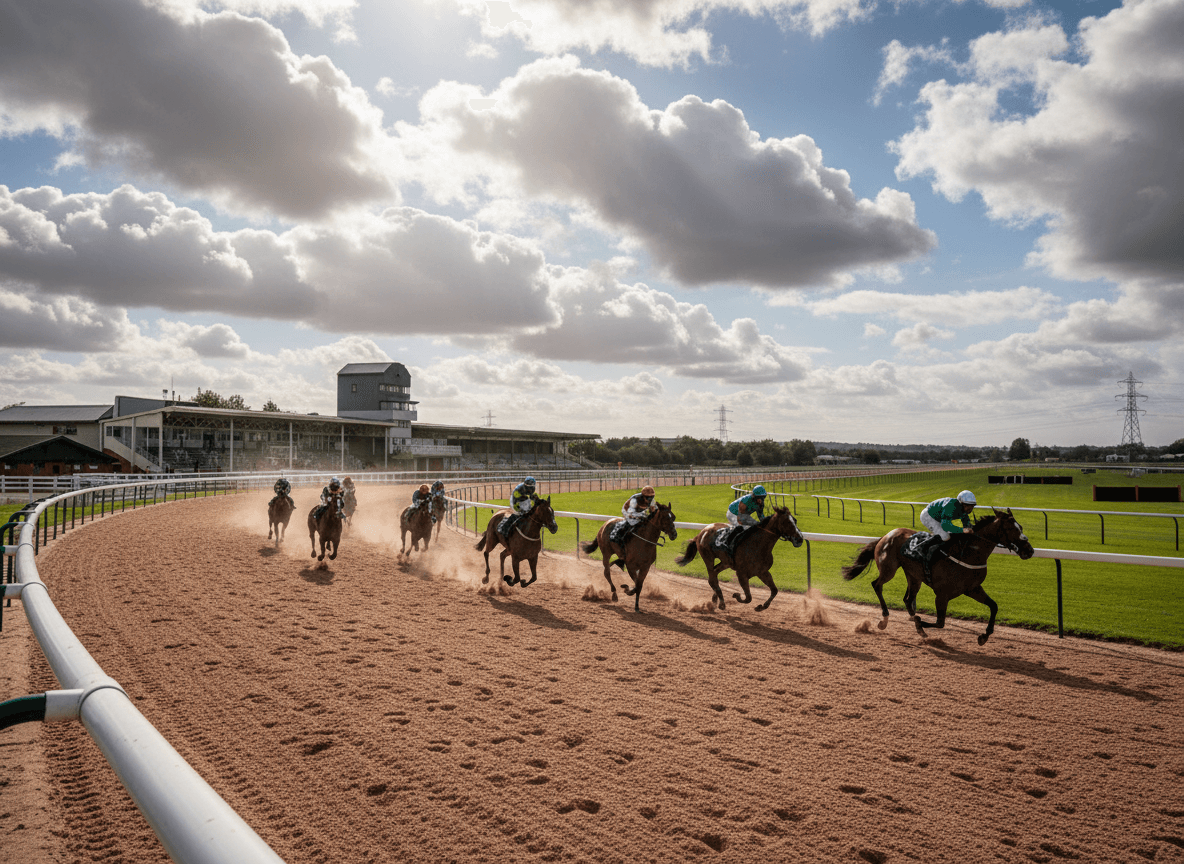
Folkestone's right-handed circuit is one of the more nuanced in the south of England, and understanding its characteristics is the first step towards finding winners here. The track's undulating nature means that balance and agility matter as much as raw ability — horses that travel sweetly through their races and switch off behind the pace are invariably better equipped to handle the rhythm changes the course demands.
The Finish and Its Demands
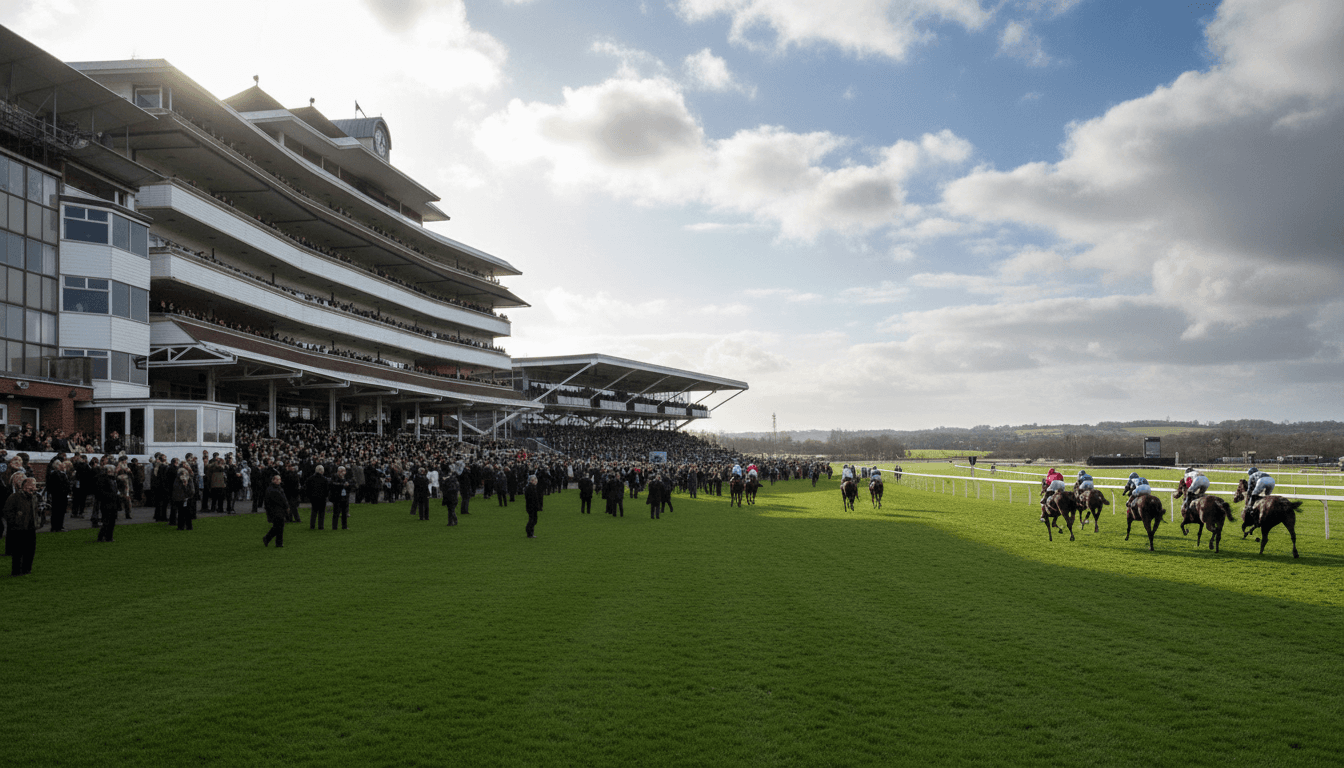
The stiff finish is Folkestone's defining feature. Runners turning for home are not presented with a flat, forgiving straight — they must climb, and they must do so having already been tested by the undulations earlier in the race. This is not a track where a horse can coast to the two-furlong marker and then produce a devastating burst. The finish rewards those that stay at their work, that grind rather than sprint. Horses who show a tendency to idle in front, or who need a flat surface to produce their best, are worth treating with caution here regardless of their form elsewhere.
Draw and Pace Considerations
On Good ground over the sprint trips, low to middle draws tend to hold a marginal advantage at Folkestone, particularly in larger fields where the right-hand bias of the track can funnel runners towards the inside rail. That said, the undulating nature of the course means this is rarely a decisive factor in the way it might be at a more pronounced draw track — pace scenario and positioning through the race often matter more than stall number alone.
In terms of pace, Folkestone tends to suit hold-up horses that can settle and pick up through the final two furlongs. Front-runners are not without hope — particularly over the shorter distances on a sound surface — but they must be genuine front-runners with tactical speed and resolution, not merely horses that happen to break well. Races here have a habit of finding out those who lead on borrowed time.
The Type of Horse That Thrives at Folkestone
The profile of a typical Folkestone winner is fairly consistent once you know what to look for. Consider the following:
- Stayers and resolute gallopers — horses with proven stamina at their trip, particularly those that have won on undulating or testing tracks elsewhere.
- Course and distance winners — as with many idiosyncratic venues, previous course form is meaningful here. Horses that have already navigated the track's rhythms successfully are worth a premium.
- Horses trained locally or in the south — trainers familiar with the track's demands tend to target it intelligently. Names from the southern training centres — Epsom, Lambourn, and the Newmarket-to-Kent corridor — appear regularly in the winners' enclosure.
- Reliable travellers on Good ground — the 44% soil moisture reading puts this squarely in the range where horses with a preference for genuine Good ground will be in their element. Soft-ground specialists and those who need a cut should be deprioritised this weekend.
- Hold-up horses ridden with confidence — jockeys who are willing to be patient and trust their mount's finishing kick are rewarded at Folkestone more than those who commit early.
Practical Tips for the Weekend
Whether you are attending in person or following the action remotely, a few practical considerations are worth bearing in mind as the Bank Holiday weekend unfolds.
The Sunday morning Going update is particularly important for the final day's card. With seven races on offer and conditions potentially shifting overnight, checking the revised GoingStick readings before finalising any selections is simply good practice. A move from Good to Good-to-Firm, or a nudge the other way, can materially alter the prospects of several runners.
For those attending, Folkestone's setting rewards an early arrival. The views across the Kent countryside from the higher vantage points on the course are genuinely lovely, and the atmosphere of a Bank Holiday meeting — relaxed, sociable, with a crowd that tends to know its racing — is one of the small pleasures the sport still offers in abundance.
From a betting perspective, the seven-race Saturday and Sunday cards offer the most opportunity for selective punters. Look for the races where the pace scenario is clear — where there is an obvious front-runner and the rest of the field must organise themselves behind — as these tend to produce the most predictable race shapes at Folkestone and give hold-up horses the clearest possible run at the finish.
A Fond Farewell, and a Warm Welcome Back
There is something quietly moving about Folkestone racing again. A course that gave so much to the sport — that launched careers, produced memorable handicaps, and offered a corner of Kent to the racing calendar for well over a century — deserves to be celebrated rather than merely attended. This Bank Holiday weekend, across three days of Flat racing on Good ground with the summer still just about holding, it has the ingredients for something rather special.
Study the Folkestone course page before you dive into the cards, arm yourself with an understanding of the track's demands, and approach the weekend with the same patience the course itself has always rewarded. The stiff finish will sort them out, as it always has. It just requires a little faith in the horses — and the track — to do their work.