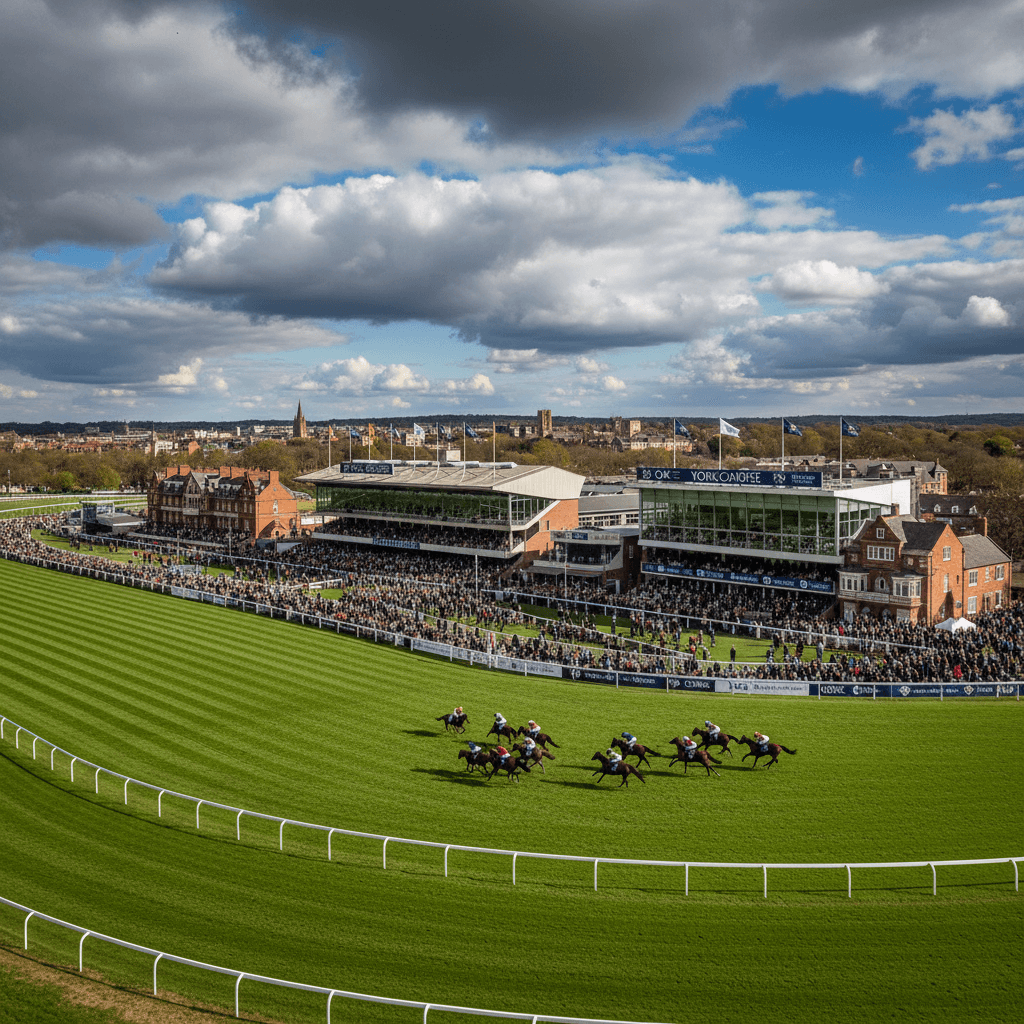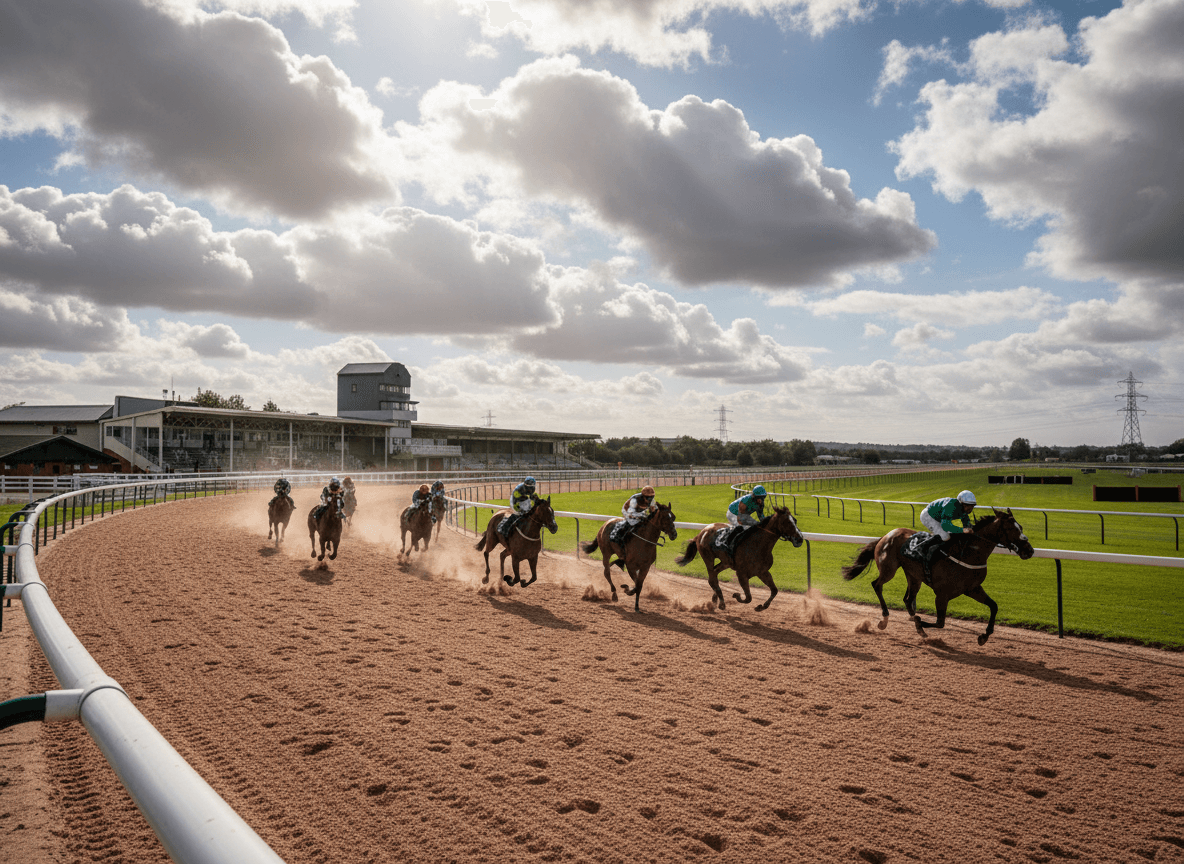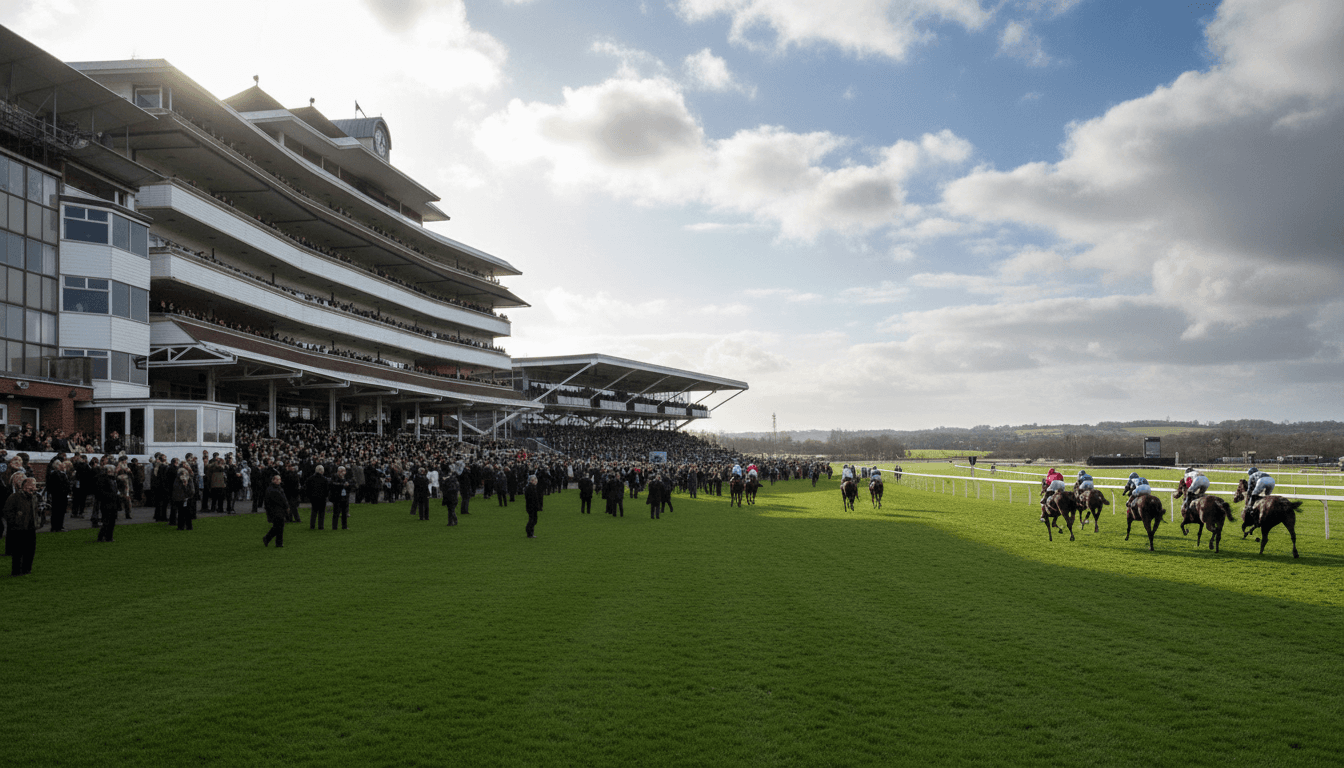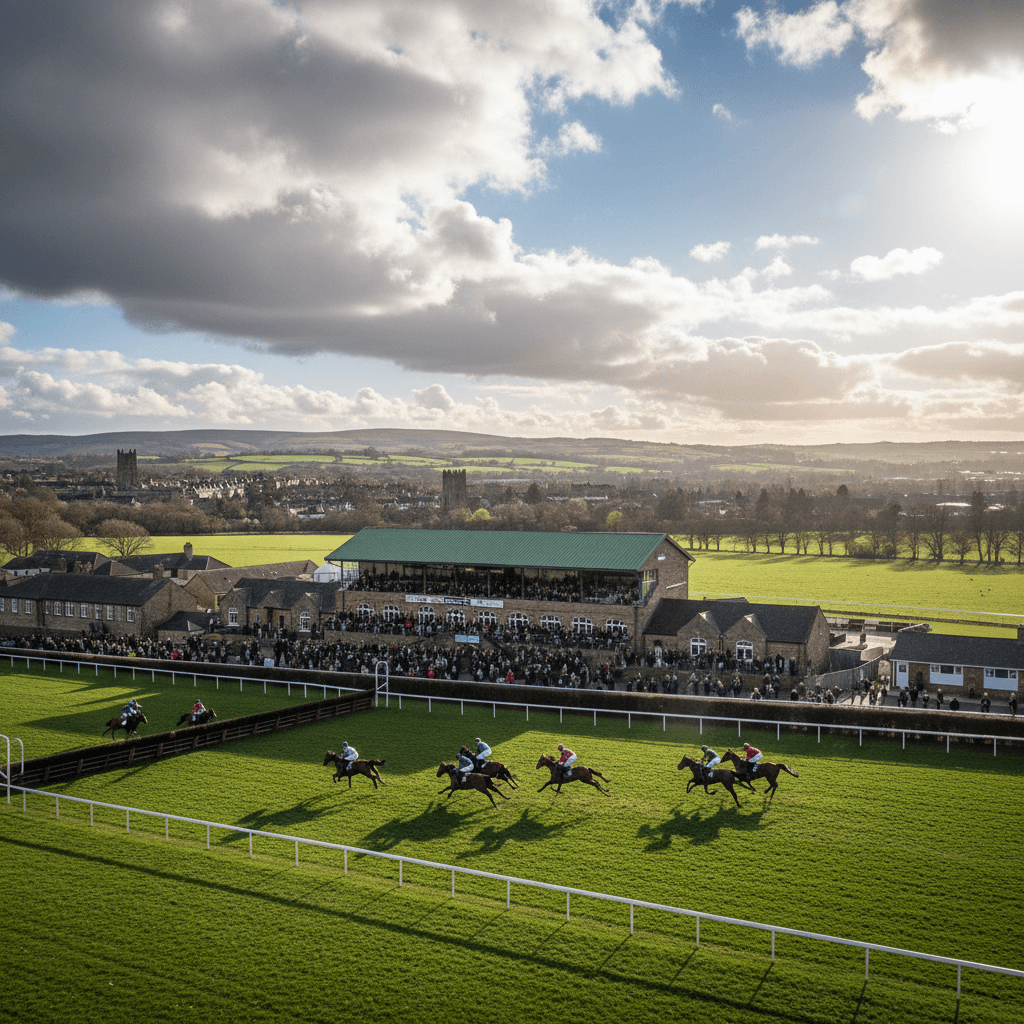
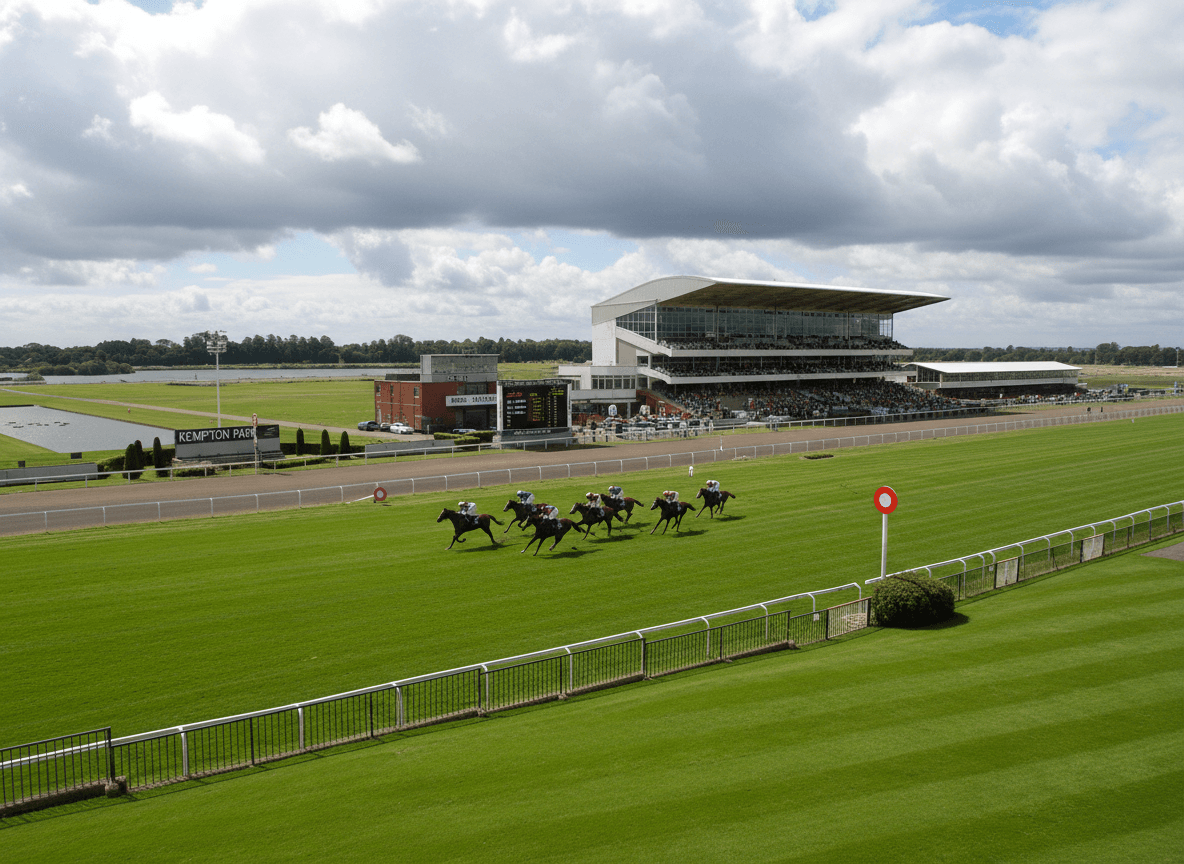
A Track That Earns Its Place in the Heart
There are racecourses you visit out of obligation and racecourses you return to by choice. Kempton Park sits firmly in the second category. Tucked into the Surrey countryside at Sunbury-on-Thames, with the Thames itself a quiet presence not far beyond the treeline, it occupies a peculiar and rather wonderful place in British racing — at once utterly familiar and endlessly interesting. It opened in 1878 and has been finding ways to reward close attention ever since.
Most who know Kempton well will picture it in winter, under floodlights, the King George VI Chase filling Boxing Day with the kind of theatre that other sports can only approximate. But the summer version — sun on the Polytrack, the grandstand casting long shadows across the paddock, an afternoon card unspooling at a measured pace — has its own quiet pleasures. This week, the track offers two of them.
This Week's Fixtures: What's on the Card
Kempton hosts a pair of Flat afternoon fixtures this week, both run on its all-weather Polytrack surface with going described as Standard. Each card carries six races.
- Tuesday, 25 August 2026 — View the full racecard
- Thursday, 27 August 2026 — View the full racecard
Standard going on the Polytrack is precisely what it sounds like: consistent, reliable, and fair to most types. There will be no excuses on that front. When the surface is riding like this — not too quick, not too deep — it tends to produce true form, and that is both a blessing for the punter seeking clarity and a warning to those hoping a favourable surface will paper over the cracks in their selection's recent record.
Afternoon fixtures at Kempton carry a slightly different energy to the floodlit evening meetings the track is perhaps better known for in its all-weather guise. The pace of the afternoon suits methodical form study. There is time to watch the horses in the paddock, to note how they move to post, to observe the way a jockey positions early in a race. It is, in the best sense, a working racegoer's afternoon.
Understanding the Track: Geometry and Its Consequences
Kempton's Flat course is a right-handed oval of approximately one mile and five furlongs, and understanding its geometry is the foundation of any serious analysis here. The track is broadly galloping in character, with subtle undulations that are easy to miss on a casual viewing but which matter to a tired horse in the closing stages. The home straight is a genuine test — long enough to reward the horse that has been produced with something in reserve, punishing to the one that has been asked too early.
The five-furlong straight course is a separate entity entirely, and it demands its own analysis. Runners here do not negotiate a bend, which removes one variable but introduces another: the draw. On the straight five, high draws have historically held an advantage when the stalls are positioned on the stands side, with the ground towards that rail riding marginally faster in many conditions. Standard going softens this bias somewhat, but it does not eliminate it. A horse drawn in the top third of the field on the straight five is worth a second look, particularly if it has the pace to use the position from the off.
On the round course, the picture shifts. Low draws tend to be favoured at distances up to a mile, where the first bend arrives quickly enough that a wide draw can cost a horse several lengths in the opening furlong simply through the geometry of running wider. At a mile and beyond, the effect is less pronounced — horses have time to find their position — but it never disappears entirely. A horse drawn double figures in a competitive mile handicap at Kempton deserves scrutiny before you back it at a short price.
Pace Scenarios: Where Races Are Won and Lost
Kempton's Polytrack rewards horses that travel smoothly through a race. The surface has a slight give to it — more so than a conventional turf track on firm going — and it tends to expose horses that are scrubbing along to maintain their position. A horse that settles, conserves energy through the middle portion, and picks up cleanly when asked is the Kempton archetype. Front-runners can and do win here, but they tend to be the genuinely quick ones, not those who lead by default and are caught out by the long home straight.
In sprint races, watch for horses that show early tactical speed without being fully committed — those that can sit just off the pace in the first two furlongs and then assert. In longer races, the premium is on horses with a genuine, sustained gallop rather than a sudden burst of speed. The Polytrack does not particularly reward the flashy accelerator; it rewards the relentless one.
The Type of Horse That Thrives at Kempton
Certain profiles recur in the Kempton winner's enclosure with enough regularity to be meaningful. Horses with proven all-weather form are the obvious starting point — not simply because they have run on Polytrack before, but because they have demonstrated the temperament to handle a surface that rewards rhythm and relaxation. A horse that fights its rider on turf will often fight its rider on Polytrack too, and Kempton's long home straight gives that tendency nowhere to hide.
Consistent types with strong sectional profiles — horses that clock reliable middle-sectional times rather than dramatic closing bursts — tend to find Kempton more forgiving than tracks with a sharper finish. Conversely, horses that rely on a single explosive gear change can find the surface slightly deadening to that quality.
From a bloodlines perspective, horses by sires with strong all-weather records are worth noting, particularly those with Kingmambo, Pivotal, or Dansili influence in the pedigree — stallions whose progeny have historically shown an affinity for synthetic surfaces. It is a soft filter rather than a hard rule, but in competitive handicaps where margins are fine, it is the kind of detail that earns its place in the analysis.
Practical Tips for Racegoers and Punters
- Arrive early and watch the paddock. Kempton's parade ring is compact and well-positioned. A horse that is sweating unduly or showing signs of agitation on a warm August afternoon is a horse worth opposing, regardless of its price on the exchange.
- Note the going report carefully. Standard is the headline, but the track team's precise wording matters. Any mention of the surface riding on the quicker side of Standard is worth factoring into pace assessments — races will be run faster, and those with a tendency to idle in front may be more vulnerable.
- Respect course-and-distance winners. Kempton's Polytrack is specific enough that a horse who has won over the exact trip and surface before carries a genuine edge. The form book here is more self-contained than at many turf tracks.
- Watch the market moves in the final hour. Kempton's all-weather fixtures attract sharp professional money, and significant market moves — particularly on horses that have been drifting before firming late — can be informative. They are not infallible, but they are rarely random.
- Consider the trainer angle. Certain stables have long-standing relationships with Kempton's Polytrack. Yards that consistently send horses here in good order, rather than using it as a prep or a consolation, are worth identifying and tracking across a season.
A Final Word
Kempton Park is the kind of course that repays loyalty. The more meetings you study here, the more its patterns reveal themselves — the draw tendencies, the pace dynamics, the way certain types of horse seem to find an extra half-length on this surface that they cannot find elsewhere. Two afternoon fixtures this week, both on Standard Polytrack going, offer a clean and uncomplicated backdrop against which to apply those lessons.
Whether you are attending in person or watching from home with the form book open beside you, Kempton in late August is a quietly rewarding way to spend an afternoon. The racing is honest, the surface is fair, and the details, as always, are where the value hides. Browse the full Kempton Park course page for historical form, and make sure to check the racecards for Tuesday and Thursday as they fill out. The week ahead is worth your attention.