A Course That Earns Its Reputation Quietly
There are racecourses that announce themselves with grandeur, and then there is Newbury — a track that simply gets on with the business of producing fine racing, year after year, without ever needing to raise its voice. Nestled in the Berkshire countryside, it has been doing exactly that since 1905, and the weight of that history sits comfortably on its broad, galloping shoulders.
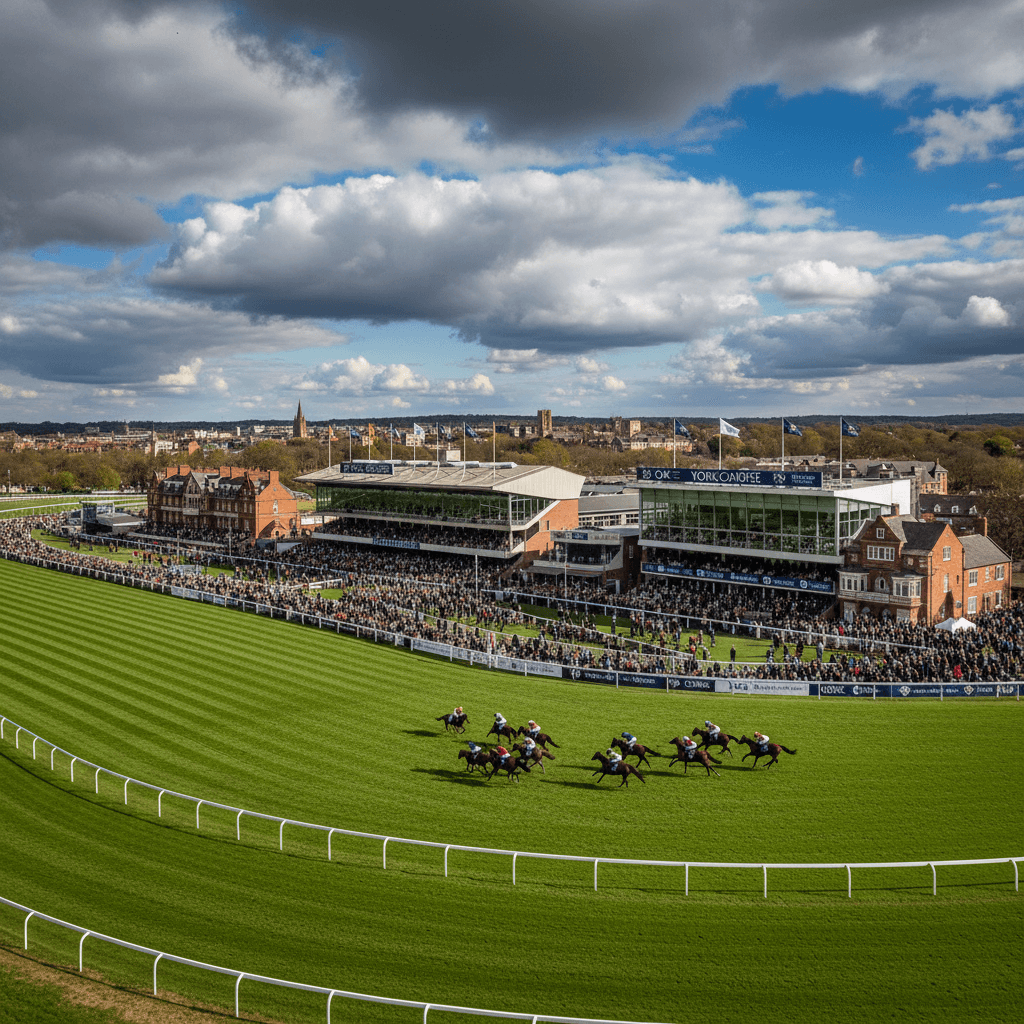
What strikes you first about Newbury, whether you're arriving for the first time or the fiftieth, is the sense of space. The wide, sweeping bends. The long, unforgiving straight. The generous width of the track, which tends to iron out the kind of scrimmaging and misfortune that can compromise a race's integrity elsewhere. Newbury, more than almost any other track on the British Flat circuit, offers horses a fair examination. The best tend to win here, and that is not something you can say about every venue.
It is a course that rewards patience — in horses, in jockeys, and in those of us trying to make sense of it from the outside. The finish can come quickly once the field rounds the home turn, but the race is often decided long before that, in the quality of the gallop set through the middle stages and the position a horse finds itself in as the straight opens up. Understanding that rhythm is the key to understanding Newbury.
This Week's Fixtures: Friday Evening and Saturday Afternoon
Newbury offers a pleasing double-header this week, with two distinct flavours of summer Flat racing on consecutive days.
On Friday 31 July, the card is an evening fixture — six races under the long summer light, with the shadows stretching across the track as the afternoon cools into something more bearable. Evening racing at Newbury has a particular charm: the crowds are lighter, the atmosphere more relaxed, and the racing tends to be competitive without the pomp of the bigger Saturday cards. It is, in short, a lovely way to spend a Friday. You can view the full Newbury Friday 31 July racecard on our course page.
On Saturday 1 August, the meeting steps up a gear — seven races across the afternoon, the kind of programme that draws larger fields, sharper competition, and the full attention of the handicapper. Saturday afternoons at Newbury in high summer have a timeless quality to them. The Newbury Saturday 1 August racecard is well worth studying in advance.
Both days are forecast to race on good to firm ground, which is very much in keeping with the season and, crucially, very much in keeping with what Newbury does best. The track drains well and tends to ride true when conditions are quick, rewarding horses with a fluent, ground-covering action rather than those who need cut underfoot to produce their best.
Track Characteristics and What They Mean in Practice
Newbury is a left-handed, essentially flat circuit with a circumference of around a mile and a half. The bends are long and sweeping rather than tight and testing, which means horses do not need to be particularly nimble or agile — they need to be strong, and they need to be able to sustain their gallop through a bend without losing momentum.
The straight at Newbury is one of the longest on the British circuit, stretching to around five furlongs. This is significant for several reasons. First, it means that horses racing over sprint distances — five and six furlongs — run the entirety of their race in a straight line, with no bend to negotiate at all. The draw becomes particularly important in these contests. On good to firm ground, high draws tend to hold an advantage in sprint races, as the ground on the stands' rail often rides marginally faster and jockeys can find a clear run without being shuffled back. That said, Newbury's width means the bias is rarely extreme — it is a nudge rather than a shove — and a well-drawn horse with a poor draw can still win if the pace scenario suits.
For races over a mile and beyond, the draw matters less. What matters more is how the race is run. Newbury's galloping nature tends to favour horses that can travel smoothly through a strong pace and pick up in the straight, rather than those who need to be produced with a single late surge. The track is not unkind to closers, but it does not reward those who leave themselves too much to do. A position in the first half of the field, travelling comfortably, is the ideal launching pad.
Draw Bias Summary
- Sprint races (5f–6f): High draws (stands' side) hold a slight edge on good to firm ground. Worth noting but not overweighting.
- Mile races: Draw is largely neutral. Race position and pace scenario dominate.
- Middle distances (1m2f+): Draw is essentially irrelevant. Focus on class, form, and how the race sets up tactically.
The Type of Horse That Thrives at Newbury
If you were to sketch a profile of the ideal Newbury horse, it would look something like this: a scopey, well-balanced individual with a long, ground-eating stride. A horse that travels well within itself and does not need to be bustled along to maintain its position. A horse with a high cruising speed rather than a sharp, explosive burst of acceleration.
Horses by sires associated with stamina and class tend to do well here — think the progeny of Frankel, Dubawi, or Sea The Stars, stallions who produce horses built for exactly this kind of galloping, fair examination. Conversely, very sharp, pacy types who are at their best on tight, turning tracks can find Newbury's openness slightly less sympathetic. The track has a way of exposing horses that rely on positional advantages or track craft rather than genuine ability.
Horses trained by handlers who favour a strong gallop — yards with a tradition of producing well-tuned, fit athletes — also tend to have a strong record here. Newbury does not flatter the half-fit or the undertrained.
Practical Tips for the Week Ahead
- Arrive early on Friday evening. Parking and access are generally smoother for evening fixtures, but getting there with time to walk the track and assess the ground yourself is always worthwhile.
- Watch the going closely. Good to firm at Newbury in late July can vary subtly across the track. The ground near the rail can ride differently from the centre of the course, particularly if there has been any localised watering. Jockeys' comments in the pre-race interviews are worth heeding.
- In sprint handicaps, note the draw early. Fields in sprint handicaps at Newbury can be large, and the draw can be published well in advance of the race. Factor it in before the market firms up.
- For Saturday's card, look for horses with strong recent form. The Saturday programme tends to attract better-quality fields, and horses coming into the race in good heart — recent winners or horses who have run well without winning — often outperform those returning from longer breaks.
- Trust the form book. Newbury is a fair track. Previous course form is meaningful here in a way it is not at more idiosyncratic venues. A horse that has won or run well at Newbury before is worth taking seriously.
A Final Word
There is something quietly reassuring about a week's racing at Newbury. It will not dazzle you with the spectacle of Ascot or the heritage of Epsom, but it will give you two days of honest, well-organised, high-quality Flat racing on a track that asks the right questions of the horses that run on it. That, in the end, is what the sport is for.
Whether you are heading through the gates on Friday evening with a glass of something cold in hand, or settling in for Saturday's fuller card with a form book and a clear head, Newbury will reward your attention. It always does. Keep an eye on our Newbury course page for the latest going updates, racecard analysis, and tips as the week unfolds.