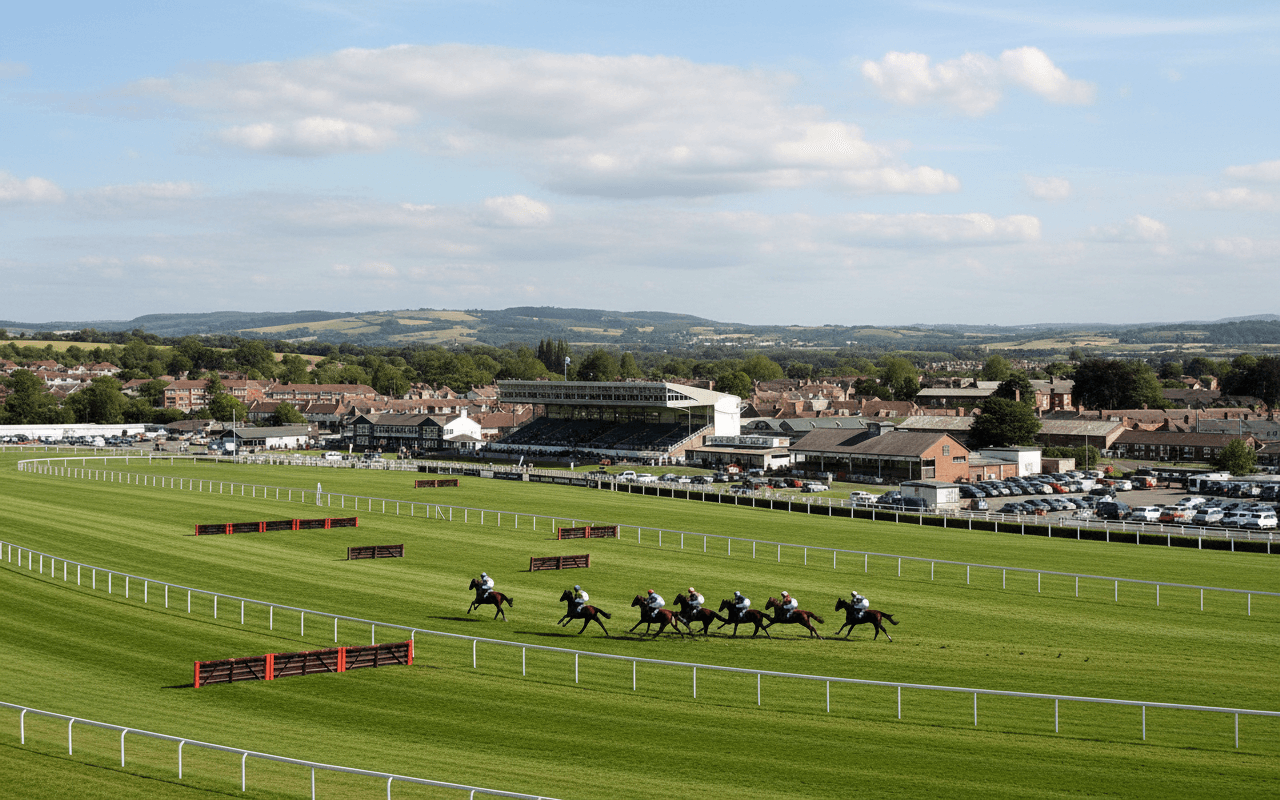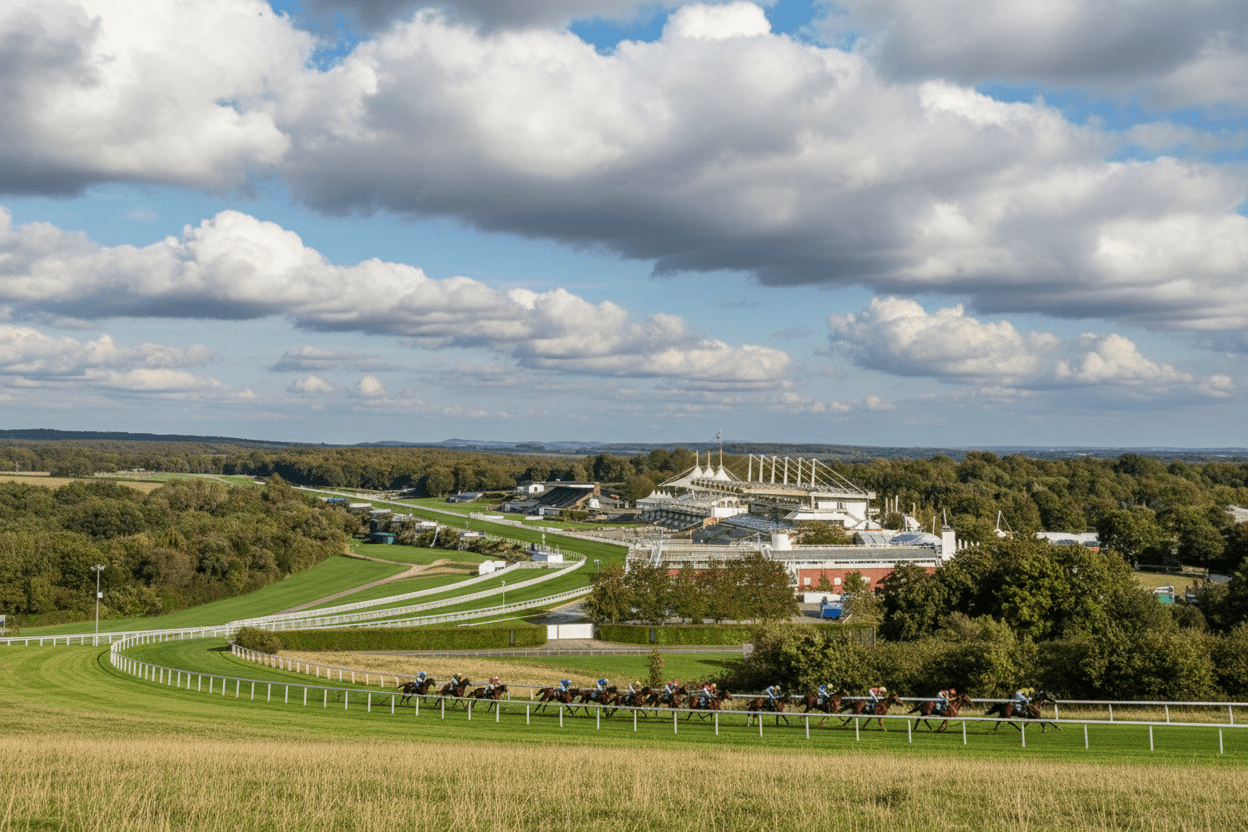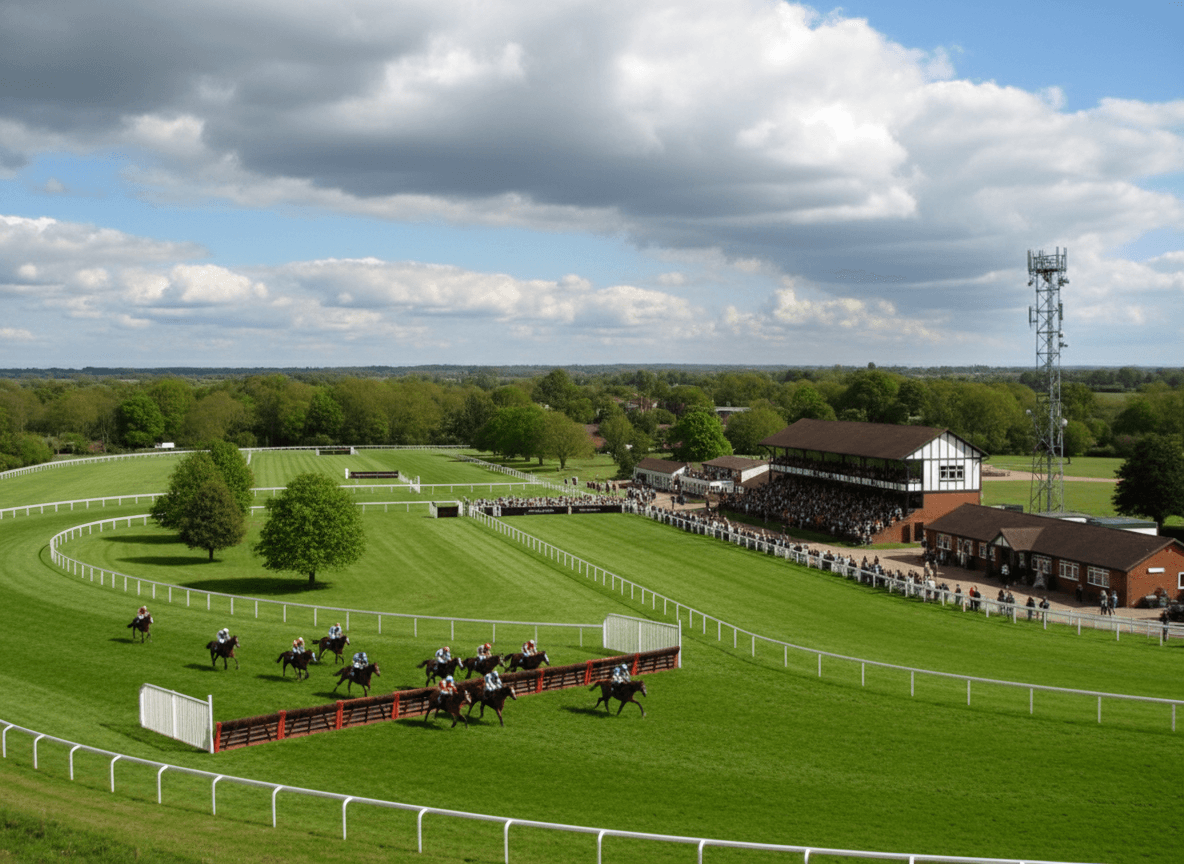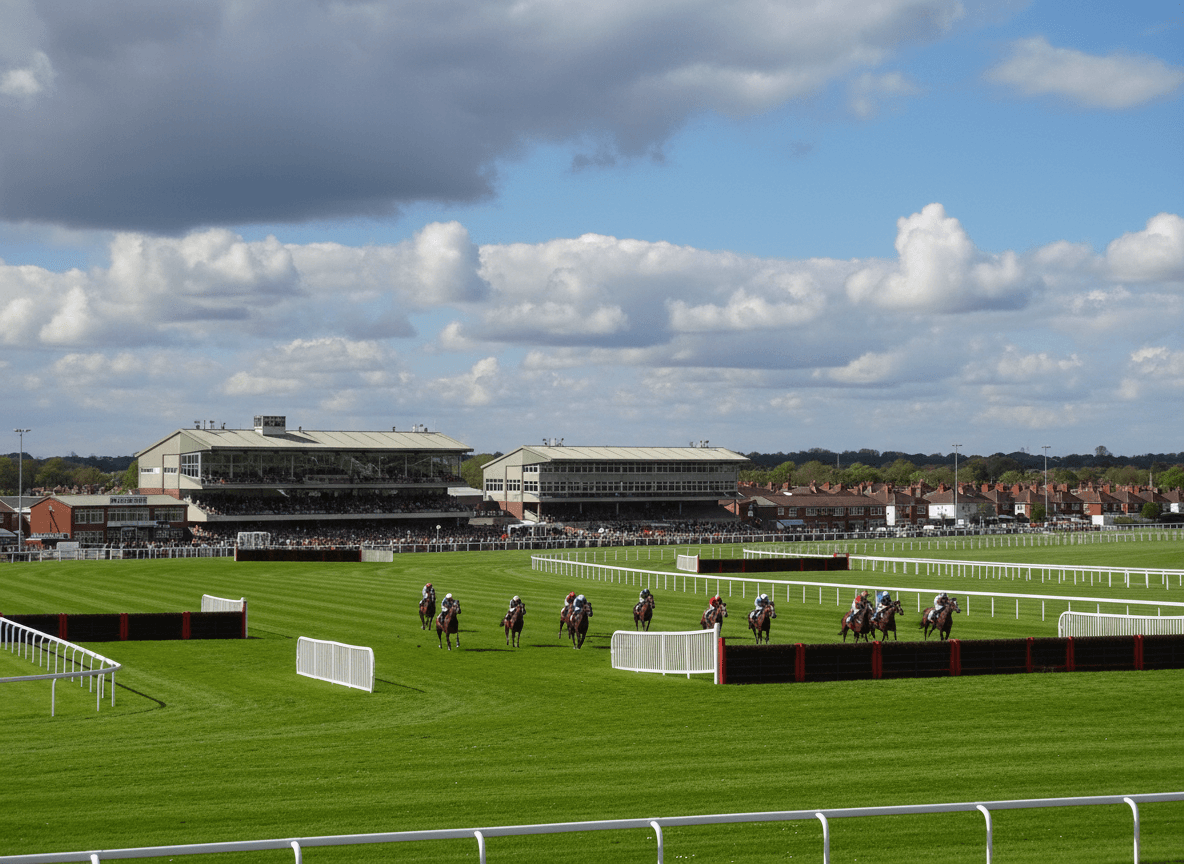
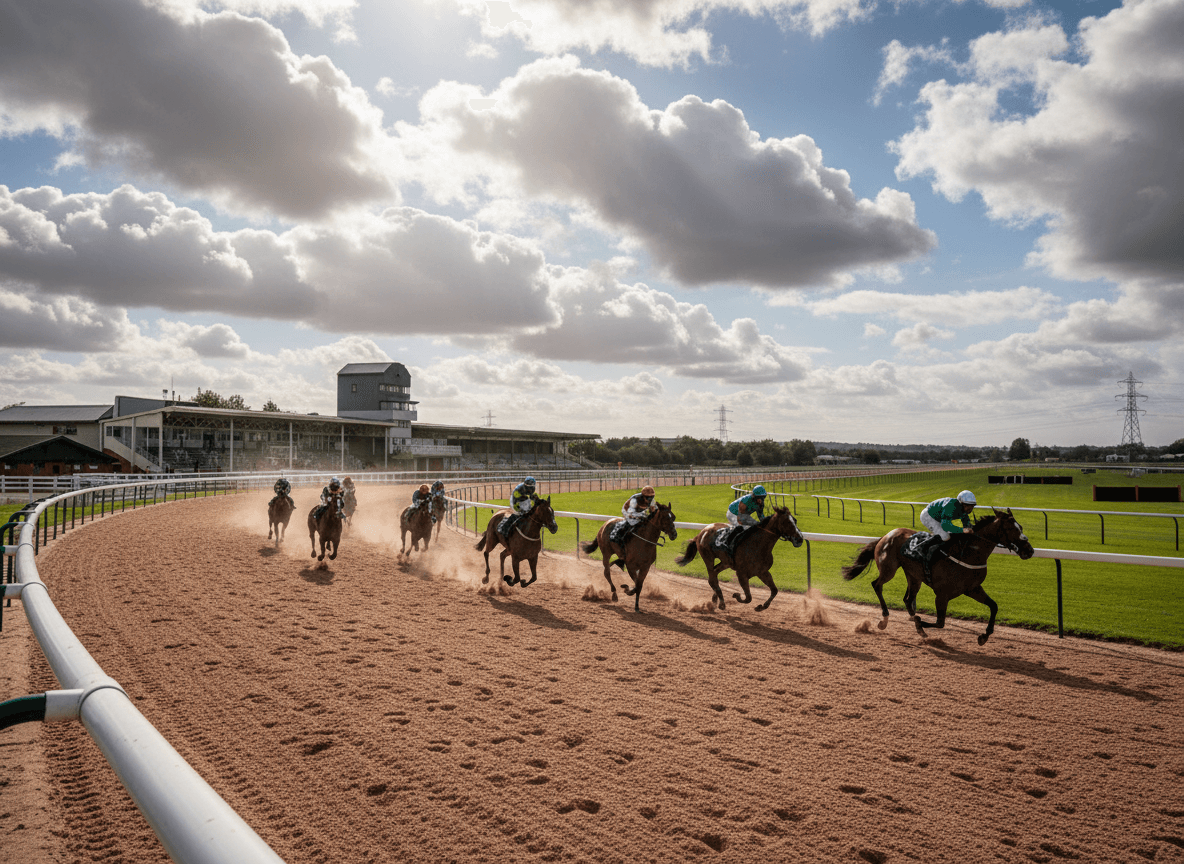
A Course Like No Other
There are racecourses you visit for the occasion, and then there are racecourses you visit because they get under your skin. Southwell belongs firmly in the second category. Nestled quietly in the Nottinghamshire countryside, a short walk from a cathedral town that feels almost untouched by time, this dual-purpose venue has been producing racing of quiet distinction since 1897 — and if anything, its singular identity has only deepened with the passing decades.
What makes Southwell genuinely unlike anywhere else in British racing is its Fibresand surface, a deep, yielding, left-handed oval circuit of one mile and two furlongs that has cultivated its own ecosystem of specialist horses, astute trainers, and punters who have learned — sometimes at considerable cost — that the form book here demands its own particular reading. This is not a course where you can simply transplant your knowledge from Newmarket or Haydock and expect it to translate. Southwell asks questions of horses that no other track quite replicates, and the horses who answer those questions correctly tend to do so repeatedly, with a loyalty to the surface that borders on the devotional.
This week, the course hosts three evening Flat fixtures across Tuesday, Thursday, and Saturday, and with the track freshly prepared, there is every reason to pay close attention.
This Week's Fixtures at a Glance
All three meetings this week take place under evening conditions, which lends Southwell a particular atmosphere — the floodlights catching the sand as the field rounds the final bend, the crowd a little more intimate than you might find at a weekend afternoon meeting elsewhere. Each card carries eight races, and the going is Standard across all three days, which is exactly the condition in which Fibresand racing tends to be at its most reliable and its most form-true.
Crucially, ahead of Tuesday's meeting on 22 September, the track has undergone full decompaction and been reinstated with a Gallop-master finish. This is significant. Decompaction work loosens the surface and restores its intended consistency, removing the compacted layers that accumulate over a busy racing and training schedule. The Gallop-master finish then levels and stabilises the sand to produce a uniform racing surface. In practical terms, this means the track on Tuesday will be riding at its freshest and most true — horses will be running through a surface that has been reset closer to its designed specification, which can subtly alter pace dynamics and, in particular, may slightly reduce the advantage of prominent racers who benefit from a firmer, more compacted top.
By Thursday, 24 September and Saturday, 26 September, the surface will have begun to settle back in under racing and training traffic, so it is worth monitoring any updated going reports as the week progresses, particularly if rainfall is forecast in the Nottinghamshire area.
Understanding the Fibresand: Track Characteristics and Draw Bias
If you are approaching Southwell for the first time — or returning after a break — it is worth spending a moment with the track's particular demands, because they shape almost every race run here.
The circuit is left-handed, tight, and oval, with a run-in of only around two furlongs from the home turn to the winning post. That short run-in is perhaps the single most important feature to understand. It means that horses who find themselves trapped wide or out of position turning for home have very little time to recover, which places a premium on tactical awareness from jockeys and on horses who are naturally economical in their movement — those who don't waste energy fighting the surface or their rider.
On the draw, the conventional wisdom at Southwell over shorter distances — particularly five and six furlongs — has historically favoured low-drawn horses, who can hug the rail and avoid being dragged wide on the tight turns. Over longer trips, the bias becomes less pronounced as the field has time to settle into position, but it never entirely disappears. After a fresh decompaction, it is worth watching Tuesday's early races carefully to see whether the rail is riding as favourably as usual, or whether the looser surface is encouraging horses to drift slightly wider in search of better ground.
Pace is everything on Fibresand. The surface rewards horses who travel smoothly within themselves, and it tends to be unkind to those who expend energy early — the deep sand simply absorbs effort in a way that a turf track does not, and horses who have burned their reserves by halfway rarely find a second wind. Front-runners can and do win here, but they tend to be the relaxed, economical type rather than tearaway leaders. Closers who can produce one sustained, well-timed run are often the ones to be on.
The Type of Horse That Thrives at Southwell
Southwell has a reputation — entirely deserved — for producing specialist winners, horses who have found their home on the sand and return to it with a consistency that would be remarkable anywhere else. When you are looking through the racecards this week, certain profiles are worth prioritising.
- Proven Fibresand performers: Course-and-distance winners should always be respected here. The surface is unusual enough that a horse who has already demonstrated an affinity for it is carrying genuinely meaningful form, not simply form that looks good on paper.
- Relaxed, economical movers: Horses with a low, ground-covering stride tend to handle the deep sand better than those with a high, extravagant action. Watch the paddock and the early strides carefully.
- Consistent, reliable types: Southwell is a track that rewards soundness and regularity. Horses who race frequently and maintain their form — often those from yards that target all-weather racing deliberately — tend to outperform flashier animals making occasional visits.
- Horses stepping back in trip: Given the energy-sapping nature of the surface, horses dropping back slightly in distance from their last run can find the Fibresand more forgiving than it might appear.
- Experienced jockeys on the track: Southwell rewards those who know its rhythms. Jockeys with a strong course record here are always worth a note, particularly in competitive handicaps where positional awareness can be the difference between winning and finishing fifth.
Practical Tips for Racegoers and Punters
Whether you are making the journey to Nottinghamshire this week or following the action from home, a few practical considerations are worth keeping in mind.
For those attending in person, the evening fixtures have a relaxed, convivial atmosphere that is quite distinct from the bustle of a major Saturday afternoon card. The facilities at Southwell are unpretentious and welcoming, and the viewing from the grandstand — particularly in the final stages of a race as the field rounds the home turn — is genuinely excellent. Wrap up; September evenings in the East Midlands can turn brisk once the sun drops.
For punters, the decompaction work ahead of Tuesday's card is the key variable to carry into your analysis. Fresh surfaces at Southwell can occasionally produce a slightly different pace dynamic in the opening meetings, so treat Tuesday's results as live information and adjust your approach for Thursday and Saturday accordingly. The standard going across all three days is encouraging — it suggests a consistent, fair surface rather than one that will throw up random results — but Fibresand always retains a degree of unpredictability that keeps things interesting.
Finally, do not overlook the trainers who target Southwell deliberately and repeatedly. Certain yards have built genuine expertise on this surface, and their horses often arrive here in better shape than their recent form might suggest, precisely because the trainers understand what the track requires.
A Week Worth Watching
Three evening meetings, twenty-four races, and a freshly prepared Fibresand surface that is as close to its best as it will be all autumn — there are worse ways to spend a week in racing than keeping a close eye on Southwell. This is a course that rewards patience and knowledge in equal measure, and it has a way of making even a modest midweek card feel like something worth caring about.
Check the full racecards for Tuesday, Thursday, and Saturday as they are published, keep an eye on any going updates, and enjoy what promises to be a fine week of all-weather racing from one of Britain's most characterful venues.