A Track That Never Stops Giving
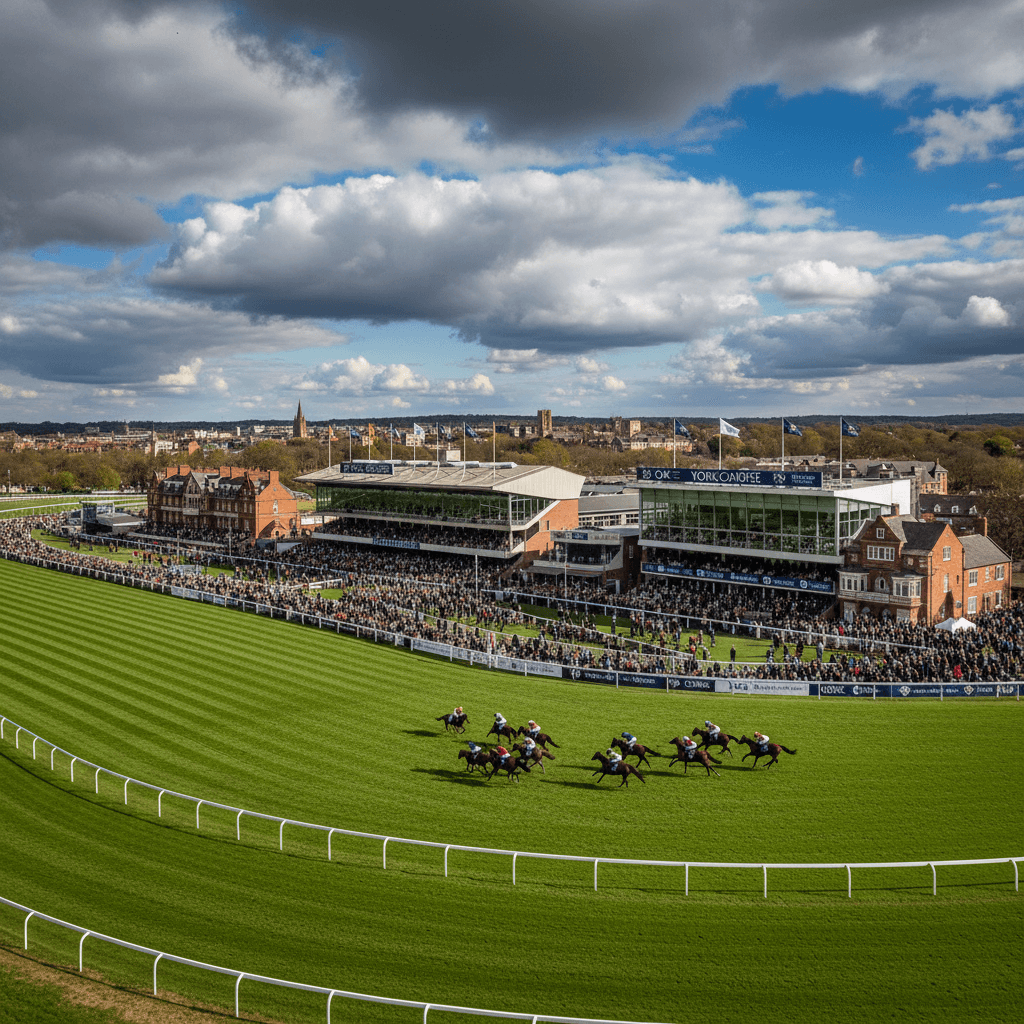
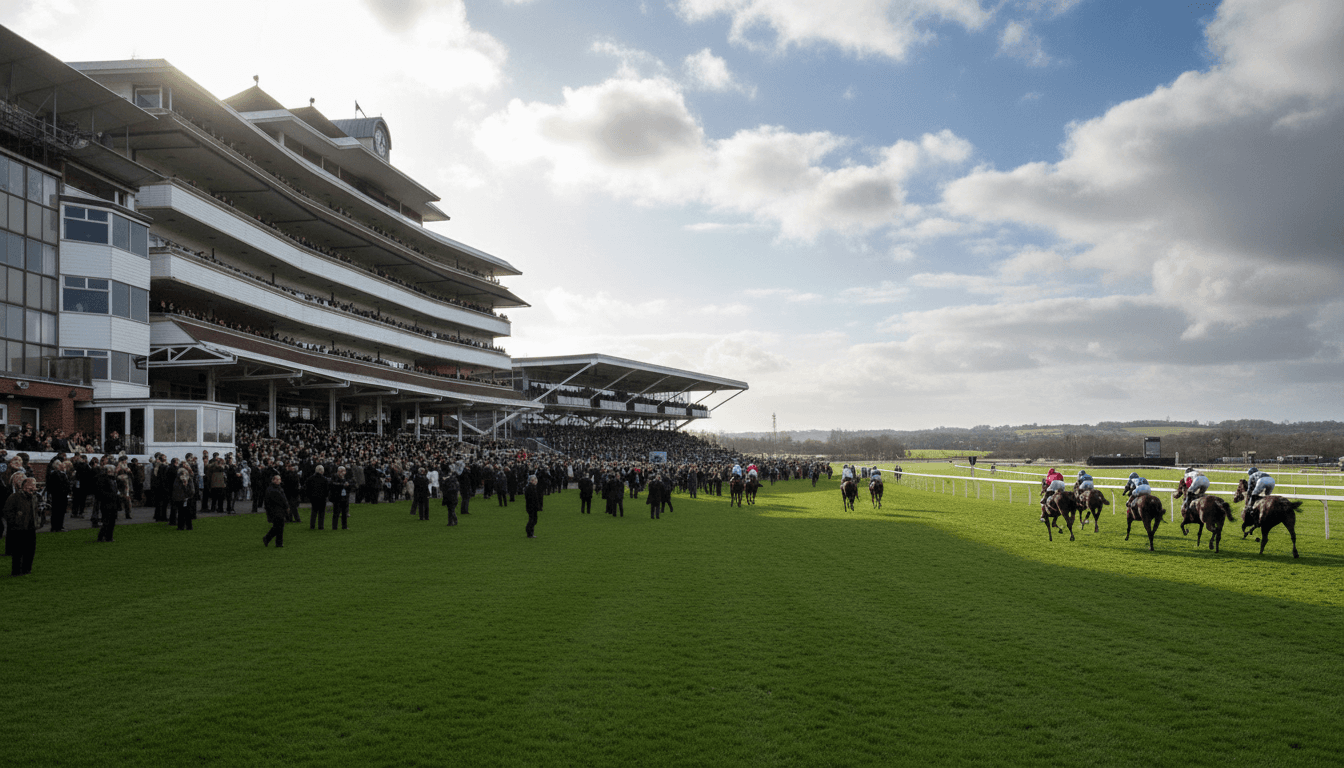
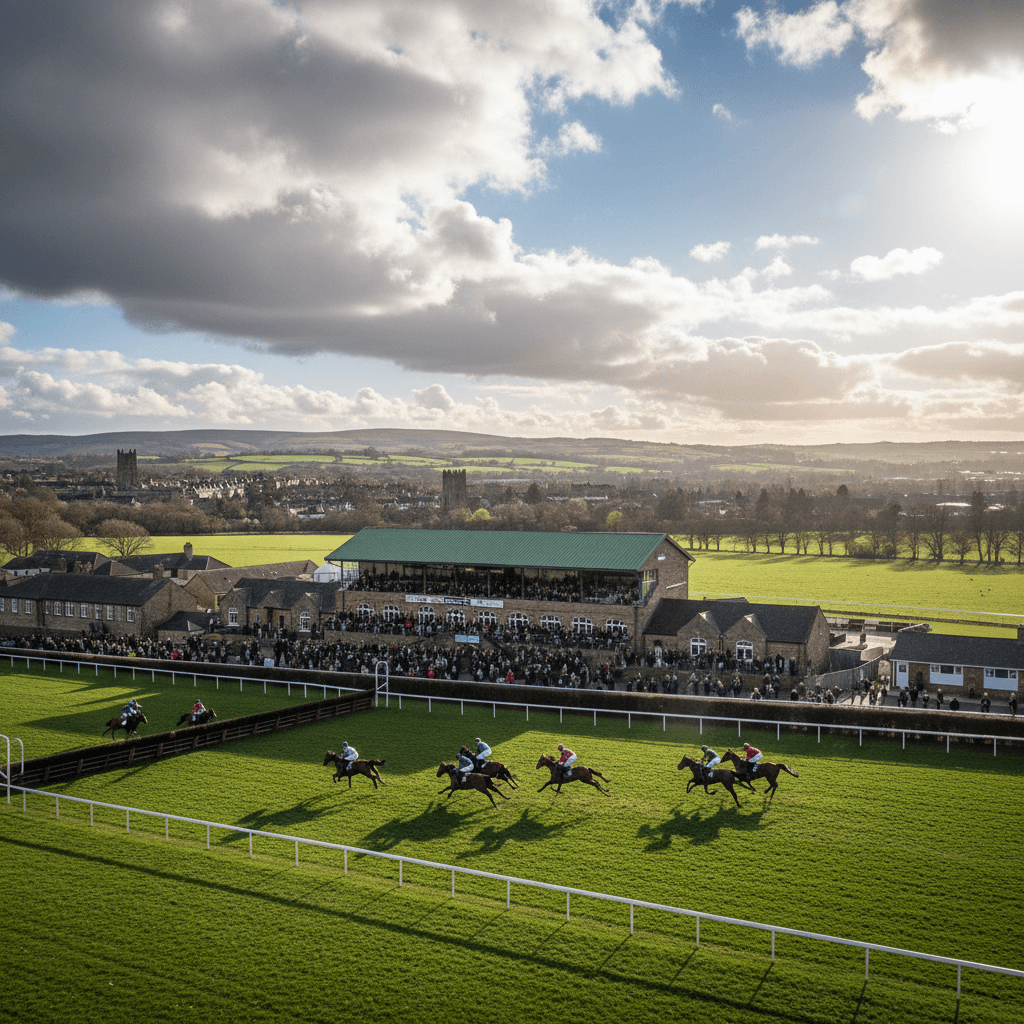
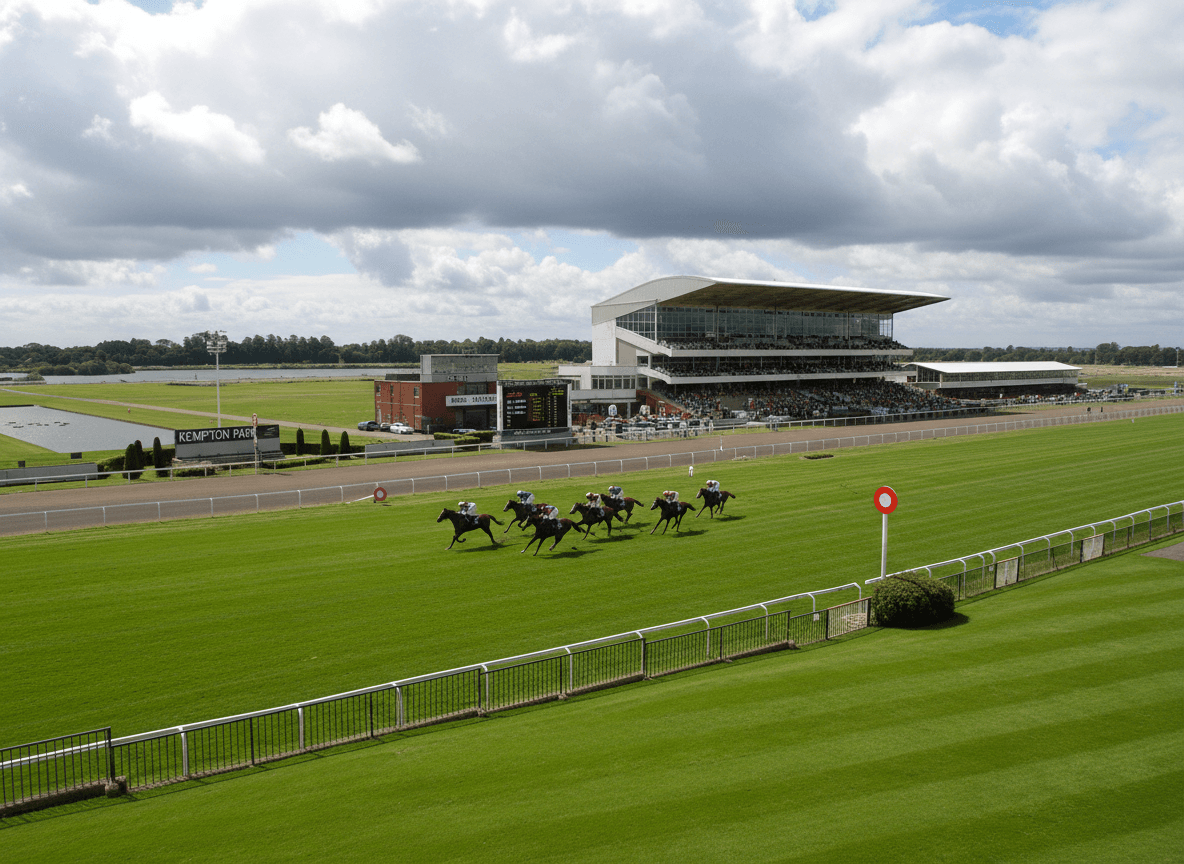
There are racecourses that demand your attention only when the calendar conspires in their favour — and then there is Kempton Park. Tucked into the leafy Surrey commuter belt at Sunbury-on-Thames, this is a track that has been quietly earning its place in racing hearts since 1878, and it shows no signs of slowing down. Whether you are watching a Grade 1 chaser thunder down the long home straight on a frost-bitten Boxing Day or settling into a summer evening with a glass in hand as the floodlights flicker to life, Kempton has a way of making you feel that you are exactly where you ought to be.
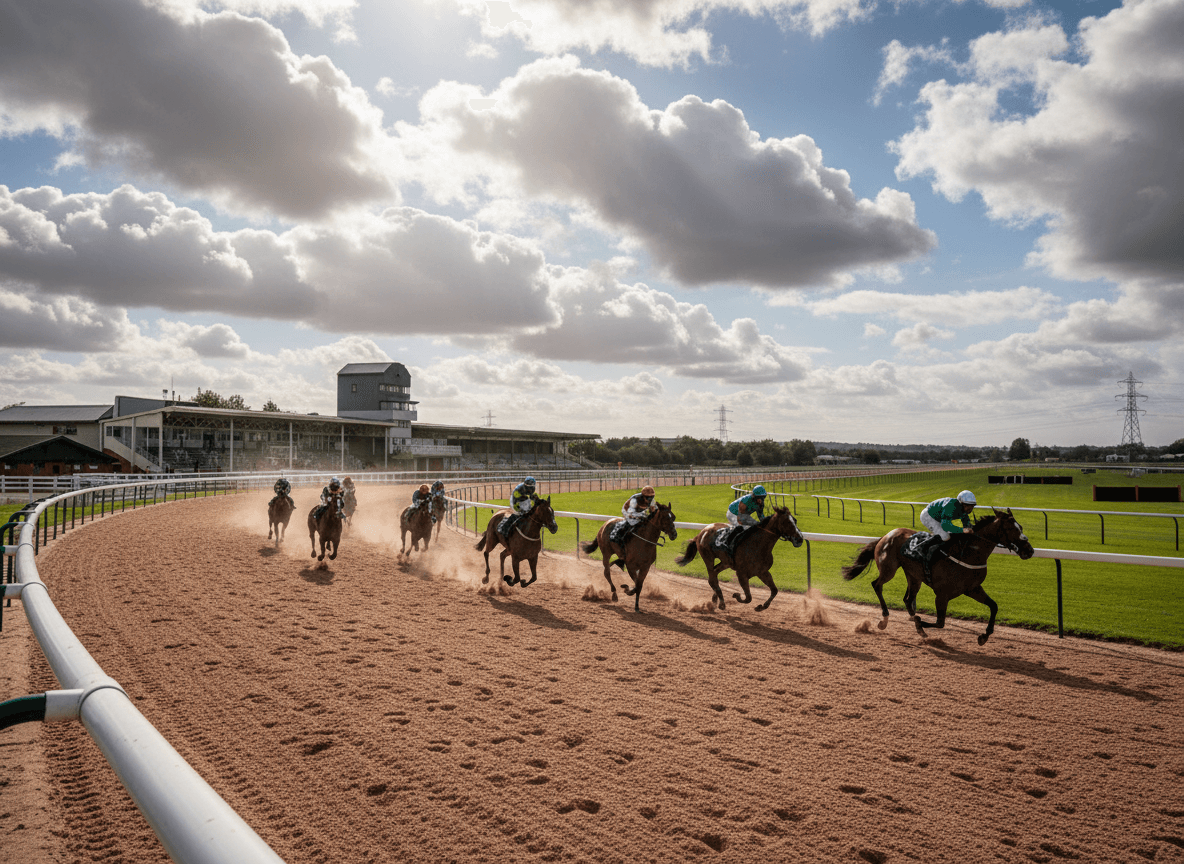
It is a dual-purpose track in the truest sense — not merely a venue that tolerates both codes, but one that has genuinely mastered them. The all-weather Polytrack surface, which replaced the old turf flat course and transformed Kempton into a year-round destination, has become one of the most studied and respected surfaces in British racing. Trainers trust it, horses thrive on it, and punters have learned — sometimes the hard way — that it rewards a particular kind of understanding. This week, with three fixtures spread across Tuesday afternoon, Thursday evening, and Saturday evening, there is ample opportunity to develop yours.
This Week's Fixtures at a Glance
The week opens with an afternoon card on Tuesday, 11 August, six races run on a Standard Polytrack surface. Afternoon racing at Kempton has a slightly different character to the evening meetings — the crowd tends to be smaller, the atmosphere more intimate, and the pace of the day more considered. It is, in many ways, the ideal environment for careful observation, and a good opportunity to watch horses travel and settle before the bigger weekend audience arrives. You can find the full Kempton Park Tuesday, 11 August 2026 racecard on site.
Thursday evening, 13 August, brings the first of the week's floodlit fixtures — also six races on a Standard surface. This is where Kempton's personality really begins to assert itself. As the light fades and the Polytrack takes on that distinctive sheen under the lamps, there is an electricity to the place that is hard to replicate anywhere else in British racing. The Kempton Park Thursday, 13 August 2026 racecard is well worth an early look.
The week concludes with a Saturday evening card on 15 August, where the going is listed as TBC at the time of writing. Standard conditions are expected, but it is always worth checking closer to the day — surface management at Kempton is generally excellent, and the team there are transparent about any adjustments. The Kempton Park Saturday, 15 August 2026 racecard will be updated as declarations come in.
Understanding the Kempton Polytrack
If you are new to Kempton, or to all-weather racing more broadly, the most important thing to understand is that the Polytrack surface is consistent but not uniform in its demands. The track is a right-handed oval of approximately one mile and five furlongs, with a separate five-furlong straight that comes into play for the shortest-distance sprints. The bends are relatively sharp by British standards, the home straight is long and genuine, and there is enough of a galloping character to the track that horses with a true, sustained action tend to be rewarded.
Draw bias is one of the most discussed aspects of Kempton's Polytrack, and rightly so. As a general principle, low draws tend to hold an advantage over sprint distances, particularly in large fields where the inside rail offers a cleaner, more efficient path through the bends. Over a mile and beyond, the bias becomes less pronounced, though horses drawn in the middle to low stalls still tend to find themselves in more comfortable positions as the field settles. It is worth noting that bias can shift subtly depending on how the surface has been raked and maintained, so recent form on the track — particularly horses that have won or run well from similar draws — is always worth factoring in.
Pace dynamics matter enormously here. The Polytrack rewards horses that can travel smoothly and economically, and races at Kempton are rarely won by horses that have had to work hard to secure their position in the early stages. Front-runners can and do win, but they need to be genuine front-runners — horses that lead because it suits them, not because they have been forced there. Closers who can find cover and produce a sustained run through the final two furlongs are consistently competitive, particularly over the mile and mile-and-a-quarter trips.
What Type of Horse Thrives at Kempton?
Experience on the surface is perhaps the single most reliable indicator of future performance at Kempton. Horses that have already demonstrated they handle the Polytrack — that they do not mind the slightly synthetic give underfoot, that they travel smoothly around the right-hand bends — should always be given credit for that knowledge. Trainers such as those based at yards in Newmarket, Lambourn, and the Surrey and Berkshire corridors tend to have strong records here simply through the volume of runners they send, but it is the individual horse's relationship with the surface that counts most.
- Consistent, reliable types who post similar figures run after run tend to outperform horses with wide variability in their form.
- Horses with a round, fluid action — rather than those that hit the ground hard — tend to find the Polytrack more forgiving and more to their liking.
- Proven course winners deserve serious consideration, particularly those that have won over similar distances and in comparable conditions.
- Lightly raced, improving horses from progressive yards can spring surprises, especially in the summer handicaps where the weights are still finding their level.
- Horses dropping in class from turf to all-weather can be deceptive — some adapt immediately, others never quite settle. Check their previous all-weather runs carefully.
Practical Tips for Racegoers and Punters
For those attending in person this week, Kempton's evening fixtures in particular offer excellent value. The venue is well-connected — a short journey from London Waterloo to Kempton Park station, which sits virtually on the racecourse doorstep — and the facilities are comfortable without being ostentatious. The paddock is compact and accessible, which means you can get genuinely close to the horses before each race, and that proximity is worth more than any form guide if you know what you are looking at. A horse that is sweating, unsettled, or lacking its usual bloom in the coat is telling you something that the tissue price has not yet accounted for.
For those following from home or placing bets remotely, a few practical principles apply. Always check the going update on the morning of racing — Standard can shade towards Standard to Slow if there has been overnight maintenance or moisture, and that shift can alter the complexion of a race significantly. Watch the market moves in the hour before each race; Kempton tends to attract sharp, informed money, and significant moves in the betting are rarely without reason. And above all, do not overlook course-and-distance winners — at a track this consistent, that combination of evidence is among the most reliable in the sport.
A Final Word on Why Kempton Matters
It would be easy to take Kempton Park for granted. It does not have the sweeping grandeur of Ascot or the storied turf of Newmarket, and its most famous day — that glorious, frost-touched Boxing Day — belongs to the winter rather than the summer. But there is something deeply valuable about a track that simply delivers, week after week, through every season, in every weather. The horses here are well cared for, the surface is conscientiously maintained, and the racing is honest and competitive in a way that rewards genuine study and genuine love of the sport.
Three fixtures, eighteen races, and all the pleasures that come with a warm August evening at one of British racing's most dependable venues. Whether you are there in person or following from afar, Kempton Park this week is well worth your time.