A Course That Has Always Known Its Own Worth
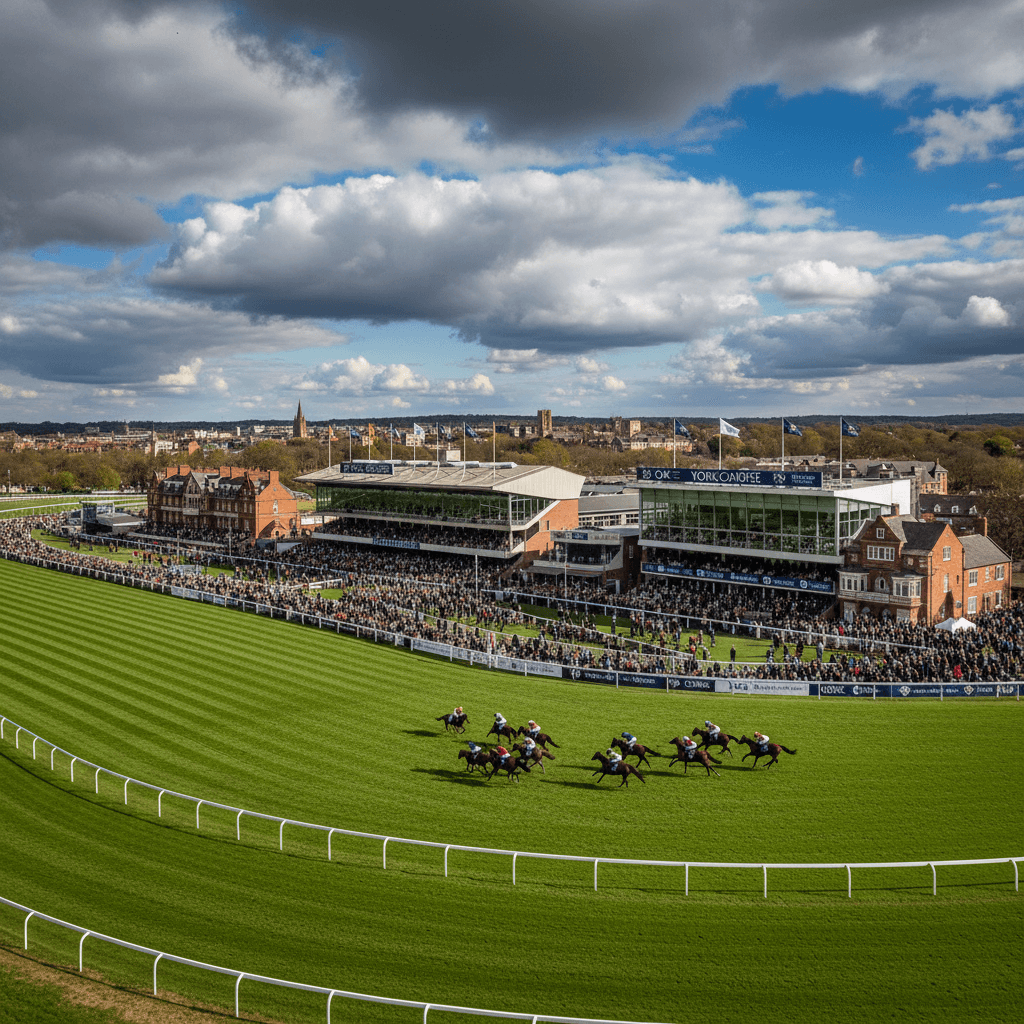
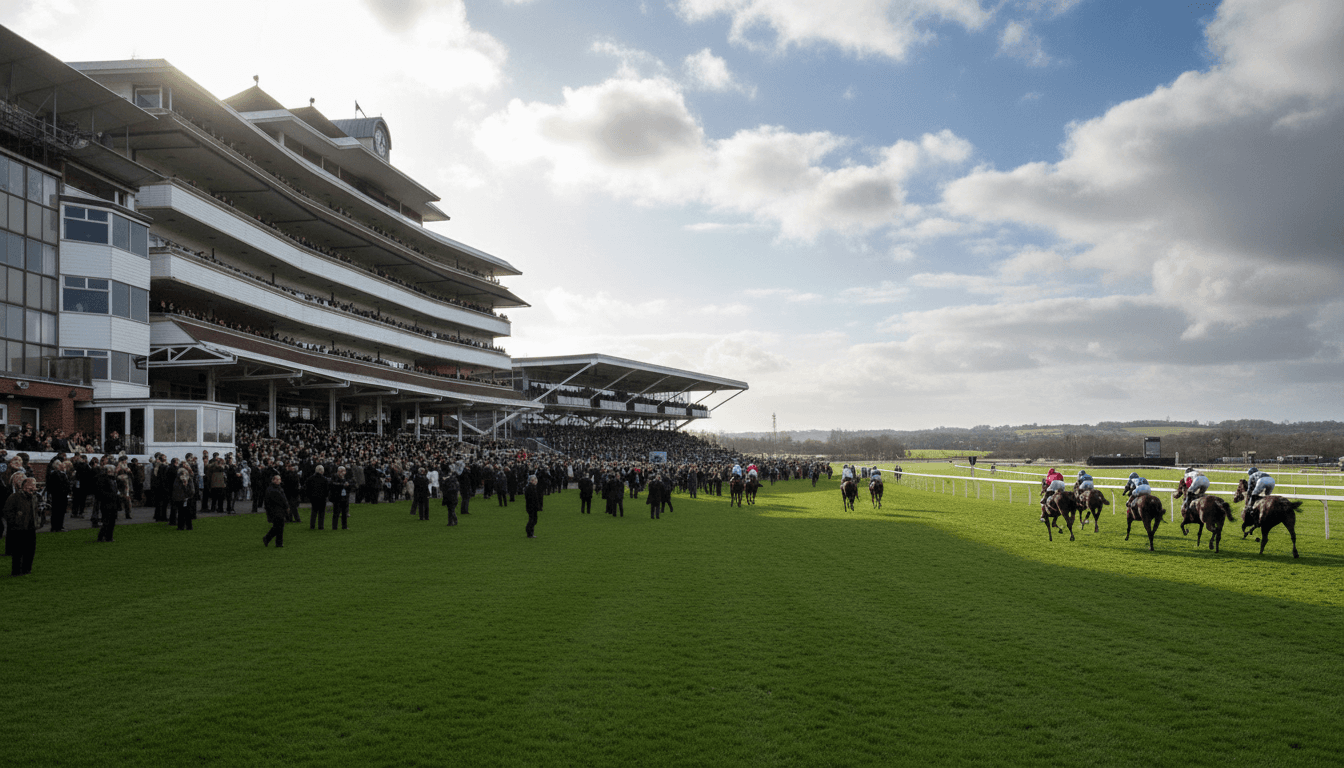
There are racecourses that feel functional, and there are racecourses that feel right — places where the land seems to have been waiting all along to have horses gallop across it. Newbury belongs emphatically to the latter category. Nestled in the gentle Berkshire countryside, this left-handed galloping track has been staging racing since 1905, and more than a century on, it retains a quality that newer venues, however well-appointed, simply cannot manufacture: a sense of accumulated significance, of great horses and great moments layered into the very turf.
The course is wide, relatively flat, and blessed with long, sweeping bends that reward balance and athleticism over brute force. Its extended straight — one of the more generous in British Flat racing — means that races rarely come down to a lucky gap or a fortunate position at the rail. Horses are asked to gallop, to sustain their effort, and to prove themselves over ground that offers no shortcuts. There is a reason trainers of the highest calibre return here season after season: Newbury is, in the truest sense of the phrase, a fair test.
It has hosted the Group 1 Al Shaqab Lockinge Stakes, the Weatherbys Super Sprint, and in its jumping guise, the Grade 1 Challow Novices' Hurdle and the Grade 2 Denman Chase. The ghost of the old Hennessy Gold Cup — now reborn as the BetVictor Gold Cup — still seems to linger in the grandstand air on cold winter afternoons. But this week, it is the Flat that takes centre stage, and with three fixtures packed into four days under the August sun, Newbury is offering something close to a midsummer festival.
This Week's Fixtures: What to Expect
The week opens with a Thursday afternoon card on 6 August, six races run under what promises to be ideal summer conditions. The ground is good to firm throughout the week — a reading that suits Newbury particularly well, allowing the course's natural drainage and well-maintained surface to present horses with a consistent, honest footing. You can view the full Newbury Thursday, 6 August 2026 racecard on our course page.
Friday brings something a little different in character: a six-race evening fixture on 7 August, the kind of meeting that has become one of summer racing's quiet pleasures. Evening racing at a quality venue like Newbury carries its own particular atmosphere — the light softens, the crowd tends to be a touch more relaxed, and there is a festive feeling in the air that afternoon cards, for all their prestige, do not always replicate. Check out the Newbury Friday, 7 August 2026 racecard for the full lineup.
The week concludes with a seven-race Saturday afternoon card on 8 August — the biggest day of the three, with an extra race adding to what should be a full and competitive afternoon's sport. Saturday cards at Newbury tend to attract stronger fields and higher-profile entries, so this is the day for those who want to see the best horses the meeting has to offer. The Newbury Saturday, 8 August 2026 racecard is well worth studying in advance.
Reading the Track: What the Form Book Tells Us
Understanding Newbury's characteristics is genuinely useful, whether you are betting from home or standing in the paddock trying to assess a field in the flesh. The course's width — it is notably broad, particularly in the home straight — means that draw biases are less pronounced here than at many other Flat tracks, which is welcome news for punters tired of watching the result be decided before the stalls open. That said, on good to firm ground over sprint distances, horses drawn towards the centre to high side of the field can hold a marginal advantage, particularly when the pace is strong and the field fans wide.
Pace dynamics matter enormously at Newbury. The long run-in rewards horses that can sustain their gallop rather than produce a single explosive burst, which means hold-up horses ridden for a late challenge can be vulnerable if the pace collapses in the middle stages. Conversely, a well-judged front-running display on good to firm ground — where the surface is quick enough to reward a bold, galloping style — can be very difficult to peg back. Look for horses whose previous form shows they have won or run prominently at tracks with similarly long straights: Newmarket, Goodwood, and Haydock are useful comparators.
The Going Factor
Good to firm ground at Newbury is genuinely good to firm — the course's excellent drainage and meticulous groundskeeping mean that the going description reflects reality rather than optimism. Horses with a proven record on quick ground should be prioritised this week, and it is worth checking whether any runners in the field have previously shown a preference for give underfoot. On this surface, athletic, well-balanced types tend to outperform heavy, powerful horses that need some cut to show their best.
The Type of Horse That Thrives Here
Newbury rewards a particular kind of racehorse: one that is well-made, carries its condition well, and possesses the stamina to sustain a gallop over a true, unrelenting surface. Horses that win here tend to be genuine, uncomplicated gallopers — they do not need the track to do them favours, because the track does not offer any. Flashy, one-paced sprinters can struggle if they cannot maintain their momentum into the straight, while horses with a high cruising speed and a clean, economical action tend to excel.
From a welfare perspective, it is also worth noting that Newbury's wide, well-maintained surface is one of the safer environments in British Flat racing. The course's management takes ground conditions seriously, and the relatively gentle bends reduce the physical stress on horses compared to tighter tracks. Trainers who care about their horses' long-term soundness — and there are many — often speak warmly of Newbury for precisely this reason.
Practical Tips for Racegoers and Punters
- Arrive early for the paddock. Newbury's parade ring is spacious and well-positioned, giving racegoers an excellent opportunity to assess horses before the off. On good to firm ground, look for horses that are moving freely and carrying a healthy summer coat — any sign of sweatiness or tension before a race on quick ground can be telling.
- Watch the market moves. Newbury attracts well-informed stables and connections who know their horses' form thoroughly. Significant market support — particularly for horses trained by yards with a strong record at the course — is worth noting.
- Consider the draw carefully in sprints. While the bias is not extreme, it is worth checking recent results for any emerging patterns across the week, particularly if the ground remains consistently good to firm throughout.
- Evening racing on Friday offers value. Evening cards sometimes attract less media attention than Saturday afternoon fixtures, which can mean slightly less efficient markets and opportunities for the diligent punter.
- Plan your journey. Newbury racecourse is well-served by rail — Newbury station is a short walk from the course — and parking is plentiful. Saturday will be the busiest day, so Thursday or Friday may offer a more relaxed experience for first-time visitors.
A Week Worth Savouring
Three days of summer Flat racing at one of Britain's most respected and best-loved tracks, on going that should produce fast, genuine, competitive sport — it is difficult to ask for much more than that. Newbury has a way of making racing feel important without making it feel heavy; there is prestige here, but there is also joy, and the two sit together comfortably in the Berkshire air.
Whether you are heading through the gates on Thursday afternoon, settling in for Friday evening's more relaxed atmosphere, or making a day of it on Saturday with family and friends, the course will reward your attention. Study the Newbury course page for the latest going updates and form guides, and take the time to watch the horses in the paddock before each race. This is a track that asks honest questions of its runners — and the answers, more often than not, are worth watching.