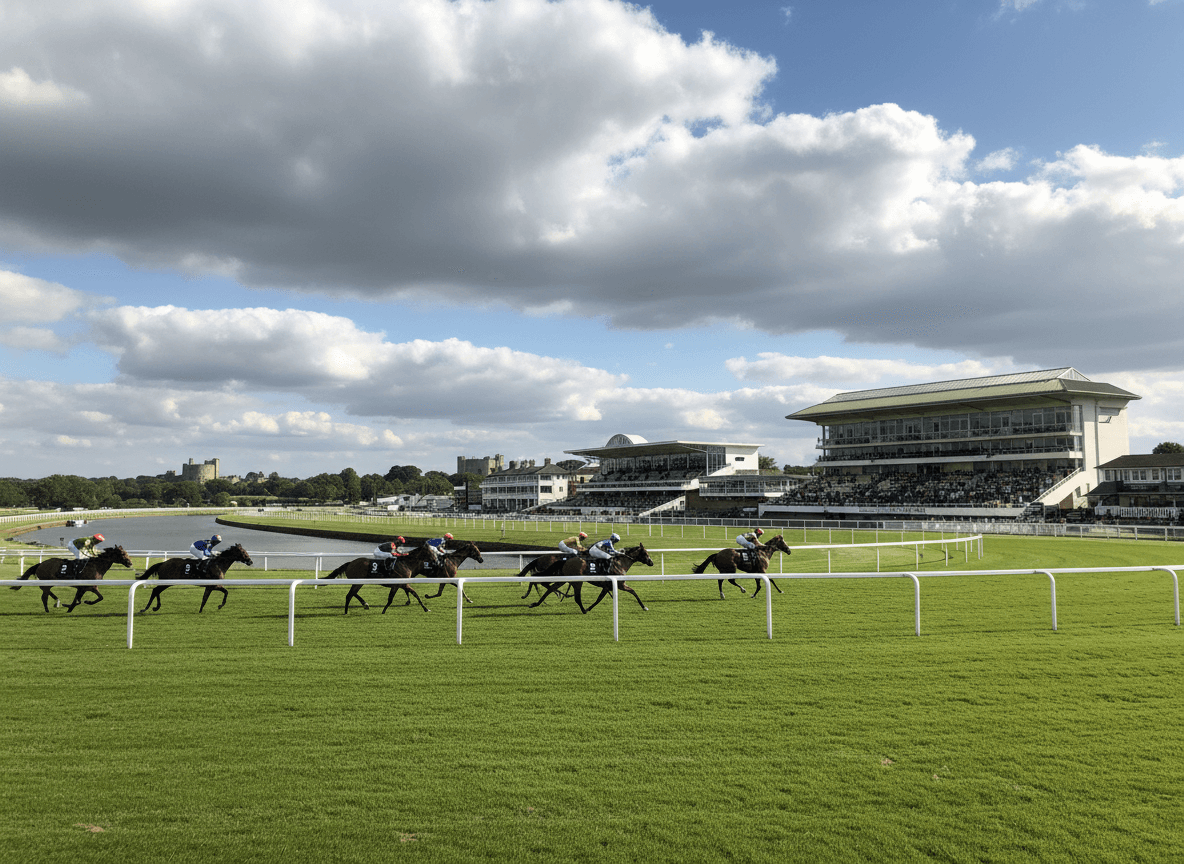
A Course Like No Other
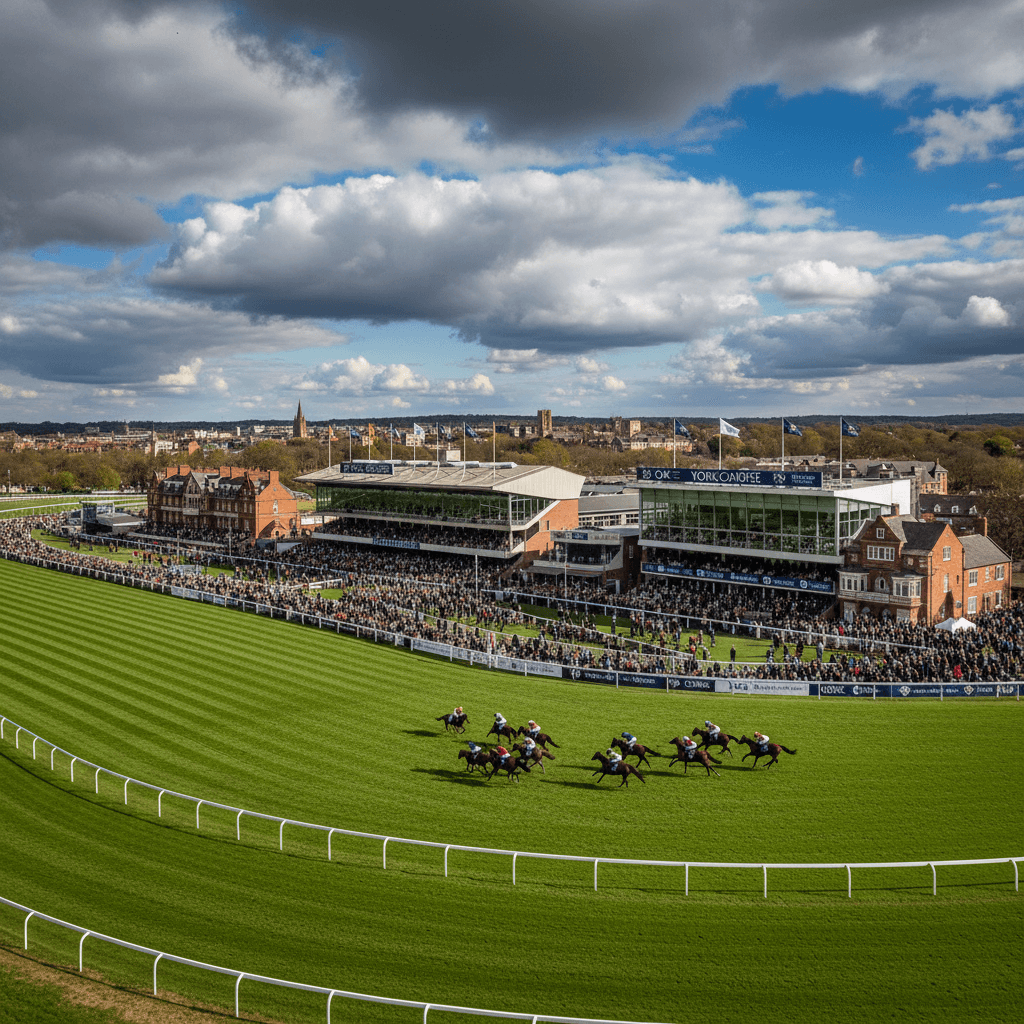
There are racecourses you visit for the racing, and there are racecourses you visit for the feeling. Windsor, on a warm Monday evening in July, belongs firmly in the second category — though it more than earns its place in the first. Tucked beside the River Thames in Berkshire, with the castle watching over the whole spectacle from its chalk hill, it is one of those places that reminds you why flat racing in England is worth caring about.
Opened in 1897, Windsor is one of only two figure-of-eight tracks in the United Kingdom — a layout that gives it a character entirely its own. The course crosses itself at roughly the halfway point of most contests, meaning horses and jockeys must navigate a genuine change of direction mid-race. It is left-handed in its overall orientation, predominantly flat, and stretches from five furlongs out to a mile and a half. The run-in, which bends left before straightening up, is longer than many assume and frequently punishes horses who find themselves on the wrong side of a pace collapse.
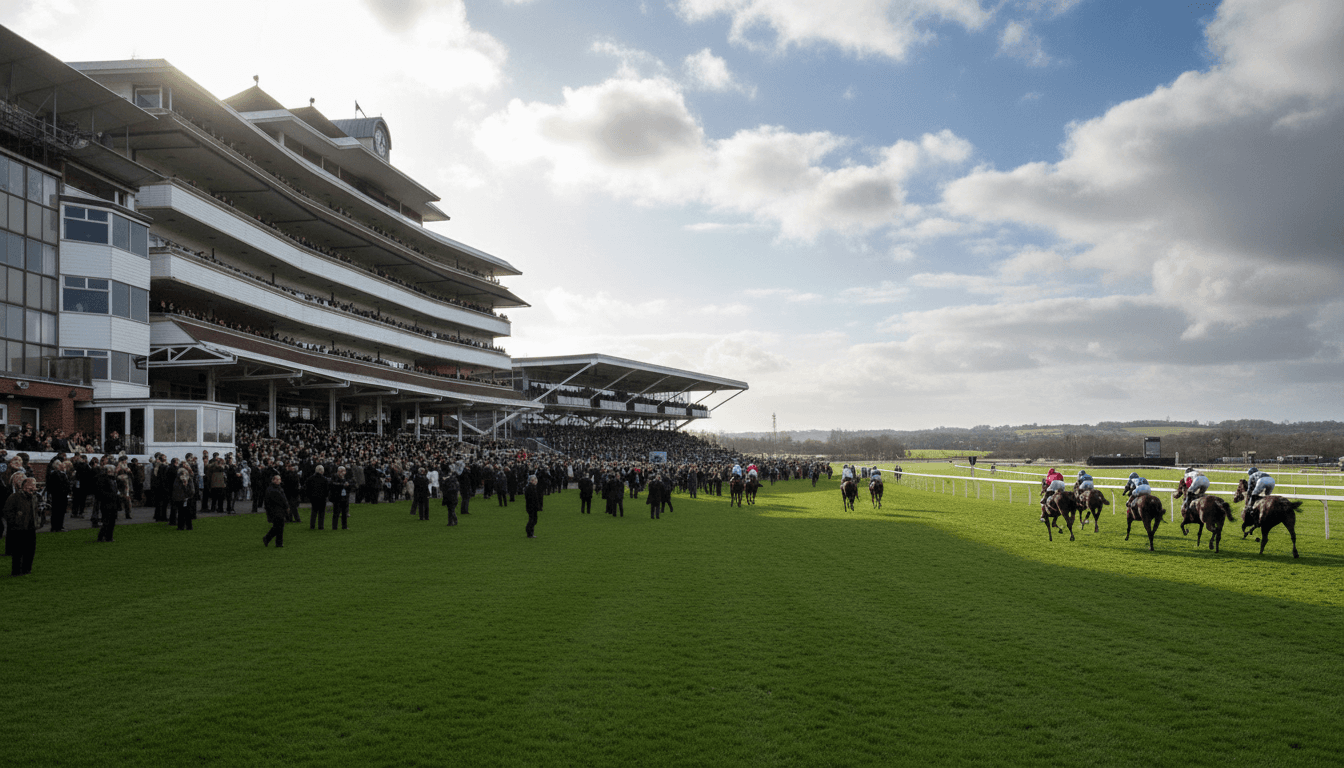
The summer evening fixtures — Monday nights especially — have become something of an institution. The crowds are lively without being rowdy, the light is long and golden, and the racing, while rarely of championship grade, is consistently competitive and frequently illuminating. This is where trainers test their promising maidens, where handicappers find their level, and where the sharp-eyed observer can sometimes spot something before the market catches up.
This Week's Fixtures: What to Expect
Windsor hosts two consecutive evening meetings this week. The Windsor Monday, 6 July 2026 card offers six races on Standard going, with the Windsor Tuesday, 7 July 2026 card following in identical format the next evening — six races again, going again listed as Standard.
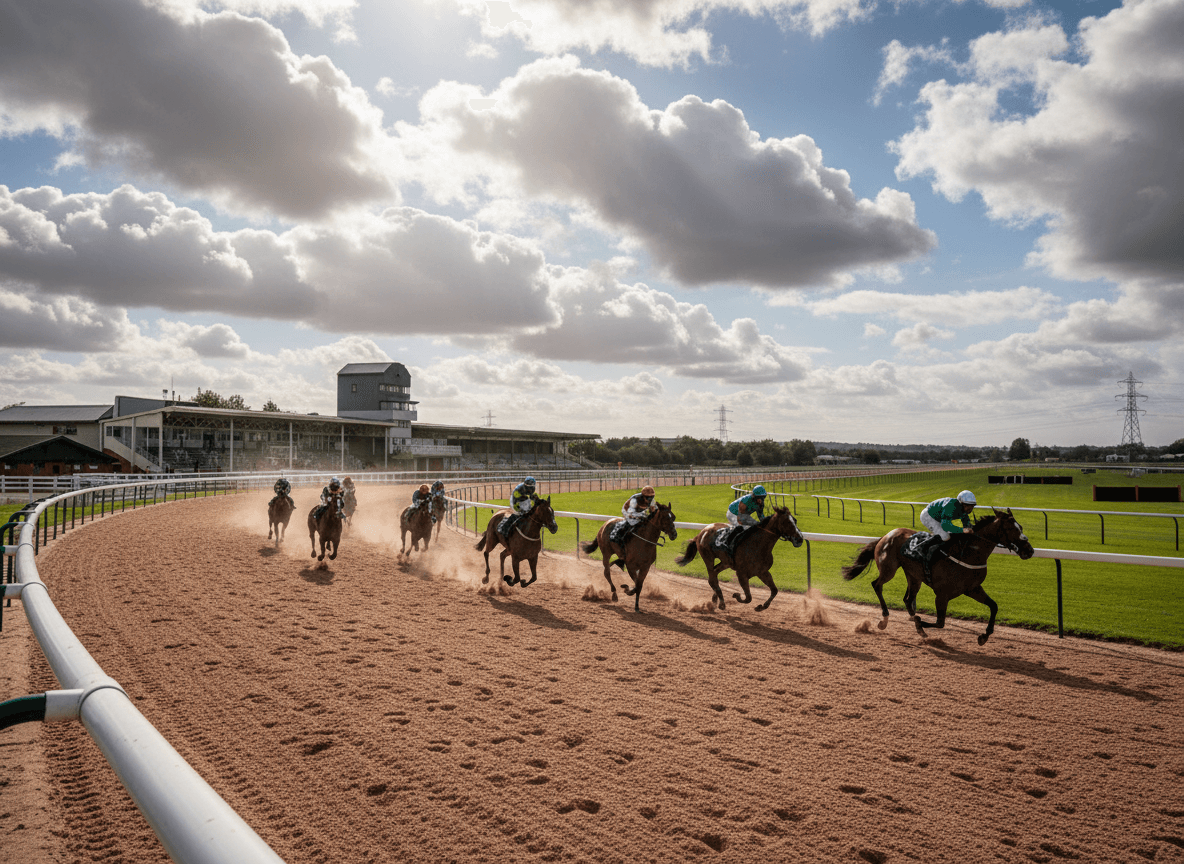
Standard going at Windsor in midsummer is a reliable surface. The track drains well and the ground tends to ride consistently throughout the card, without the late-evening deterioration you sometimes see at courses with heavier clay bases. Horses who have shown a preference for a sound surface will be at home here, and times recorded on Standard Windsor ground are generally trustworthy for comparative purposes.
Evening fixtures typically begin around 5:30–6:00pm, running through to approximately 9:00pm — long enough to catch the best of the evening light, short enough that the last race doesn't feel like a concession to the darkness. The format suits casual racegoers and serious punters alike, and the six-race card length keeps things focused without feeling thin.
Reading the Track: Draw, Pace, and the Figure-of-Eight Factor
Understanding Windsor as a betting proposition requires a little more thought than most tracks demand, and that is part of what makes it rewarding.
Draw Bias
In sprints — particularly over five furlongs and six furlongs — the high draw has historically held an advantage at Windsor, particularly in larger fields. The track bends left early, and horses drawn wide on the stands side can sometimes find a more favourable racing line. That said, this bias is not absolute and can be softened by a strong pace set from a low draw. In fields of ten or fewer, the draw effect diminishes considerably and should not be weighted too heavily.
Over a mile and beyond, draw matters less. The figure-of-eight configuration means that positional advantage shifts through the race, and by the time the field reaches the final turn and the long run-in, it is track position and stamina that tend to settle the argument.
Pace Scenarios
Windsor rewards horses who can travel comfortably in a rhythm. The figure-of-eight layout creates a natural disruption in pace — horses tend to ease slightly through the crossing point, then re-accelerate — and those who handle this smoothly without burning energy have a structural advantage. Keen horses who pull hard in the early stages frequently find themselves in trouble in the closing stages, not because the track is especially testing, but because that mid-race lull tempts them into an effort they cannot sustain.
In sprint races, a horse who can sit just off the pace and make a clean move into the straight is ideally positioned. Front-runners at Windsor do win, but they tend to be genuine front-runners with a relaxed cruising speed, not horses who bolt into an unsustainable lead.
The Run-In
The final furlong at Windsor is often where races are decided and where form students earn their money. The track bends left before straightening, and horses who are balanced and responsive to their jockey's hands through that bend gain several lengths on those who drift or hang. Jockeys with good Windsor records tend to be those who ride the bend well — it is a skill that is learned, not assumed.
What Type of Horse Thrives at Windsor?
The honest answer is: a versatile one. Windsor does not strongly favour one physical type over another in the way that, say, a stiff uphill finish might suit a big, powerful stayer. What it does favour is mental composure. The figure-of-eight layout, the evening crowds, the riverside setting — it is a busy, stimulating environment, and horses who are easily unsettled by atmosphere or who take time to settle in unfamiliar surroundings can underperform here.
- Consistent travellers — horses who settle quickly and travel within themselves — tend to outrun their odds at Windsor.
- Horses with a turn of foot rather than relentless galloping ability suit the nature of the track, where a well-timed late move is often more effective than grinding from the front.
- Course and distance winners should always be respected here. Windsor's idiosyncrasies mean that familiarity genuinely counts, and horses who have already learned the track's rhythms carry that knowledge forward.
- Lightly-raced improvers from leading stables often appear in the maiden and novice contests on these cards. The evening fixture format attracts trainers who want a relatively low-pressure environment to introduce horses — and the Standard going means the ground won't be used as an excuse.
Practical Notes for Racegoers and Punters
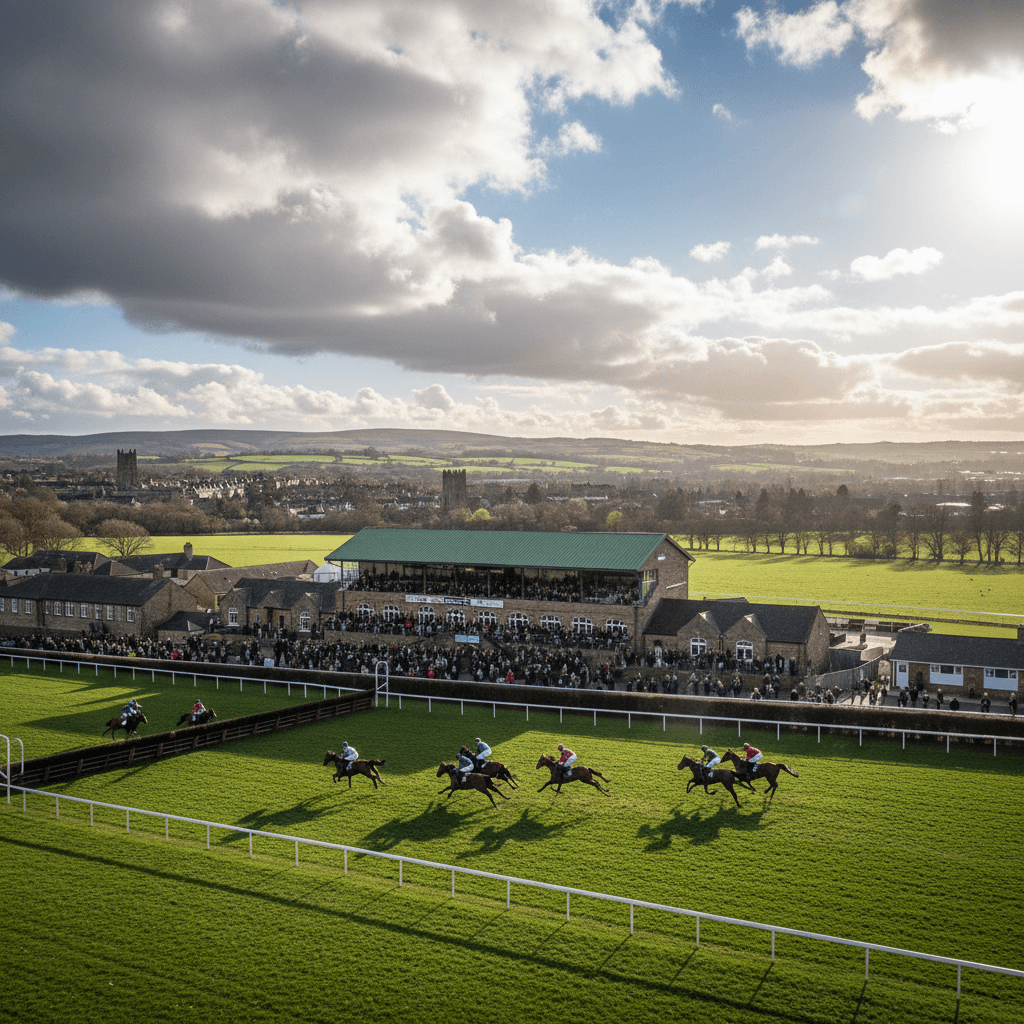
If you are attending either fixture, arrive with time to walk the course side of the track before racing begins. The view from the rail as the field passes the crossing point of the figure-of-eight is one of the more unusual sights in British racing — horses appearing to run towards each other before the tracks diverge. It never quite loses its novelty.
For punters unable to attend in person, Windsor's evening fixtures are well-served by the major broadcasters and betting exchanges. The Standard going means markets tend to be efficient and prices accurate, so value is found in the details — pace analysis, draw assessment, and a close reading of the trainer patterns — rather than in simple form reversals.
Keep an eye on the going reports issued on the day of each fixture. Standard at Windsor in July is the norm, but a dry spell or an unexpected shower can shift the surface subtly, and trainers do occasionally withdraw horses when conditions drift away from their preference.
Two Evenings Worth Savouring
Windsor in July is one of flat racing's quieter pleasures — not a championship stage, not a day that will define a season, but a pair of evenings that reward attention and repay loyalty. The course has been doing this for well over a century, and it shows no sign of losing its appeal.
Whether you are heading through the gates on Monday or Tuesday, or simply settling in at home with a card and a notebook, there is plenty here to engage with. Consult the full cards for both days — Monday 6 July and Tuesday 7 July — and take a moment to explore the full Windsor course profile before you do. The detail, as ever, is where the interest lives.