A Course Like No Other
There is something quietly remarkable about Wolverhampton that rewards those who take the time to understand it. It is not a course that trades on grandeur or Group 1 glory — it has never pretended to be Ascot or Newmarket — but in its own industrious, West Midlands way, it has carved out a place in the hearts of racing people that feels entirely earned. Since its origins in 1825, the course has reinvented itself more than once, and its willingness to adapt — most significantly with the move to Polytrack in 1994 and then to the current Tapeta surface — speaks to an institution that takes its responsibilities seriously. Racing here is not a backdrop to something else. It is the thing itself.
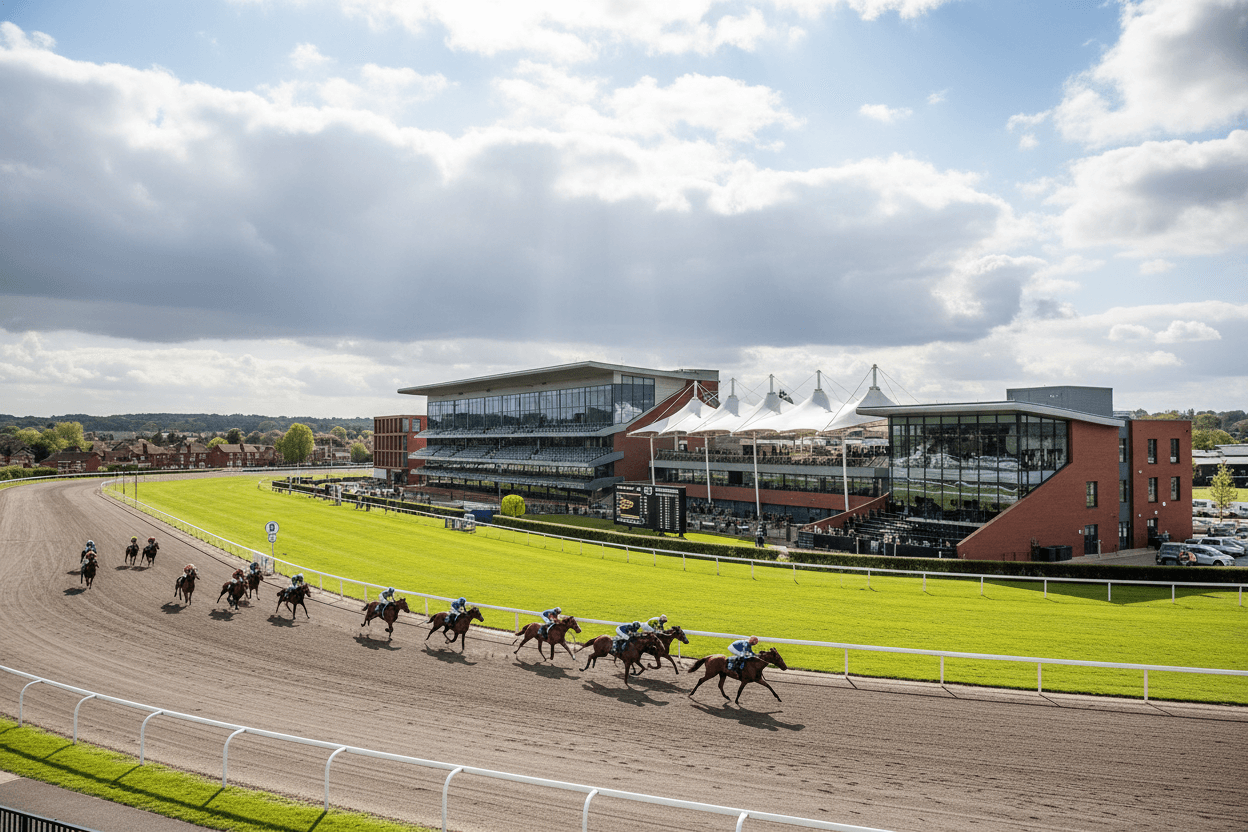
What strikes you first, if you visit on a summer evening, is the atmosphere created by the floodlights. There is a particular magic to watching horses stride through that amber glow, the stands buzzing with a crowd that is genuinely engaged rather than merely present. And then there is the extraordinary novelty — still unique in British racing — of a hotel sitting inside the track itself, guests able to watch from their windows as the field sweeps past. It is the kind of detail that sounds faintly absurd until you see it, and then it seems perfectly, wonderfully right.
This Week's Fixtures at a Glance
Wolverhampton offers two opportunities to enjoy racing this week, and both cards are worth your attention. The first is a Wednesday evening meeting on 19 August 2026, comprising six races run under the lights — the kind of card that suits the working week perfectly, offering a relaxed, sociable backdrop to what should be competitive action. Going is currently assessed at Good (47%), which on the Tapeta surface represents a surface that should ride fairly and consistently, rewarding horses with a clean, balanced action.
The second fixture arrives on Sunday, 23 August 2026, an afternoon card with seven races — a slightly more substantial programme that gives trainers and punters alike a broader canvas to work with. Going here is marginally softer at Good (46%), though the difference is unlikely to be significant. Sunday afternoon racing at Wolverhampton has its own rhythm — families, casual racegoers, and serious students of the form all mixing comfortably in the stands.
You can find the full racecard for Wolverhampton Wednesday, 19 August 2026 and the Wolverhampton Sunday, 23 August 2026 card on our dedicated pages, where we will be updating with analysis as the week progresses.
Understanding the Track: What the Form Book Tells Us
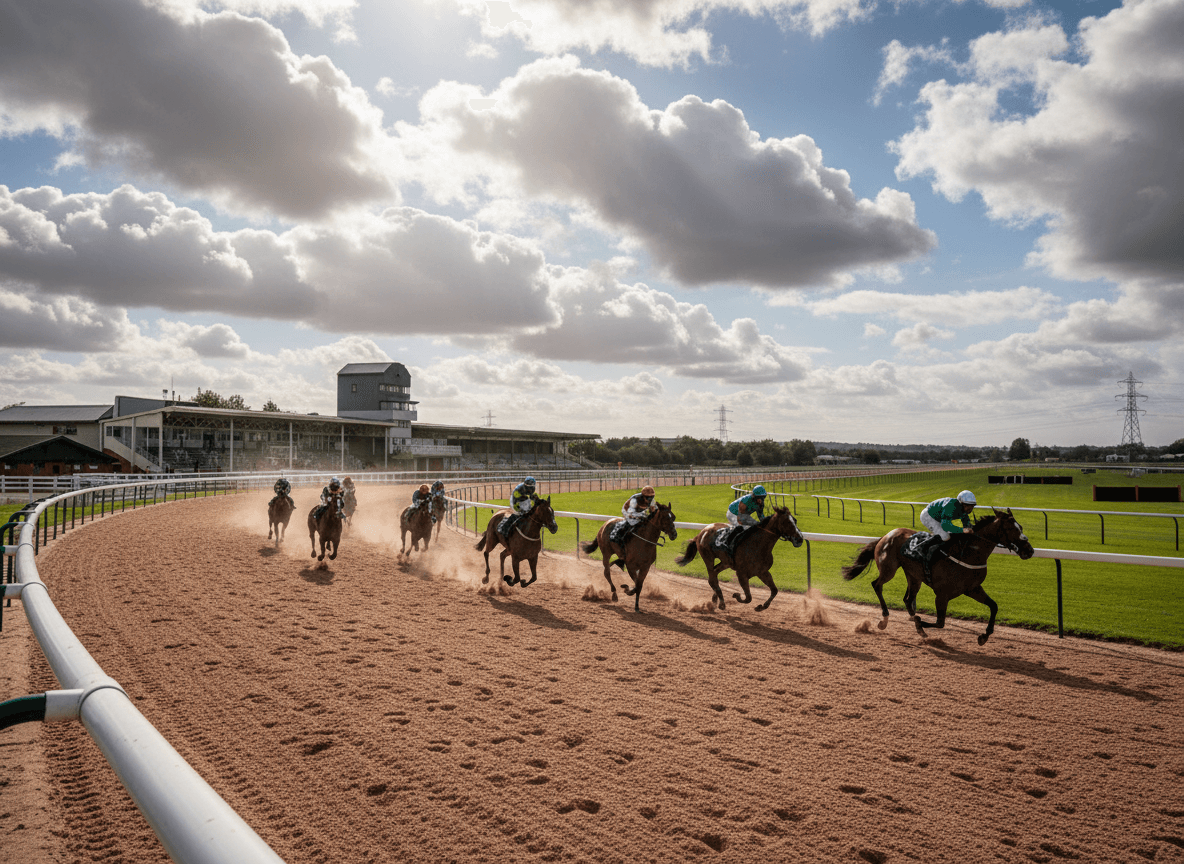
Wolverhampton is a left-handed oval of just under a mile in circumference, and its relatively tight turns are the defining characteristic that shapes every race run here. This is not a galloping track in the traditional sense — it does not suit the long-striding, wide-travelling type who needs room and time to build momentum. Instead, it rewards agility, balance, and the ability to travel smoothly through a bend without losing position or rhythm.
The home straight is genuinely long, which means that horses who are produced with a challenge approaching the final turn can sustain their effort all the way to the line. This tends to benefit horses with a good, honest cruising speed — those who can be placed close to the pace without being asked for an early effort — rather than pure closers who rely on a late, dramatic surge. On a track this size, getting too far back early can make life very difficult, particularly in shorter sprint races where the race is often over before a wide draw or a tardy start can be recovered.
Draw and Pace Considerations
Draw bias at Wolverhampton is a subject that rewards careful study. In sprint races, particularly over five and six furlongs, low draws have historically held an advantage, as the tight nature of the first bend can squeeze out horses on the wider outside who are unable to find a clean passage into the straight. In longer races, the bias becomes less pronounced, though horses drawn wide over a mile or more will often need to work harder in the early stages to find a comfortable position.
Pace is equally important. Wolverhampton tends to suit front-runners and prominent racers in smaller fields, where a horse can dictate on its own terms without being swamped. In larger handicap fields, however, the pace dynamics become more complex, and a horse that can travel smoothly just off the leader — conserving energy through the bends — often proves the most dangerous proposition in the closing stages.
The Horse That Thrives at Wolverhampton
If you are building a profile of the ideal Wolverhampton performer, you are looking for a horse that is compact, well-balanced, and comfortable on an artificial surface. All-weather specialists are, by definition, horses that have adapted — physically and temperamentally — to the different feedback that Tapeta provides underfoot compared to turf. They tend to be consistent types, not necessarily flashy, but reliable and professional in their approach to racing.
Horses with a high cruising speed and a clean, economical action tend to excel here. So do those trained by handlers who understand the all-weather game — trainers who are not afraid to run their horses regularly and who know how to place them to best effect in the handicap system. Wolverhampton is, in many respects, a trainer's track: course knowledge, surface familiarity, and shrewd placing matter enormously, and the form book rewards those who pay attention to these details.
From a welfare perspective, it is also worth noting that the Tapeta surface — while artificial — is generally considered kind on horses' legs, offering consistent give that reduces the jarring impact associated with firm turf. For horses that have shown fragility on harder ground, all-weather tracks like Wolverhampton can offer a second lease of racing life, and it is not uncommon to see horses flourish here after struggling on summer turf.
Practical Tips for Attending or Betting This Week
- Arrive early for the Wednesday evening card — the floodlit atmosphere builds gradually, and watching the track in the fading daylight before the lights take over is one of racing's small, underrated pleasures.
- Study course and distance form carefully. Wolverhampton regulars — horses with multiple runs on the track — have a meaningful advantage, and the form book here is more self-contained than at many turf venues.
- Pay close attention to draw in sprint races. Low numbers over five and six furlongs have a structural advantage, and it is worth factoring this into your assessment before the market opens.
- Watch for in-form trainers with strong all-weather records. A handful of stables dominate here across the winter and summer months alike, and following their runners on a going-to-post basis can be a profitable exercise.
- Check for market movers in the hour before racing. Wolverhampton's evening cards in particular attract a sharp betting audience, and significant market moves often reflect stable confidence that is not visible in the form book alone.
A Final Word
Wolverhampton will never be everyone's idea of a romantic racing destination, and it has never needed to be. What it offers instead is something more durable: honest, competitive racing on a surface that rewards good horses and good training, delivered with a consistency and frequency that makes it indispensable to the British racing calendar. Whether you are heading to the stands on Wednesday evening to watch the floodlights do their work, or settling in on Sunday afternoon with a racecard and a coffee, there is real racing to be enjoyed here this week.
Browse the full details on our Wolverhampton course page, and make sure you have the racecards for Wednesday and Sunday bookmarked as the week unfolds. We will be adding analysis and selections as declarations are confirmed. Enjoy the racing.