Britain is home to 59 racecourses, each with its own character, history, and atmosphere. From the regal splendour of Royal Ascot to the raw, white-knuckle theatre of Cheltenham's amphitheatre, choosing the best is no easy task. I've been going racing for the best part of 25 years, and I still discover something new every time I walk through the gates of a British racecourse. In this guide, I've ranked the top 10 tracks in the country, explained exactly how I scored them, and included everything you need to plan your next raceday — from key 2026 fixtures to dress codes and transport.
How We Ranked the UK's Best Racecourses
Ranking racecourses is subjective, and every racing fan has their own favourite. But I wanted to bring some structure to the debate. Each course was assessed against four criteria, scored out of 10:
| Criterion | What We Assessed | Weighting |
|---|---|---|
| Racing Quality | Standard of fixtures, number of Group/Graded races, quality of fields | 35% |
| Atmosphere | Crowd energy, unique character, big-day buzz | 25% |
| Visitor Experience | Facilities, food and drink, viewing quality, enclosures | 25% |
| Accessibility | Transport links, parking, proximity to towns/cities | 15% |
I've also classified each course by type: Flat (turf flat racing only), National Hunt (jumps only), Dual-Purpose (hosts both), or All-Weather (artificial surface for year-round racing). This matters because the best course for a summer afternoon's flat racing is very different from the best for a winter afternoon watching horses fly over fences.

The Top 10 UK Racecourses
1. Cheltenham — The Cathedral of Jump Racing
Type: National Hunt | Capacity: 67,500 | Overall Score: 9.6/10
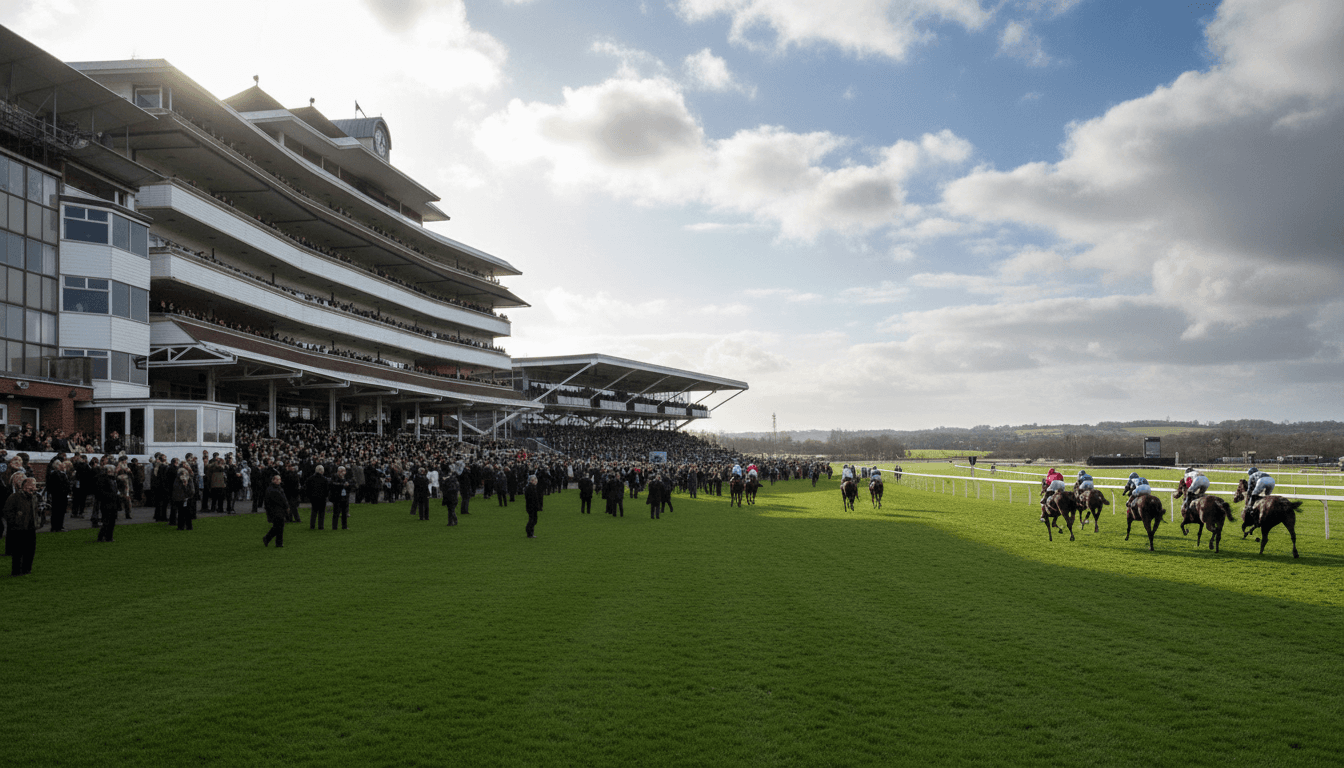
There is nowhere in world sport quite like Cheltenham on Festival week. The natural amphitheatre carved into the Cotswold hills creates an atmosphere that makes the hairs on your neck stand up from the moment you walk through the gates. The "Cheltenham Roar" — that wall of noise as the first race tape rises on Tuesday — is something every racing fan should experience at least once.
But Cheltenham isn't just about four days in March. The November Meeting (now styled as The Showcase) and the International in December regularly attract fields that would grace any Festival card. The track itself is demanding: its undulations, the stiff uphill finish, and the quality of the competition mean that only the best horses win here. That's why a Cheltenham winner is worth more than a winner anywhere else in jump racing.
Key 2026 Fixtures: Cheltenham Festival (10-13 March), The Showcase (14-15 November), International Meeting (11-12 December)
Getting There: Cheltenham Spa station is a 10-minute shuttle bus ride away. By car, junction 11 of the M5 is 15 minutes from the course. Parking is plentiful but pre-booking is essential for the Festival.
2. Ascot — Where Royalty Meets Racing
Type: Dual-Purpose | Capacity: 80,000 | Overall Score: 9.4/10
Ascot is the grandest racecourse in Britain. Founded by Queen Anne in 1711, its Royal Meeting in June is the centrepiece of the Flat racing calendar and arguably the most prestigious week of racing in the world. The Royal Procession, the strict dress code, the extraordinary hats — it's a sporting event and a social occasion rolled into one glittering package.
But Ascot delivers quality year-round. The King George VI and Queen Elizabeth Stakes in July is the mid-season championship race, and the British Champions Day card in October features four Group 1 contests on a single afternoon. Ascot's round course with its stiff uphill finish is a proper test of stamina and class, and the new grandstand (opened in 2006) offers superb viewing from every level.
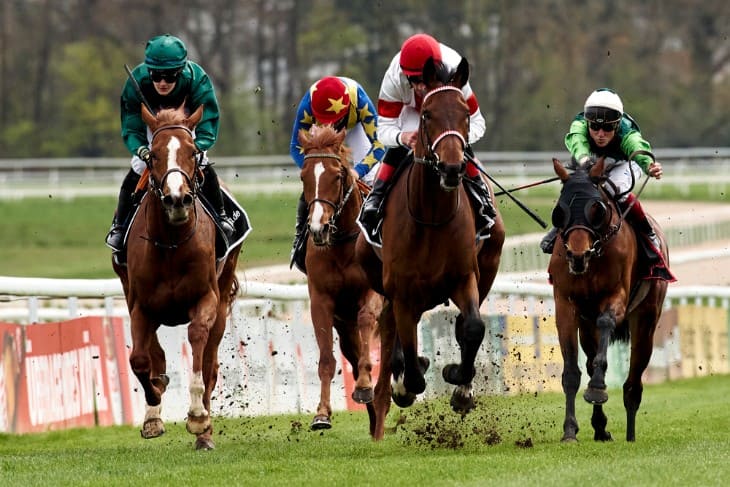
Key 2026 Fixtures: Royal Ascot (16-20 June), King George VI & Queen Elizabeth Stakes (25 July), British Champions Day (17 October)
Getting There: Direct trains from London Waterloo to Ascot station (50 minutes), which is a 7-minute walk from the racecourse. Free parking available on most racedays outside of Royal Ascot.
3. York — The Knavesmire
Type: Flat | Capacity: 40,000 | Overall Score: 9.2/10
York is, quite simply, the best flat racecourse in the North of England — and many would argue the best in Britain, full stop. The Knavesmire is a wide, galloping track that rewards quality horses, and the standard of racing at the Ebor Festival in August rivals Royal Ascot. The Juddmonte International, the Yorkshire Oaks, and the Nunthorpe Stakes form a trio of Group 1 races that routinely attract the best horses in Europe.
What sets York apart is the combination of top-class racing and genuine warmth. The atmosphere at the Ebor Festival has a distinctly Northern character — knowledgeable, passionate, and brilliantly good fun. The facilities are excellent, the viewing is outstanding, and the racecourse's location — walking distance from York's medieval city centre — makes for a perfect day out.
Key 2026 Fixtures: Dante Festival (13-15 May), Ebor Festival (19-22 August), October Meeting (10-11 October)
Getting There: York station is served by direct trains from London King's Cross (under 2 hours) and Edinburgh. The racecourse is a 15-minute walk or short bus ride from the station.
4. Newmarket — The Home of Racing
Type: Flat | Capacity: 20,000 (Rowley Mile) / 10,000 (July Course) | Overall Score: 9.0/10
Newmarket's claim to be the home of British racing is indisputable. The town has two distinct racecourses — the Rowley Mile, which hosts the spring and autumn fixtures including the 1000 and 2000 Guineas, and the July Course, which provides a more relaxed summer atmosphere. The Rowley Mile's straight course is the widest in Britain, and watching a field of 20-plus horses thunder towards you across the heath is one of racing's great sights.
The town itself is steeped in equine heritage. With over 3,000 horses in training within a few miles of the racecourse, morning gallops on the Warren Hill are a pilgrimage for racing enthusiasts. The National Stud, the Tattersalls sales ring, and the National Horseracing Museum complete the picture. If you love racing, Newmarket is a place you need to visit.
Key 2026 Fixtures: Guineas Festival (2-3 May), July Festival (9-11 July), Future Champions Day (17 October)
5. Aintree — Home of the Grand National
Type: National Hunt (with summer Flat fixtures) | Capacity: 70,000 | Overall Score: 8.9/10
Aintree means one thing to most people: the Grand National. The world's most famous steeplechase, first run in 1839, takes place here every April and attracts a global television audience of over 500 million. The race itself — four miles and two furlongs over 30 unique fences — is one of sport's ultimate tests of stamina, bravery, and luck.
But the three-day Grand National Festival offers far more than Saturday's showpiece. The Aintree Hurdle, the Melling Chase, and the Betway Bowl are top-class races in their own right, and the Friday card has developed into one of the strongest days of jump racing outside the Cheltenham Festival. The Merseyside atmosphere adds something special — there's an energy and a warmth to Aintree on Ladies Day that's unlike anything else in racing.
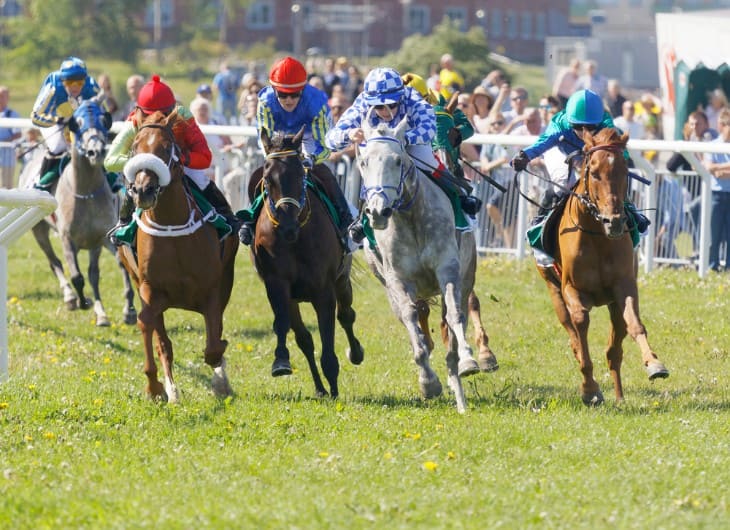
Key 2026 Fixtures: Grand National Festival (2-4 April), Becher Chase Meeting (5 December)
Getting There: Aintree station (Merseyrail) is adjacent to the course. Shuttle buses run from Liverpool Lime Street. By car, junction 1 of the M57 is 5 minutes away.
6. Epsom — Home of the Derby
Type: Flat | Capacity: 130,000 (Derby Day) | Overall Score: 8.7/10
The Epsom Derby is the most famous flat race in the world. First run in 1780, it remains the ultimate test of the three-year-old thoroughbred — a gruelling mile and a half over an undulating, left-handed track that demands speed, stamina, and balance in equal measure. Tattenham Corner, where the field swings downhill into the home straight, is one of racing's most dramatic moments.
Epsom's unique topography makes it a course unlike any other. The cambers, the gradients, and the run-in all conspire to test horses in ways that flatter tracks simply cannot. Derby Day itself has a carnival atmosphere, with the free-to-enter Hill offering a family-friendly alternative to the grandstands. The Oaks, run the day before, is the equivalent race for fillies and regularly features future champions.
Key 2026 Fixtures: Derby Festival (5-6 June)

7. Goodwood — Glorious in Every Sense
Type: Flat | Capacity: 25,000 | Overall Score: 8.5/10
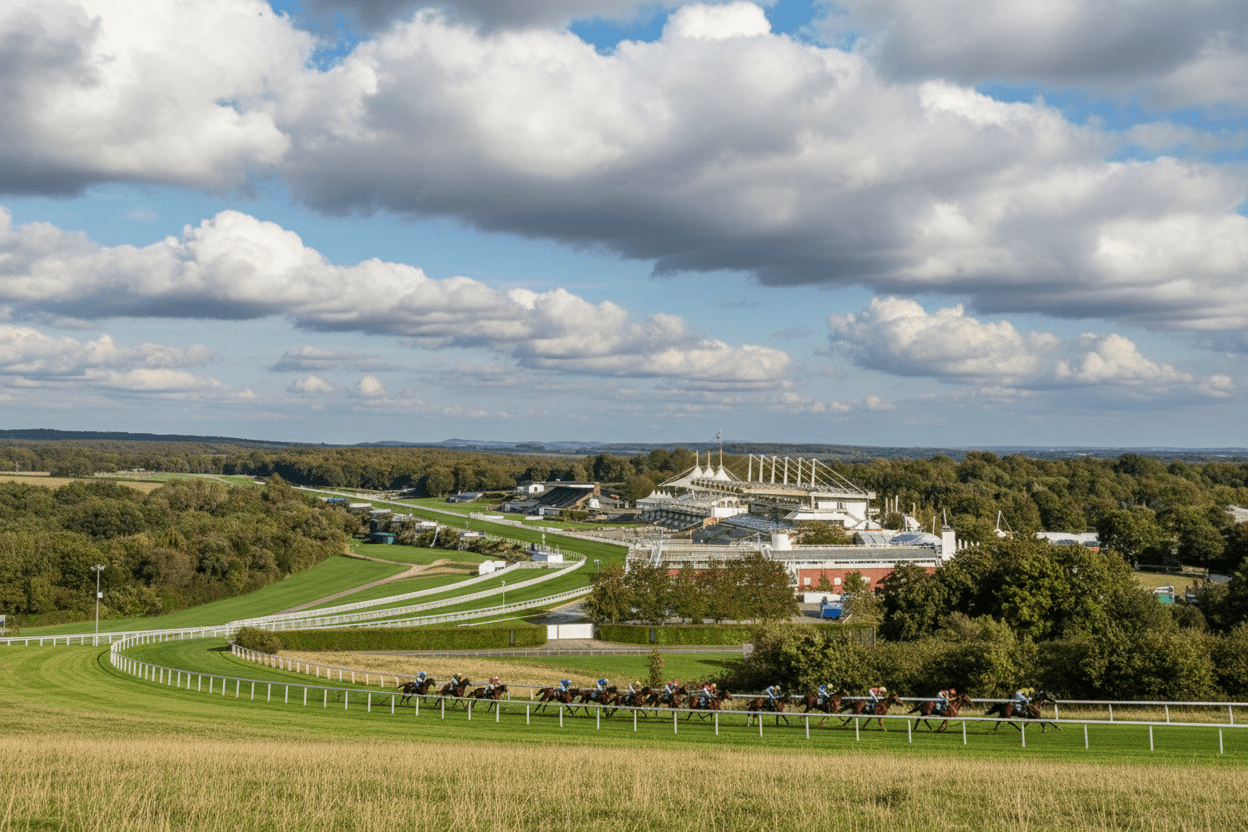
There is no more beautiful racecourse in Britain than Goodwood. Perched on the Sussex Downs with views across to the Solent, the course occupies the grounds of the Goodwood Estate and has been hosting racing since 1802. The five-day Glorious Goodwood meeting in late July combines top-class racing with a relaxed, festival atmosphere that makes it a highlight of the summer.
The Sussex Stakes, the Goodwood Cup, and the Nassau Stakes headline a card packed with quality, and the undulating track with its sharp bends provides a genuine test that catches out horses who lack agility. Goodwood also hosts the excellent Qatar Festival of Speed weekend and a series of popular evening meetings during the summer months.
Key 2026 Fixtures: Glorious Goodwood (28 July - 1 August)
8. Sandown Park — London's Best-Kept Secret
Type: Dual-Purpose | Capacity: 30,000 | Overall Score: 8.3/10
Sandown Park doesn't always get the recognition it deserves. Located in Esher, Surrey, barely 30 minutes from central London, it hosts some of the best dual-purpose racing in the country. The Eclipse Stakes in July is one of the season's defining middle-distance races on the Flat, while the Tingle Creek Chase in December and the bet365 Gold Cup in April are National Hunt highlights.
The park course with its tight turns and railway fences provides a stern examination of jumping ability, and the atmosphere on Tingle Creek day — with Cheltenham six weeks away — is electric. The facilities are modern, the viewing is excellent, and its proximity to London makes it one of the most accessible quality courses in the country.
Key 2026 Fixtures: Eclipse Stakes (4 July), Tingle Creek Festival (5-6 December), bet365 Gold Cup (25 April)
9. Newbury — The Complete Racecourse
Type: Dual-Purpose | Capacity: 30,000 | Overall Score: 8.1/10
Newbury is the racecourse that professionals love. Its wide, galloping track and excellent drainage make it one of the fairest courses in Britain, and the standard of racing — both Flat and National Hunt — is consistently high. The Betfair Super Saturday in February is one of the best jump cards outside the Festivals, and the Lockinge Stakes in May is a top-class Flat contest.
The Hennessy Gold Cup (now the Ladbrokes Trophy) in November is one of the most anticipated handicap chases of the season, regularly unearthing future Cheltenham Gold Cup contenders. Newbury's facilities have been significantly upgraded in recent years, and the course's location in Berkshire, close to the M4, makes it easily accessible from London, the Midlands, and the West Country.
Key 2026 Fixtures: Betfair Super Saturday (7 February), Lockinge Stakes (16 May), Ladbrokes Trophy (28 November)
10. Chelmsford City — The All-Weather Standard Bearer
Type: All-Weather | Capacity: 6,000 | Overall Score: 7.8/10
You might raise an eyebrow at seeing Chelmsford City on this list ahead of more traditional courses like Chester or Doncaster. But Chelmsford has done something remarkable since opening in 2015: it has created a modern, purpose-built racing venue that delivers an excellent experience 52 weeks a year. The Polytrack surface produces fair, competitive racing, and the facilities — particularly the indoor viewing areas and restaurants — are among the best in the country.
Chelmsford has also invested in quality fixtures, with its All-Weather Championships Finals Day in April becoming a genuine highlight. The Friday evening meetings during the summer are tremendously good fun, with live music and a social atmosphere that attracts younger racegoers. For punters, the consistent surface makes form study more reliable than turf — which is a genuine advantage.
Key 2026 Fixtures: All-Weather Championships Finals Day (18 April), Friday evening meetings (May-September)

Best Racecourses by Type: Flat, Jumps, and Dual-Purpose
Every racecourse has a character shaped by the type of racing it hosts. Here's a quick breakdown to help you decide where to head based on what you enjoy:
Best Flat Racecourses
| Course | Region | Signature Race | Why Visit |
|---|---|---|---|
| Ascot | Berkshire | Royal Ascot | The ultimate flat racing experience — pomp, pageantry, and Group 1 quality |
| York | Yorkshire | Juddmonte International | Wide, galloping track with superb atmosphere and facilities |
| Newmarket | Suffolk | 2000 Guineas | The home of racing — two unique courses on the historic Heath |
| Epsom | Surrey | The Derby | Unique topography creates the ultimate test for three-year-olds |
| Goodwood | West Sussex | Sussex Stakes | Stunning setting on the Downs with a relaxed, festival atmosphere |
Best National Hunt Racecourses
| Course | Region | Signature Race | Why Visit |
|---|---|---|---|
| Cheltenham | Gloucestershire | Gold Cup | The atmosphere is unmatched — every jump racing fan's Mecca |
| Aintree | Merseyside | Grand National | The world's most famous race over the world's most famous fences |
| Kempton Park | Surrey | King George VI Chase | Boxing Day tradition at its finest |
| Leopardstown | Dublin (honourable mention) | Irish Gold Cup | Not UK, but many British fans make the trip for the Christmas Festival |
Best Dual-Purpose Racecourses
Dual-purpose courses offer the best of both worlds. Sandown Park and Newbury are the standouts, hosting top-level racing on both the Flat and over jumps. Haydock Park in Merseyside is another excellent dual-purpose venue, with the Sprint Cup on the Flat and the Betfair Chase over fences both attracting top-class fields. Doncaster hosts the St Leger (the oldest Classic) and the Lincoln Handicap on the Flat, plus quality jumping including the December Novice Hurdle.
Planning Your Raceday: Tickets, Dress Code, and Transport
Tickets and Enclosures
Most UK racecourses operate a tiered enclosure system. Here's what to expect:
- Premier/Members' Enclosure: Best viewing positions, closest to the parade ring and winner's enclosure. Expect to pay £30-£80 on standard days, £80-£300+ for festival days. Smart dress code enforced.
- Grandstand/Tattersalls: Good viewing, more relaxed atmosphere. Usually £15-£40. Smart casual is fine.
- Course Enclosure: The most affordable option (£5-£20). Open-air viewing, casual dress, great for families.
- Hospitality: Private boxes, dining packages, and champagne bars. Prices range from £100 to £500+ per person.
Pro tip: Book early for major festivals. Cheltenham Festival badges sell out months in advance, and Royal Ascot's Royal Enclosure requires a membership application by March. For most other meetings, buying online a week ahead saves 10-20% compared to gate prices.
Dress Code Guide
| Enclosure | Typical Dress Code | Notes |
|---|---|---|
| Royal Enclosure (Ascot) | Morning suit / formal dress with hat | Strictly enforced. No fascinators — hats must have a solid base of 10cm+. |
| Premier/Members' | Suit and tie / smart dress | Jacket required at most courses. No jeans, trainers, or sportswear. |
| Grandstand | Smart casual | Chinos and an open-collar shirt are fine. No shorts or flip-flops. |
| Course Enclosure | Casual | Come as you are. Comfort is key, especially in winter. |
Transport Tips
- By Train: Most major racecourses are served by nearby stations with shuttle buses on racedays. Cheltenham, Ascot, York, and Aintree all have excellent rail links. Book advance tickets for significant savings.
- By Car: Pre-book parking where possible, especially for festivals. Some courses charge £5-£15 for car parking on the day. Designated driver? Many courses offer free soft drinks for drivers.
- Coach Packages: Several operators run raceday coach packages from major cities, including admission and transport. These are often the best value for festival days when parking and train fares spike.
- Accessibility: All major UK racecourses have wheelchair-accessible viewing areas, accessible toilets, and assistance available. Contact the racecourse in advance to arrange any specific requirements — most are excellent at accommodating needs.
Frequently Asked Questions
How many racecourses are there in the UK?
There are currently 59 active racecourses in the UK, spread across England, Scotland, and Wales. These include 23 Flat-only courses, 17 National Hunt-only courses, 13 dual-purpose courses, and 6 all-weather venues. The British Horseracing Authority oversees all licensed racecourses in Great Britain, while Northern Ireland's courses fall under Horse Racing Ireland.
What is the most prestigious racecourse in the UK?
It depends on the discipline. For Flat racing, Ascot is widely considered the most prestigious, particularly during Royal Ascot week. For National Hunt, Cheltenham holds that title without question — the Festival is the jumping equivalent of the Olympic Games. If you pressed me for a single answer across both codes, I'd say Cheltenham, purely because of what winning at the Festival means to connections and fans.
Which racecourse has the biggest capacity?
Epsom Downs has the largest capacity in Britain, able to accommodate over 130,000 spectators on Derby Day thanks to its open Hill area. In terms of seated grandstand capacity, Ascot leads with 80,000 following its £220 million redevelopment. Aintree accommodates 70,000 for the Grand National, and Cheltenham holds 67,500 during the Festival. For everyday meetings, most courses accommodate between 5,000 and 25,000.
What is the oldest racecourse in England?
Chester is generally recognised as the oldest racecourse still in active use in England, with records of horse racing on the Roodee dating back to 1539. However, Newmarket's association with racing dates to the early 1600s under the patronage of James I, and the town has been the administrative heart of British racing for over four centuries. York also claims ancient origins, with accounts of racing in Roman times, though the modern Knavesmire course dates from 1731.
Summary
Britain's racecourses are among its greatest sporting treasures. Each has its own personality: Cheltenham's tribal roar, Ascot's regal elegance, York's warm Northern hospitality, Aintree's spine-tingling Grand National fences. Whether you're a seasoned racegoer or planning your first visit, there's a course and a meeting to suit every taste and budget.
My advice? Don't just stick to the big festivals. Some of the best days I've had at the races have been on quiet midweek afternoons at Newbury or summer evening meetings at Goodwood, where you can get close to the paddock, study the horses properly, and enjoy the sport without the crush of festival crowds. That's where you really learn about racing — and where you develop the eye that makes you a better punter.
For insights into the riders who bring these courses to life, read our guide to the role of jockeys in horse racing. And if Cheltenham is calling, don't miss our comprehensive Cheltenham Festival guide.