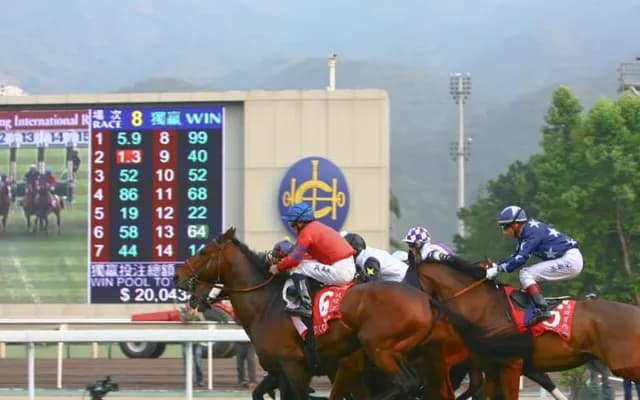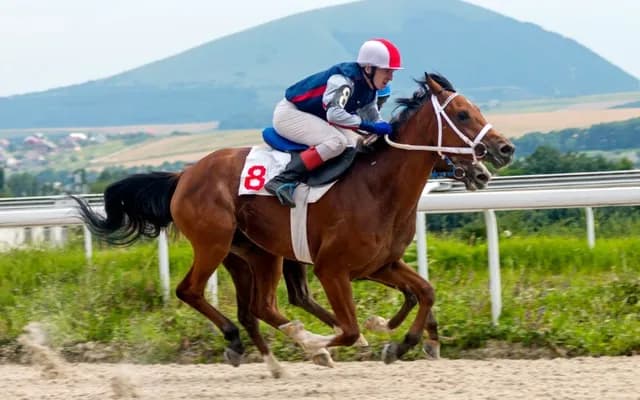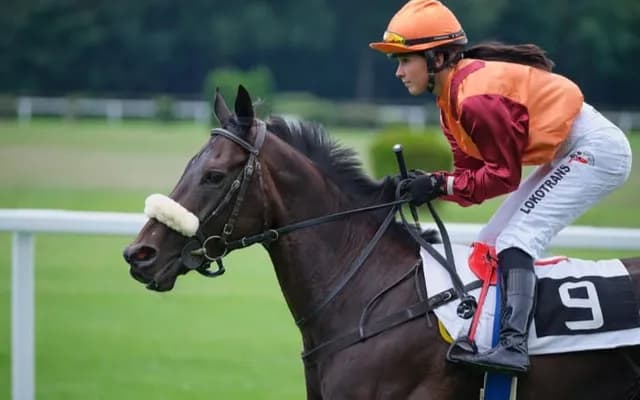
The Cheltenham Festival is the championship meeting of jump racing in Britain and Ireland. For four days each March, Prestbury Park stages the best hurdlers, chasers and novices from both sides of the Irish Sea, with 28 races, a championship contest every afternoon and the Cheltenham Gold Cup to finish. Most jumps horses are trained with this week as their main target, which makes it the most informative meeting of the season and one of the hardest to bet on.
Dates, sponsors' names and the running order change from year to year. The structure described here does not.
When and where
The Festival is held at Cheltenham Racecourse, Prestbury Park, on the northern edge of Cheltenham in Gloucestershire. It runs from Tuesday to Friday in mid-March and is usually close to St Patrick's Day, which is why so many Irish racegoers travel over for it. The Thursday is branded St Patrick's Thursday whether or not it falls on 17 March.
The meeting grew out of the National Hunt Chase, first run in 1860, and settled at Prestbury Park in 1911. The Gold Cup was first run as a steeplechase in 1924 and the Champion Hurdle in 1927. Until 2005 the Festival was a three-day meeting. A fourth day was added that year, with the Gold Cup moved to the Friday as the finale.
Each day has seven races and its own identity:
- Tuesday – Champion Day, built around the Champion Hurdle.
- Wednesday (billed in recent years as Ladies Day or Style Wednesday), built around the Queen Mother Champion Chase.
- Thursday – St Patrick's Thursday, with the Stayers' Hurdle and the Ryanair Chase.
- Friday – Gold Cup Day, with the Cheltenham Gold Cup.
The atmosphere starts before a jump has been cleared. The opening race, the Supreme Novices' Hurdle, is traditionally greeted by the "Cheltenham roar" as the tape goes up. Crowds are large: the Jockey Club reported more than 226,000 racegoers across the four days in 2026.
The course
Cheltenham is a left-handed, undulating track with stiff fences, and the last half-mile is uphill. That climb from the final fence or flight to the line is where races are often won and lost, and it is why the place rewards stamina and sound jumping more than many British tracks.
There are three tracks at Prestbury Park. The first two days of the Festival are run on the Old Course and the last two on the New Course. The New Course hurdles track has only two flights in the final six furlongs, which puts more emphasis on stamina, and its chase course has a longer run-in. The third track, the Cross Country course, is used for the Festival's cross-country chase.
Day-by-day guide to the feature races
Sponsors' names change regularly, so the races below are given their established names. Since the 2026 programme changes, every day has at least three Grade 1 races. The Jockey Club tweaks the running order most years. In 2026, for example, the Mares' Hurdle moved from Tuesday to Thursday, so always check the current racecard.
Tuesday: Champion Day
Supreme Novices' Hurdle (Grade 1, about 2m½f). This is the Festival opener, for novice hurdlers, meaning horses in their first season over hurdles. Past winners include Altior and Constitution Hill, who both went on to become champions.
Arkle Challenge Trophy (Grade 1, about 2m). This is the two-mile championship for novice chasers, run at a strong gallop. Fast, accurate jumping is essential.
Champion Hurdle (Grade 1, 2m87y). The two-mile hurdling championship was first run in 1927. Five horses have won it three times: Hatton's Grace, Sir Ken, Persian War, See You Then and Istabraq. Istabraq was odds-on to become the first four-time winner in 2001, but that year's Festival was lost to foot-and-mouth disease. Dawn Run, who won in 1984, is the only horse to have won both the Champion Hurdle and the Gold Cup.
Tuesday also features valuable handicaps and the National Hunt Chase, the race the Festival grew from. For most of its history it was confined to amateur riders. Since 2025 it has been a novice handicap chase that professionals can also ride in.
Wednesday
Queen Mother Champion Chase (Grade 1, 2m). This is the championship for two-mile chasers. It was first run in 1959 as the National Hunt Two-Mile Champion Chase and renamed in 1980 for the Queen Mother's 80th birthday. Badsworth Boy, who won three in a row from 1983 to 1985, remains the race's most successful horse.
Novice championships. Wednesday also has the Baring Bingham Novices' Hurdle (Grade 1, about 2m5f), which runs under its sponsor's name and so has had several titles, and the Brown Advisory Novices' Chase (Grade 1, about three miles). The Brown Advisory is the championship for staying novice chasers and the obvious stepping stone towards a future Gold Cup.
Champion Bumper (Grade 1, about 2m½f). This is a National Hunt flat race, run without obstacles, for young horses that have yet to go jumping. Willie Mullins has dominated it, and his win with Jasmin De Vaux in 2024 was his 13th in the race and his 100th Festival winner.
The card is completed by the Cross Country Chase, now a limited handicap, and competitive handicaps such as the Coral Cup and the Grand Annual.
Thursday: St Patrick's Thursday
Stayers' Hurdle (Grade 1, 3m). This is the championship for staying hurdlers. It has carried the Stayers' Hurdle name since 1972, apart from a spell as the World Hurdle under sponsorship from 2005 until 2017, when the traditional title returned. Big Buck's won four in a row from 2009 to 2012, and he, his trainer Paul Nicholls and his jockey Ruby Walsh are the most successful horse, trainer and jockey in the race's history.
Ryanair Chase (Grade 1, about 2m4½f). The championship over the intermediate trip, between the Champion Chase and the Gold Cup. It was introduced in 2005, when the fourth day was added, and became a Grade 1 in 2008. Its registered title is the Festival Trophy.
Also on Thursday: the Mares' Hurdle (Grade 1, about 2m4f), which moved from Tuesday in 2026, and handicaps including the Pertemps Final and the Kim Muir for amateur riders. The two-and-a-half-mile novice chase run on this day lost its Grade 1 status in 2025 and is now a limited novice handicap.
Friday: Gold Cup Day
Triumph Hurdle (Grade 1, about 2m1f). This is the championship for juvenile hurdlers, which are four-year-olds. It opens the final day.
Spa Novices' Hurdle (Grade 1, about 3m). This is the three-mile championship for novice hurdlers. It is still widely known as the Albert Bartlett, after its long-time sponsor.
Cheltenham Gold Cup (Grade 1, about 3m2½f). The most prestigious steeplechase in Britain and Ireland, first run in its current form in 1924. Golden Miller won five in a row from 1932 to 1936, a record nobody has come close to. Cottage Rake, Arkle and Best Mate each won three. Kauto Star is the only horse to have regained the title, winning in 2007 and again in 2009. The biggest-priced winner was Norton's Coin at 100-1 in 1990. Desert Orchid, the 1989 winner, is the only grey to have won it.
Friday also has the Foxhunter Chase for hunter chasers, the County Hurdle and the Martin Pipe Conditional Jockeys' Handicap Hurdle.
Records worth knowing
- Leading jockey: Ruby Walsh retired with a record 59 Festival winners and was leading rider at the meeting 11 times. He rode seven winners in 2009 and again in 2016, a record for a single Festival.
- Leading trainer: Willie Mullins is the most successful trainer in Festival history. He passed 100 winners in 2024 and has trained ten winners at a single Festival twice, in 2022 and 2025.
- Gold Cup jockey: Paul Townend's win on Gaelic Warrior in 2026 took him to five Gold Cups. That was one more than Pat Taaffe, who previously held the record.
How the Festival differs for punters
Strength in depth
Most Grade 1s during the season are won by horses the market knows all about. At Cheltenham every championship brings together the best from both countries, and novices from different form lines meet for the first time. The form is harder to read because it rests on fewer direct comparisons.
Big-field handicaps
Roughly a third of the card is made up of handicaps, and the big ones are capped in the low-to-mid twenties. For 2026 the Jockey Club cut the maximum for races such as the Coral Cup and the County Hurdle from 26 to 24. Large fields, a fast pace and an uphill finish produce surprises, and handicappers are aimed at these races months in advance. In 2026 the Grand Annual was won by Martator at 66-1.
The Irish challenge
Irish-trained horses have long been central to the Festival. Of the Gold Cup winners up to 2026, 28 were trained in Ireland. The Prestbury Cup, a running score of British-trained against Irish-trained winners across the 28 races, has become a feature of the week. Ireland won 23-5 in 2021 and 15-13 in 2026, when the result was settled in the final race. When the leading Irish yards run several horses in the same race, the market can struggle to separate them, and their second and third strings are often worth a closer look.
Course form matters
The hill, the stiff fences and the switch from the Old to the New Course mean some horses repeat their best form here and others never do. A horse that has already run well at Cheltenham, especially at the Festival, has shown it can handle the track.
Practical betting angles
Use each-way terms in the big handicaps
Under standard terms a handicap with 16 or more runners pays a quarter of the odds for the first four places. Many bookmakers offer extra places during Festival week. With 20-plus runners and a strong pace, an each-way bet on a well-handicapped horse at a decent price is often a better proposition than a win bet. Check the place terms before you bet, as they vary between firms. Our guide to calculating odds and payouts shows how each-way returns are worked out.
Understand ante-post and non-runner no bet
Festival markets are open for months beforehand. Ante-post betting can get you a much bigger price than on the day. The catch is that a standard ante-post bet is lost if your horse does not run, and Cheltenham horses are often entered in more than one race before connections choose a target. In the run-up to the meeting many bookmakers switch Festival markets to non-runner no bet, which returns your stake if the horse does not take part. The prices are usually shorter, but you keep your stake if plans change. Our guide to understanding Cheltenham odds explains how these markets develop.
Read the form with the track in mind
- Previous Cheltenham runs. Look for horses that have finished their races strongly up the hill, not just those that have won elsewhere.
- Jumping. Untidy jumpers that get away with it on flatter, easier tracks are found out by Cheltenham's fences.
- Trip and course. A horse that just held on over two and a half miles on the Old Course may not see out a similar trip on the New Course, where stamina counts for more late on.
- Going. March ground can range from good to heavy within a single week. Check the official going and any watering updates each morning.
If any of the terms on a racecard are unfamiliar, our betting terminology guide explains them.
Multiples and pool bets
With seven races a day, many punters combine selections in a Yankee or play the Placepot. Big fields and frequent upsets make the Festival Placepot hard to land, but the dividends tend to reflect that. Remember that full-cover bets multiply your stake.
Best Horse Racing Betting Sites


Visiting the Festival
Racegoers choose between three enclosures. The Club enclosure is the premium option, with the main grandstand, the Members' lawn and access to the parade ring. Tattersalls is the middle ground, close to the winner's enclosure and the winning post. The Best Mate enclosure is the cheapest and sits opposite the main grandstand, with a head-on view down the home straight.
The nearest mainline station is Cheltenham Spa, about two and a half miles away. During the Festival, shuttle buses run from the station to the course via the town centre, and they get busy, so allow plenty of time. There is no official dress code, though the racecourse notes that smart dress is preferred and widely worn. For fixtures outside Festival week, see our Cheltenham course guide.
Frequently asked questions
When is the Cheltenham Festival held?
Every March, over four days from Tuesday to Friday, usually in the middle of the month and close to St Patrick's Day. The Jockey Club announces exact dates well in advance on the official Cheltenham website.
How many races are run at the Cheltenham Festival?
There are 28 races, seven on each of the four days. They include championship races, novice and juvenile Grade 1s, big-field handicaps, races for amateur and conditional riders, a cross-country chase and a hunter chase.
What are the championship races at the Cheltenham Festival?
There are five: the Champion Hurdle on Tuesday, the Queen Mother Champion Chase on Wednesday, the Stayers' Hurdle and the Ryanair Chase on Thursday, and the Cheltenham Gold Cup on Friday.
Which horse has won the most Cheltenham Gold Cups?
Golden Miller, who won five in a row from 1932 to 1936. Cottage Rake, Arkle and Best Mate each won three.
Who is the most successful jockey and trainer at the Festival?
Ruby Walsh holds the jockeys' record with 59 winners. Willie Mullins is the most successful trainer in Festival history and became the first to reach 100 winners when he passed that landmark in 2024.
What does non-runner no bet mean for Cheltenham betting?
It is a concession offered by many bookmakers in the build-up to the Festival. If your horse does not run in the race you backed it for, your stake is returned. Without it, a standard ante-post bet on a non-runner is lost.
What is the Prestbury Cup?
It is a running contest between British-trained and Irish-trained horses across the 28 Festival races, with a point for each winner. It has no effect on betting, but it adds an edge to the week, particularly when the score is close going into Friday.
Why is each-way betting popular at Cheltenham?
Many Festival races, especially the handicaps, have 20 or more runners. Standard terms in handicaps of 16 or more runners pay a quarter of the odds for four places, and bookmakers often add extra places during Festival week. That gives each-way backers of bigger-priced horses a realistic chance of a return.
Please gamble responsibly. You must be 18 or over to bet. For advice and support, see our responsible gambling page.